In This Article
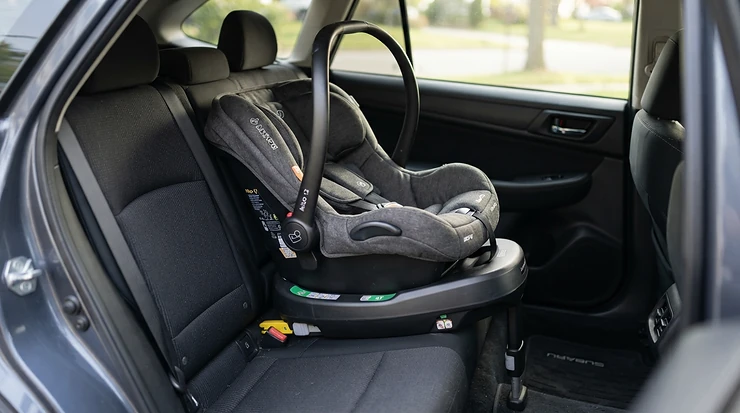
An i-size infant car seat is a rear-facing baby carrier approved under the UN R129 regulation, which sizes seats by your baby’s height rather than their weight. It suits newborns up to roughly 12 to 15 months, and it usually clicks onto an ISOFIX base for a secure fit with far less room for installation error.
Buying your first car seat should be simple. It isn’t. You’re staring at a wall of rotating bases, lie-flat recline modes and acronyms (R129, ISOFIX, ADAC) while trying to picture a baby who hasn’t arrived yet. The whole decision comes down to a few kilos of moulded plastic and energy-absorbing foam, and it matters more than almost anything else on your baby list.
Here’s what I’ve done for you. I’ve pulled together 2026 specifications, UK retailer listings, published results from test bodies such as ADAC and Stiftung Warentest, and the official rules, then weighed seven seats against each other. I haven’t strapped a baby into any of them, and I won’t pretend otherwise. Everything below is analysis built on published data, not personal testing.
The legal bit first. Under the government’s child car seat rules, height-based i-Size seats must stay rear-facing until your child is over 15 months. Only approved seats carrying the R129 label are legal on UK roads.
Whether you’re hunting for a baby car seat for newborns or the most lightweight baby car seat you can find without compromising safety, this guide covers both. All prices are ranges from the time of research, so check current pricing before you buy.
Quick Comparison: 7 Best i-size Infant Car Seat Options at a Glance
| Seat | Weight | Height range | Install | Best For |
|---|---|---|---|---|
| Nuna Pipa Next | 2.8kg* | 40–83cm | Base or belt | Easiest carry |
| Joie i-Snug 2 | ~3.3kg | 40–75cm | Base or belt | Budget-friendly lightness |
| Graco SnugLite i-Size | 3.3kg | 40–75cm | Base or belt | Tight budgets with a rotating option |
| Maxi-Cosi CabrioFix i-Size | 3.2kg | 40–75cm | Base or belt | Everyday value |
| Maxi-Cosi Pebble 360 Pro2 | 4.7kg | 40–87cm | Rotating base or belt | Comfort and longer use |
| Cybex Cloud T i-Size Plus | 4.5kg | 45–87cm | ISOFIX base (Base T or Z2) | Lie-flat flexibility |
| Silver Cross Dream i-Size | ~5–5.5kg | 40–85cm | Base or belt | Silver Cross pushchair owners |
*Excludes newborn insert and canopy.
Look at the weight column and a pattern jumps out. Four seats cluster between 2.8kg and 3.3kg, while the three feature-rich options sit well above 4kg. The Nuna Pipa Next wins on pure carrying ease, and the Maxi-Cosi CabrioFix i-Size is the sensible middle ground on weight and price. If your baby will spend more time in the car than in your arms, the Maxi-Cosi Pebble 360 Pro2 and Cybex Cloud T i-Size Plus justify their extra kilos with recline and rotation.
💬 Just one click — help others make better buying decisions too!😊
Top 7 i-size Infant Car Seat Picks: Expert Analysis
Which?’s car seat buying guide describes i-Size baby seats as running from 40 to 85cm, roughly birth to 12–15 months. Keep that window in mind, because it explains why height limits matter so much in the picks below.
1. Nuna Pipa Next — lightest carrier on this list
At 2.8kg before the insert and canopy go on, this is the lightest i-size infant car seat in the line-up by a clear margin. It fits babies from 40 to 83cm and up to 13kg, installs on a compatible base or with the vehicle belt, and offers seven headrest positions plus a merino-and-lyocell newborn insert.
That 400g gap to the next-lightest seat sounds trivial until it’s the third flight of stairs with a sleeping baby. Based on the spec comparison, this suits city parents who live on upper floors, hop into taxis, or have a bad back. It also scored 1.8 (“Good”) in the 2022 ADAC test when paired with its base. The catch is the 83cm ceiling, which gives tall babies less runway than the 87cm seats here.
Parent testers on Mother & Baby and a UK retailer’s blog both single out how light it feels. Both are magazine or retailer sources rather than independent ratings, so treat that as a themed impression, not a verdict.
Pros:
- ✅ Genuinely the lightest option here
- ✅ Base or belt installation
- ✅ Good ADAC score with its base
Cons:
- ❌ 83cm limit means an earlier upgrade for tall babies
- ❌ Base costs extra
Expect roughly £230–£325 for the seat depending on retailer and RRP, with the base on top. It’s a premium price for lightness, and worth it if carrying is your daily reality.

2. Joie i-Snug 2 — budget lightness with a spin upgrade path
Joie’s pitch is one of the lightest i-Size carriers on the market, and the numbers back it up. Listings put it at around 3.3kg (retailers vary between 3.25kg and 3.35kg), for babies from 40 to 75cm. It meets ECE R129/03 and has an adjustable Tri-Protect headrest. It installs via a compatible i-Base or with the seat belt using the green belt path.
The clever bit is the ecosystem. Pair it with the i-Base Encore and you get a 90° spin, and that same base later hosts Joie’s i-Harbour toddler seat. The trade-off is the 75cm ceiling, which usually means roughly 12 months of use, so you’ll shop for the next seat sooner.
I couldn’t verify a deep pool of independent UK review data for this article. At least one owner review I came across on Joie’s own site was disappointed, though the excerpt didn’t say why. Read recent buyer reviews before committing.
Pros:
- ✅ Very light for the money
- ✅ Spin base available later
- ✅ Works with many pushchair adapters
Cons:
- ❌ 75cm limit shortens its lifespan
- ❌ Base sold separately
Budget roughly £100–£120 for the seat alone. It’s good value if you accept the shorter shelf life.
3. Graco SnugLite i-Size — rotating-base route without the premium
The Graco SnugLite i-Size weighs 3.3kg and fits babies from 40 to 75cm up to 13kg. It comes with a memory-foam newborn insert and installs on either the SnugLite base or the SnugTurn rotating base. It can also be belted in, which is handy for taxis and hire cars.
What the spec sheet won’t shout about is the upgrade route. The same base can later take Graco’s SnugGo 2-in-1 convertible, stretching the base’s usefulness to around four years. The headrest isn’t adjustable per retailer listings, so fit relies on the newborn insert and harness height. Based on spec comparison, this suits parents who want rotation convenience but balk at premium pricing.
I couldn’t verify review sentiment for this specific model, so I’m not going to characterise it. The sibling SnugEssentials earned an ADAC score of 1.8 in 2021, but that’s a different seat.
Pros:
- ✅ Light at 3.3kg
- ✅ Rotating base option available
- ✅ Belt install for taxis and rentals
Cons:
- ❌ Headrest not adjustable
- ❌ 75cm cap limits longevity
Retail prices span roughly £75–£140 for the seat, with the base extra. Strong value if you want a rotating system on a small budget.
4. Maxi-Cosi CabrioFix i-Size — the proven everyday all-rounder
The Maxi-Cosi CabrioFix i-Size is the seat you’d pick if you wanted no surprises. It weighs 3.2kg and fits babies from 40 to 75cm (0–12kg). It installs with a base (5.2kg) or the seat belt, and it comes with a Baby Hugg inlay and a removable cover that machine-washes at 30°C.
In practice, the 12kg cap and 75cm limit mean you’ll likely outgrow it by around 12 months. In exchange you get a seat that fits most Maxi-Cosi pushchairs and many others via adapters. Stiftung Warentest gave it an overall 1.8 (“Good”) in 2022, with 1.7 when used with its base. That’s about as clear an independent endorsement as this price bracket gets.
Retailer listings I checked describe it as good value, but I couldn’t verify a large body of rating data. The test result is the firmer evidence here.
Pros:
- ✅ Good independent test result
- ✅ Simple click-in installation
- ✅ Broad pushchair compatibility
Cons:
- ❌ Lower 12kg weight cap
- ❌ Single recline position
Expect around £130 for the seat and roughly £200 with the base. Best all-round value on this list.
5. Maxi-Cosi Pebble 360 Pro2 — rotating comfort with lie-flat recline
At 4.7kg, the Maxi-Cosi Pebble 360 Pro2 is heavier, but the extras are real. It fits 40–87cm (0–13kg), roughly 15 to 18 months. It offers G-CELL side-impact protection, a full lie-flat recline, and a retailer-reported TÜV aircraft approval in all recline positions. Add the FamilyFix 360 Pro base (8.6kg, rotating) and the base itself keeps going to 105cm and 17kg, around four years.
That base is the headline. You rotate the seat to the door, slide the carrier on, and skip the contortion act in a tight car park. An Austrian ÖAMTC test in spring 2024 described the seat as very safe, with an adjustable backrest angle for comfort.
A UK retailer lists 25–28 reviews for it, though I couldn’t confirm an average rating. One buyer who upgraded from an earlier Pebble 360 praised the recline.
Pros:
- ✅ Rotating base makes loading easier
- ✅ Lie-flat recline for comfort
- ✅ 87cm height band lasts longer
Cons:
- ❌ Heavy at 4.7kg
- ❌ Pricey once the base is added
The seat alone sits in the mid-£200s, climbing to roughly £450–£500 with the rotating base. Worth it if you value comfort and a long-lasting base.

6. Cybex Cloud T i-Size Plus — lie-flat position on your pushchair
The Cybex Cloud T i-Size Plus weighs 4.5kg and fits babies from 45 to 87cm up to 13kg. It offers an in-car recline plus a “stretch and lie-flat” mode when used on a compatible pushchair. A removable newborn inlay stays in until your baby passes 60cm. It pairs with Cybex’s Base T (7.7kg), which also takes the Sirona T toddler seat, extending the system to around four years.
Cybex says the flat position outside the car helps keep a young baby’s head from tipping forward, which is a brand claim rather than independent proof. Still, for parents who use their carrier as a pushchair seat, a flatter angle is a genuine selling point. It also shared the ADAC test-winner badge in October 2023. One caveat: Base T only works with Cybex’s T range.
A John Lewis listing for the bundle shows 4.6 out of 5 from 41 reviews, a small sample but a healthy one.
Pros:
- ✅ Lie-flat position outside the car
- ✅ ADAC test-winner badge (shared)
- ✅ Base T carries on to toddler stage
Cons:
- ❌ Heavier than lightweight rivals
- ❌ Base T locks you into Cybex
Around £230–£250 buys the seat, with seat-and-base bundles in the low £400s. Fair value for a flexible system.
7. Silver Cross Dream i-Size — premium feel with bamboo fabrics
The Silver Cross Dream i-Size fits 40–85cm and up to 13kg, with a five-position headrest, four layers of side-impact protection and natural bamboo fabrics. Weights range from about 5kg to 5.45kg depending on the listing. It installs via the matching ISOFIX base (with a support leg and green indicators) or by seat belt, and Silver Cross runs a car seat recycling scheme.
The weight is the honest trade-off, since it’s roughly twice the heft of the Nuna Pipa Next. A retailer lists an ADAC “good 2.0”, and the brand says the seat is only covered by i-Size regulations when used with its own base. That detail matters for compliance, so read the manual before belting it in. It’s most compelling if you already own a Silver Cross pushchair, as it slots straight into that travel system.
Which? lists it among its reviewed seats, but the full review sits behind a paywall, and I couldn’t verify review sentiment for this piece.
Pros:
- ✅ Five adjustable headrest positions
- ✅ Strong side-impact design
- ✅ Matches Silver Cross pushchairs
Cons:
- ❌ Heaviest seat on this list
- ❌ i-Size cover needs its own base
The seat alone runs roughly £200–£250, with bundles from about £300 to £430. Pricey, but sensible for existing Silver Cross families.
Fitting Your i-size Infant Car Seat: A Practical 30-Day Guide
Your seat is only as safe as its installation, so treat this like a skill you rehearse before the baby arrives.
Week before the due date. Do a full practice install in your own car. Check where your ISOFIX points sit and how much rear legroom you lose. If you’re belting rather than using a base, follow the colour-coded belt path, such as the green one on the Joie i-Snug 2, and check the manual’s lock-off steps.
Day one. Use the newborn insert exactly as instructed. The Maxi-Cosi Pebble 360 Pro2 has one that’s integrated from 40cm. The Cybex Cloud T i-Size Plus inlay comes out once your baby passes 60cm. Strip off bulky coats before buckling, because padding hides slack in the harness.
First fortnight. Plan breaks on longer trips instead of letting a newborn stay semi-upright for hours. If you’re ever unsure about car travel with a very small baby, Which? advises checking with the hospital or your GP.
Weeks three and four. Check the headrest height as your baby grows, and know your cleaning rules. The Maxi-Cosi CabrioFix i-Size cover machine-washes, while Graco advises surface-cleaning harness straps only, never soaking them. Check the headrest and base indicators every time, not just on day one.
Real-World Scenarios: Matching a Seat to Your Life
Specs only mean something in context, so here are three profiles.
The first-time, budget-conscious couple. A small hatchback, short local trips, a combined budget under £250 for seat and base. The Maxi-Cosi CabrioFix i-Size with its base lands inside that, and its 1.8 Stiftung Warentest result gives genuine reassurance. If rotation matters more than the brand, the Graco SnugLite i-Size is the fallback.
The city family without a car most days. A fourth-floor flat, a lot of taxis, a seat that gets carried as much as it’s driven. The Nuna Pipa Next earns its premium here, because every gram counts across hundreds of stair climbs and car-to-pushchair swaps.
The long-drive family. Grandparents two hours away every other weekend, plus the school run. Here the Maxi-Cosi Pebble 360 Pro2 or Cybex Cloud T i-Size Plus make sense. Both offer recline and extended height bands, and both bases carry on into the toddler years, which spreads the cost over about four years.
If you’re already invested in a Silver Cross Dream i-Size pushchair ecosystem, the decision largely makes itself.
✨ Don’t Miss These Carefully Chosen Picks!
🔍 Take your first journey home to the next level with these seats. Click any highlighted product name to check current pricing and availability. They’ll help you build calm, confident car journeys your whole family will love!
How to Choose an i-size Infant Car Seat
Here’s a simple six-step framework for choosing an i-size infant car seat:
- Check the label. Look for the capital E in a circle with R129. Only approved seats are legal in the UK, as the gov.uk rules above confirm.
- Confirm car fit. Check for ISOFIX points and rear-seat space, ideally by test-fitting. A seat that doesn’t sit right in your car is worth nothing.
- Decide base or belt. A base reduces installation errors and makes daily use quicker. Belt install helps in taxis and second cars.
- Weigh carry weight against features. A 2.8kg seat and a 4.7kg seat feel very different over a year of daily lifting.
- Match your pushchair. Many seats here work with Maxi-Cosi-style adapters, but brand-specific bases like Base T need matching gear.
- Plan the next stage and budget. A base that carries to toddler age can reduce long-term cost.
Baby Car Seat for Newborns: Fit, Recline and Inserts
A baby car seat for newborns has one job beyond crash protection: fitting tiny bodies properly. The minimum height matters. Most seats here start at 40cm, while the Cybex Cloud T i-Size Plus is specified from 45cm. Smaller or premature babies may need a seat that starts lower, so check the minimum before you buy.
Inserts do much of the work. The Nuna Pipa Next uses a merino-and-lyocell insert, the Graco SnugLite i-Size has a memory-foam one, and the Maxi-Cosi Pebble 360 Pro2 integrates its insert so there are fewer loose pieces. Recline is the other variable. The Cybex Cloud T i-Size Plus and Maxi-Cosi Pebble 360 Pro2 both offer recline, while the Maxi-Cosi CabrioFix i-Size has a single position.
Don’t judge by cosiness alone. Follow each manufacturer’s insert-removal heights, and never add aftermarket padding. When in doubt about travelling with a very small baby, speak to your hospital team or GP.
Lightweight Baby Car Seat: Does Lighter Mean Less Safe?
Short answer: no, but it’s worth understanding why. A lightweight baby car seat typically saves weight by trimming extras such as rotation, big recline mechanisms and heavy covers, not by skimping on crash structure.
The evidence supports that. The Nuna Pipa Next (2.8kg) scored 1.8 in the 2022 ADAC test and the Maxi-Cosi CabrioFix i-Size (3.2kg) scored 1.8 with Stiftung Warentest, while the heavier Silver Cross Dream i-Size (about 5kg) sits at 2.0 per a retailer listing. Those tests differ in year, method and base, so they’re not directly comparable. But they do show weight alone doesn’t predict safety performance.
What weight does predict is how often you’ll use the seat as a carrier. The seat plus a 9kg baby is a different proposition from the seat plus a newborn. If you plan to carry often, a lightweight baby car seat pays back daily. If it mostly stays on its base, features matter more.
i-Size vs Older R44 Seats
| Factor | i-size infant car seat (R129) | Older R44 seat |
|---|---|---|
| Sizing basis | Child’s height | Child’s weight groups |
| Rear-facing rule | Rear-facing until over 15 months | Group 0/0+ baby seats face rearward |
| Side-impact testing | Included in R129 | Older standard |
| Car fit | Designed around ISOFIX positions | Varies |
| Best For | Parents wanting the current standard | Buyers needing a specific older model |
An R129 seat is generally regarded as offering stronger side-impact protection, and sizing by height removes the guesswork about when to move up. Which?’s UK car seat law guide confirms both standards remain legal, so R44 seats aren’t banned. For a first-time buyer in 2026, though, I’d favour R129, simply because the choice is wider and the sizing is clearer.
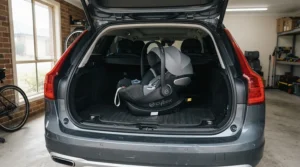
Features That Actually Matter (And Those That Don’t)
Matter: a base or belt route you can install correctly every time, a harness that tightens easily, a headrest or insert that fits a newborn, and weight you can live with. Which? crash-tests seats in both a front simulation (around 31mph) and a side simulation (around 37mph), which is more demanding than many baseline standards.
Matter somewhat: rotation and recline. They’re comfort and convenience features, so don’t confuse them with crash performance.
Mostly marketing: fabric talk. Bamboo on the Silver Cross Dream i-Size and merino on the Nuna Pipa Next feel lovely, but neither changes crash outcomes. Awards help only if you check who gave them and when. The Cybex Cloud T i-Size Plus ADAC badge was shared, for instance.
Long-Term Cost & Maintenance
| Seat | Seat only (approx.) | With base or system (approx.) | Best For |
|---|---|---|---|
| Nuna Pipa Next | £230–£325 | Base extra | Carry-heavy daily use |
| Joie i-Snug 2 | £100–£120 | Base extra | Lowest entry cost |
| Graco SnugLite i-Size | £75–£140 | Base extra | Budget rotating route |
| Maxi-Cosi CabrioFix i-Size | £130 | Around £200 | Everyday value |
| Maxi-Cosi Pebble 360 Pro2 | Mid-£200s | £450–£500 | Longest-lasting base |
| Cybex Cloud T i-Size Plus | £230–£250 | Low £400s | Cybex pushchair users |
| Silver Cross Dream i-Size | £200–£250 | £300–£430 | Silver Cross families |
Spread over a baby seat’s 12 to 18 months, a roughly £200 setup works out at around £13 a month, while a £450 setup is nearer £30. The question is what the extra buys. Bases that carry into the toddler years are where a pricier system can claw value back, as with Maxi-Cosi Pebble 360 Pro2 and Cybex Cloud T i-Size Plus. Prices vary by retailer and date, so check current figures.
Maintenance costs little: wipe-clean harnesses, check washing instructions, and register the warranty.
Common Mistakes When Buying an i-size Infant Car Seat
Buying on looks. A seat that photographs beautifully but doesn’t sit right in your car is a false economy.
Skipping the test-fit. Check ISOFIX points and rear space before you pay.
Buying second-hand. You can’t verify a seat’s crash history, and Which?’s second-hand car seat warning explains why that risk isn’t worth the saving.
Moving up too early or too late. Which? advises changing seats when the crown of your baby’s head reaches the top of the seat, so check height, not just age.
Forgetting belt-install caveats. Some listings note that i-Size classification can depend on using the matching base, as with the Silver Cross Dream i-Size, so read your manual.
Safety, Regulations & UK Law
UK law requires a suitable car seat until your child is 12 years old or 135cm tall, whichever comes first. The seat must carry the approval label showing a capital E in a circle plus either R129 or ECE R44. For babies, R129 seats are rear-facing until over 15 months, and manufacturers set their own height and weight limits within that.
Beyond the legal minimum, installation is where most real-world risk lives. A correctly fitted mid-range seat beats a poorly fitted premium one every time. Check the base indicators, follow the manual’s recline guidance, and recheck as your baby grows. UK-approved seats are marked for UK use, so don’t import seats from outside the approved system.
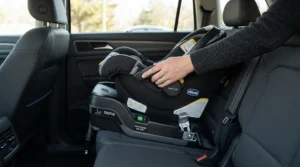
FAQ: i-size Infant Car Seat Questions
❓ Can I fit an i-size infant car seat with a seat belt instead of ISOFIX?
❓ Is a second-hand i-size infant car seat safe to buy?
❓ Do I really need the newborn insert in a baby car seat for newborns?
❓ Does a rotating base make a lightweight baby car seat safer?
❓ Can I take an i-size infant car seat on a plane?
Conclusion: Which i-size Infant Car Seat Should You Choose?
There’s no single best i-size infant car seat, only the best one for your car, stairs and budget. If carrying ease is everything, the Nuna Pipa Next is hard to beat at 2.8kg. For sensible, independently tested value, the Maxi-Cosi CabrioFix i-Size is the safe bet. The Joie i-Snug 2 and Graco SnugLite i-Size keep costs down while staying light, though their 75cm limits mean you’ll upgrade sooner.
If comfort and a long-lasting base matter more than weight, look at the Maxi-Cosi Pebble 360 Pro2 or Cybex Cloud T i-Size Plus. And if your pushchair is already a Silver Cross, the Silver Cross Dream i-Size completes the set.
Whichever you pick, do three things: test-fit it in your car, practise the install before your baby arrives, and recheck the fit every few weeks. A well-fitted seat in a modest budget bracket will always beat an unfitted premium one.
Recommended for You
- Baby Car Seat That Fits Pushchair: 7 Essential Picks (2026)
- Value Pushchair For Newborn: 7 Smart Budget Picks (2026)
- Value Double Pushchair: 7 Proven UK Picks Without Overspending (2026)
Disclaimer: This article contains affiliate links. As an Amazon Associate, I earn from qualifying purchases. If you purchase products through these links, we may earn a small commission at no additional cost to you.
✨ Found this helpful? Share it with your friends! 💬🤗
