In This Article
What is a value pushchair for newborn use? It’s a budget-conscious pram or pushchair that is safe from birth. It has a flat or near-flat lie-back position or a carrycot, a recognised safety label and sensible everyday features, all without premium-brand pricing. The goal isn’t the lowest sticker price. It’s the most reliable newborn protection per pound.

Here’s the awkward truth. Walk into any baby shop and the shelves are crammed with gleaming frames that look identical and cost wildly different amounts. Some are brilliant. Some are fine for a six-month-old but wrong for a tiny, floppy newborn. A few look like bargains until you add the carrycot, the car seat adaptors and the rain cover.
According to Which?’s pushchair buying guide, not every pushchair suits a newborn, because very young babies can’t support their own weight. So the first job is separating “cheap” from “cheap and newborn-ready”.
This guide does that. We look at seven real options across the budget-to-mid range. We unpack the best value travel system and best value pushchair with car seat question, and we look at newborn recline on a budget. We also cover value carrycot options and safety certification on budget buggies. Where reviews or specs couldn’t be verified for a product, I say so rather than papering over it.
Quick Comparison: Seven Value Options at a Glance
| Product | Type | Newborn Setup | Price Range (check current) | Best For |
|---|---|---|---|---|
| Maxi-Cosi Zelia3 Luxe | 2-in-1 travel system | Bassinet mode, then seat | Mid-£300s | First-time parents wanting one box |
| Ickle Bubba Atom | Travel system bundle | Car seat on chassis | Around £400 (bundle) | City living and quick folding |
| Joie Chrome DLX | Pushchair, bundle options | Carrycot/car seat via bundle | £200s (chassis), more with bundle | Flexible, build-your-own set-ups |
| Cosatto Woosh 4 | Lightweight pushchair | Confirm from-birth recline | Around £150 | Second buggy or tight budgets |
| Joie Versatrax | Larger-wheel pushchair | Carrycot via compatible kit | £300-£400 range | Rough pavements and country lanes |
| Cosatto Wow 3 | Compact pushchair | Carrycot/car seat compatible | £250-£350 range | Style-conscious, small boots |
| Graco Evo | Pushchair/travel system | Check bundle contents | £200-£300 range | Tight budgets with big-brand backing |
Prices are ranges at the time of research and may vary, so check current listings. The Maxi-Cosi Zelia3 Luxe and Ickle Bubba Atom are the “everything in the box” answers, which makes them the simplest route for new parents. The Joie Chrome DLX and Joie Versatrax reward people willing to assemble a system piece by piece. The Cosatto Woosh 4 is the budget wildcard, brilliant as a second buggy but only a newborn option if the recline checks out.
💬 Just one click — help others make better buying decisions too!😊
Top 7 Value Pushchair for Newborn Options: Expert Analysis
1. Maxi-Cosi Zelia3 Luxe — complete travel system at a modest price
The Maxi-Cosi Zelia3 Luxe earns its place by bundling the essentials, rather than leaving you to hunt for compatible parts.
Its headline design is a two-in-one seat that starts life as a newborn bassinet and converts to a regular seat from around six months. In practice, that means one frame, one fold and no separate carrycot to store. Mumsnet’s testers rated it one of the cheapest complete travel systems on the market, at around £370, so it sits comfortably in the mid-£300s.
On paper, this suits parents who want a single purchase and a recognisable brand. A bassinet-style newborn mode is usually smaller than a standalone carrycot, so check the internal length against your baby’s likely growth over the first four to five months. The spec sheet won’t tell you how roomy it feels, so look for photos with a newborn-sized doll or ask a shop to let you try it.
I couldn’t verify a large pool of independent owner reviews for this model, so treat the Mumsnet testing as the main evidence. Parents repeatedly praise Maxi-Cosi’s brand backing and spare-part availability, but check retailer pages for current feedback.
Pros:
- ✅ Complete system reduces compatibility headaches
- ✅ Bassinet converts to a regular seat
- ✅ Established brand with spares and support
Cons:
- ❌ Bassinet mode may feel snug as baby grows
- ❌ Check folded size against your boot
Price range and verdict: Mid-£300s. Strong value if you want a single-purchase solution.
2. Ickle Bubba Atom — budget travel system that folds in a flash
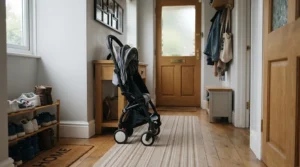
The Ickle Bubba Atom wins on simplicity, and it stays light enough to be genuinely practical.
Mumsnet’s review team describes a full travel system with car seat and base for around £400. The frame weighs roughly 9kg, which is lighter than many travel systems. That figure matters most on stairs, in bus doorways and when you’re lifting it into a boot while holding a baby.
Car seat transfer is described as easy, which is the feature you’ll use dozens of times in the first weeks. The flagged downside is limited sunshade coverage on the car seat, a real consideration in hot summers. A clip-on parasol or muslin (never draped over the seat, as heat can build up) is the usual fix.
Reviewer sentiment I could verify comes from the Mumsnet testing, where a new mum rated it as a genuinely practical, budget-friendly option. I couldn’t verify a statistically meaningful pool of retailer ratings, so view this as a well-regarded rather than proven pick.
Pros:
- ✅ Full travel system with car seat and base
- ✅ Around 9kg, easy for urban lifting
- ✅ Simple car seat transfer
Cons:
- ❌ Limited sunshade on the car seat
- ❌ Not the cheapest if you only need a frame
Price range and verdict: Around £400 for the bundle. Good value for a ready-made, city-friendly system.
3. Joie Chrome DLX — flexible build-your-own budget favourite
The Joie Chrome DLX is the classic “mix and match” budget route, where you pay for what you need.
One older Mumsnet roundup called it a steal at under £300 for the pushchair, and around £490 once a carrycot and car seat were added. Those figures are historic, so check what a current bundle includes before assuming the same maths applies. The principle holds, though: buy the chassis, then add a carrycot or car seat, rather than paying for a mega-bundle you won’t use.
Joie is also one of the brands Which? lists among its Best Buy pushchairs at £300 or under, though that is brand-level, and model-level scores sit behind its paywall. I can’t confirm a specific Which? score for this model.
The flexibility cuts both ways. The more components you buy separately, the more you must check adaptors and compatibility. Build your list on paper before ordering.
Aggregated owner feedback on this model is plentiful across retail sites, but I couldn’t verify current review counts or ratings. Look for recurring themes on fold, weight and ride quality rather than the headline star score.
Pros:
- ✅ Buy only the components you need
- ✅ Joie has a good budget-range reputation
- ✅ Wide carrycot and car seat compatibility
Cons:
- ❌ Requires careful adaptor checking
- ❌ Bundle prices have shifted since older reviews
Price range and verdict: Chassis in the £200s, more with a bundle. Great for planners.
4. Cosatto Woosh 4 — cheapest credible second buggy
The Cosatto Woosh 4 is the bargain of this list, with a personality to match.
Which? lists it among its low-cost pushchair examples at around £150, and notes that Cosatto designs are always eye-catching thanks to bright colours and unique prints. For a parent watching every pound, that’s an impressive combination of price and style.
Here is the caveat. A buggy-style frame is often brilliant from six months, but not always right for a newborn. Before buying, confirm the listing states from-birth suitability and check the recline angle (see the recline section below). If you can’t verify it, treat the Cosatto Woosh 4 as a second buggy for later.
I couldn’t verify detailed owner reviews on newborn use, so I won’t pretend otherwise. The Which? description is the main verified source here.
Pros:
- ✅ Very low price for a branded buggy
- ✅ Distinctive, colourful designs
- ✅ Light enough for quick errands
Cons:
- ❌ Newborn suitability must be confirmed
- ❌ Fewer bundled extras than travel systems
Price range and verdict: Around £150. Superb value as a lightweight second buggy; check newborn suitability before using it as a first.
5. Joie Versatrax — larger wheels for rougher pavements
The Joie Versatrax is aimed at parents whose daily walks include kerbs, cobbles or park paths, rather than smooth shopping centres.
Larger wheels generally smooth out bumps, which matters for newborns who are best kept settled and flat. If your route is rough, that ride quality can be worth more than a lighter frame. Joie also appears among Which?’s Best Buy brands in the £300-and-under group, though I can’t confirm a model-specific score.
Newborn use usually relies on a compatible carrycot or lie-flat seat, so verify exactly which components fit and are included. Specs vary by bundle, and mismatched adaptors are the classic budget-buyer headache.
I couldn’t verify a robust pool of current owner reviews, so rely on retailer pages for the latest feedback, especially on fold and weight.
Pros:
- ✅ Bigger wheels suit uneven surfaces
- ✅ Joie has strong budget-range credentials
- ✅ Compatible carrycot and car seat options
Cons:
- ❌ Likely heavier than city-focused frames
- ❌ Check adaptor compatibility carefully
Price range and verdict: Roughly £300-£400. Worth it only if your walks justify the bigger wheels.
6. Cosatto Wow 3 — compact fold with serious style
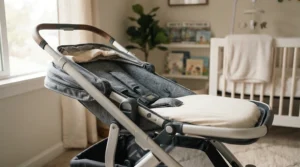
The Cosatto Wow 3 suits parents who want a smaller footprint without looking like they’ve settled for a basic model.
Compact folding is the quiet hero for small hallways and tiny boots, where a bulky travel system turns every trip into Tetris. Cosatto’s prints and colourways also keep it popular with parents who care about aesthetics.
Check which carrycot and car seat options are compatible and what adaptors you’ll need. As with any pram-style system, the cost can creep upward once you add them, so total the bundle before you compare with a ready-made option.
I couldn’t verify current review counts or detailed newborn feedback. If newborn use is your priority, read recent retailer reviews for comments on recline, bump absorption and sun hood coverage.
Pros:
- ✅ Compact fold for small spaces
- ✅ Eye-catching Cosatto designs
- ✅ Carrycot and car seat options available
Cons:
- ❌ Add-ons can inflate the total cost
- ❌ Verify the newborn configuration carefully
Price range and verdict: Around £250-£350. Good value when compactness and style matter.
7. Graco Evo — big-brand backing on a tighter budget
The Graco Evo sits at the practical end of the list, a name many parents recognise from supermarket and department store shelves.
Which? says its Best Buy list includes Graco among 12 options costing £300 or less, though that is brand-level evidence, and I can’t confirm a specific score for this model. It’s a reminder that cheaper doesn’t automatically mean worse, but also that each model must be judged individually.
Check whether your chosen bundle includes a car seat or carrycot, and confirm the recline for newborn use. Graco’s frames are typically straightforward rather than flashy, which keeps costs sensible.
I couldn’t verify a strong pool of current owner reviews, so judge it on the bundle details and recent retailer feedback.
Pros:
- ✅ Familiar brand with wide availability
- ✅ Sensible pricing for the category
- ✅ Straightforward, no-frills design
Cons:
- ❌ Newborn configuration needs checking
- ❌ Less distinctive than Cosatto designs
Price range and verdict: Around £200-£300. Reasonable value if the bundle suits your needs.
How to Choose a Value Pushchair for Newborn: 6 Steps
- Start with the car seat. Which? advises choosing the car seat first, because it must fit your car and your pushchair. Everything else flows from that choice.
- Check from-birth suitability. Look for a carrycot, a bassinet, or a seat that reclines flat enough. Don’t assume.
- Compare the bundle, not the chassis. A cheap frame with expensive add-ons can cost more than a complete travel system.
- Weigh the fold and weight. If you live up stairs or in a flat, lightness trumps features.
- Confirm the safety label. Look for BS EN 1888 on the frame or seat pad.
- Think about month seven. Ask what happens once the carrycot is outgrown, because a good value pushchair for newborn use should also work for toddlerhood.

Best Value Travel System: What Your Money Actually Buys
A travel system is simply a pushchair that works with a baby car seat. Some also take a carrycot. The attraction is obvious: you move a sleeping baby from car to pushchair without waking them.
Value is where it gets tricky. A bundle like the Ickle Bubba Atom or Maxi-Cosi Zelia3 Luxe packs the essentials in one box, but you pay for items you may not need. A build-your-own approach with the Joie Chrome DLX gives more control but demands careful compatibility checking.
Mumsnet’s travel system testing is a useful benchmark, because it combines parent feedback with hands-on assessment. Notice its emphasis on easy car seat transfers and manageable weight, rather than flashy extras.
The best value travel system is the one that matches your actual life. If you drive daily, a lightweight car seat and easy clip-in matter most. If you’re mostly walking, prioritise the pushchair seat unit and fold. Always add up the full cost, including adaptors, before comparing bundles.
Best Value Pushchair with Car Seat: Making the Maths Work
Buying a pushchair with a car seat in one purchase is usually cheaper than buying separately, but not always. The key is checking what’s in the box.
Which? reports that its cheapest Best Buy travel system retails for £150, while the average Best Buy single pushchair or pram is £547. Its analysis of how much you need to spend also found 12 Best Buys at £300 or less, including brands like Joie, Cybex and Graco. In other words, budget doesn’t have to mean compromise.
Here’s a practical test. List the car seat, the pushchair seat and the carrycot or lie-flat option you need. Price each separately, then compare with the bundle. If the bundle saves money and includes everything, great. If it leaves out adaptors or a rain cover, the gap narrows quickly.
Also remember that a car seat has a limited lifespan. Which? recommends not keeping a baby in a car seat for more than two hours at a time, unless it’s a lie-flat seat, so plan for the pushchair seat or carrycot as the main sleeping and resting space.
Newborn Recline on a Budget: What to Check
A newborn can’t hold up their own head or back, so the position matters. Which? says a from-birth seat should recline 150 degrees or more. That’s the benchmark to hold cheaper models against.
On a budget, recline is where corners are often cut. Many lightweight buggies recline enough for older babies but not for newborns. Even where a listing says “from birth”, compare the exact degrees if the manufacturer publishes them, and look for a firm, flat sleeping surface.
Three quick checks help. First, does the seat lie close to flat, rather than just tilting back? Second, is there a newborn insert or pack, and is it included? Third, does the harness fit snugly around a very small body?
If any answer is unclear, a carrycot or bassinet is the safer route. That’s why products like the Maxi-Cosi Zelia3 Luxe with its bassinet mode appeal to value shoppers, and why the Cosatto Woosh 4 needs the extra check. A good newborn recline on a budget is achievable, but only if you verify rather than assume.
Value Carrycot Options: Bundled, Add-On, or Skip?
A carrycot gives a newborn a flat, enclosed place to sleep during walks. The value question is whether you need one at all.
Bundled carrycots come with the system and guarantee compatibility. Add-on carrycots let you spread costs and choose a model, but demand adaptor checks. Skipping the carrycot works if the pushchair has a genuinely flat recline, but it means relying on that recline for longer naps.
Which? notes that most babies transition from a carrycot to a pushchair seat around six months. That’s a short window, and it explains why many value-focused parents choose a 2-in-1 option like the Maxi-Cosi Zelia3 Luxe, where the carrycot-style mode converts to a regular seat.
Cost per use is the best lens. If you’ll use a carrycot for around five months, daily, the cost per walk is tiny. If your baby is born in summer and you’ll mostly use the car seat and a flat-recline seat, you may not need one. Second-hand carrycots can also be sensible, but check the safety guidance in the next sections.
Practical Guide: Your First 30 Days With a Newborn Pushchair
The first month is when setup mistakes happen. Here’s a simple routine.
Before baby arrives: Assemble the pushchair, practise folding and unfolding it, and check the brakes. Fit the car seat to the chassis, and practise the clip-in and release with a bag of flour or a teddy of similar weight. It sounds silly, but fumbling in a car park with a real baby is worse.
Week one: Keep outings short. Use the carrycot or flattest recline, and check the harness is snug but not tight. Don’t hang heavy bags on the handles, as this can affect stability.
Weeks two to four: Build a routine. Check wheels for debris, wipe the frame, and make sure the sun hood and rain cover are accessible. If using a car seat on the chassis, keep time in it under two hours.
Common first-month mistakes: Draping blankets over the seat (heat risk), skipping the harness, and leaving the brake off on slopes. Small habits like these matter more than any feature on a spec sheet.

Real-World Scenarios: Matching Budget Pushchairs to Real Lives
The city flat parent. Third-floor flat, no lift, public transport most days. Weight and fold are everything, which points to the lighter Ickle Bubba Atom. Budget: around £400 for a bundle. Use: daily.
The first-time parent on a tight budget. Wants one purchase and no compatibility headaches. The Maxi-Cosi Zelia3 Luxe bundle simplifies things, with a mid-£300s budget and a car seat included. Use: daily, plus weekend drives.
The planner who hates paying for extras. Prefers building a system piece by piece. The Joie Chrome DLX chassis plus a carrycot and car seat, chosen separately, offers control. Budget: flexible, with an eye on adaptors.
The country-lane walker. Uneven paths, gravel and kerbs. The Joie Versatrax and its larger wheels may justify the extra weight. Budget: £300-£400 range.
The second-buggy shopper. Already has a travel system but wants something light for toddlerhood. The Cosatto Woosh 4 at around £150 is a smart add-on, once the baby is old enough for its recline.
Value Pushchair vs Premium Pram: Is the Extra Cost Worth It?
Premium prams are beautiful. They often have luxurious suspension, high-grade fabrics and impressive resale value. A value pushchair for newborn use, though, focuses on safety, function and sensible cost.
| Feature | Value Pushchair | Premium Pram |
|---|---|---|
| Typical price | Around £150-£400 | £600-£1,000+ |
| Safety standard | BS EN 1888 required | BS EN 1888 required |
| Weight | Often lighter | Often heavier |
| Fabrics and finish | Functional | More luxurious |
| Best For | Practical, budget-conscious parents | Parents prioritising luxury and resale |
Which? says its Best Buy single pushchairs average £547, and it has found 12 Best Buys costing £300 or less. So price isn’t a perfect proxy for quality. Both categories must meet the same safety standard, so what you’re paying for with a premium pram is mostly comfort, finish and brand.
For many families, a good value option plus the money saved for other baby essentials is the smarter play. If you love a premium design and have the budget, that’s fine too. Just don’t assume cost equals safety.
Long-Term Cost and Maintenance: Total Cost of Ownership
The sticker price is only part of the story. Add-ons, replacement parts and resale value all shape the real cost.
| Cost Factor | Value Bundle | Build-Your-Own |
|---|---|---|
| Upfront cost | One purchase | Several purchases |
| Adaptors | Usually included | Often extra |
| Spare parts | Brand-dependent | Brand-dependent |
| Resale | Moderate | Moderate |
| Best For | Simplicity seekers | Careful planners |
A bundle like the Ickle Bubba Atom gives certainty, while the Joie Chrome DLX route can save money if you shop carefully. Maintenance matters too: wipe the frame regularly, keep wheels clear of grit, and store the pushchair dry to prevent rust and mould.
Cost per use is the clearest measure. A pushchair used daily for two or three years costs pennies per walk, even at the upper end of the value range. Resale can also soften the cost, particularly for well-kept frames from recognised brands.
✨ Don’t Miss These Options!
🔍 Take your search for the right value pushchair for newborn use to the next level by comparing the seven picks above. Click on any highlighted product to check current pricing and availability. These choices will help you step out confidently on those first precious walks!
Safety Certification on Budget Buggies: What the Labels Mean
Here’s the reassuring bit. In Great Britain, all prams and pushchairs, new or second-hand, must be safe. According to Trading Standards guidance, one way to show this is compliance with BS EN 1888. A label confirming compliance should be on the frame or seat cover.
The current standard is BS EN 1888-1:2018+A1:2022 for pushchairs and prams, with BS EN 1888-2 covering pushchairs for children between 15kg and 22kg. If you see a pushchair with no label, walk away.
Warnings matter too. A seat unit that isn’t suitable for babies under six months must say so on the product. If a listing is vague on this, ask the retailer.
For second-hand buys, the same guidance recommends checking for sharp edges, harness condition, working parking brakes and overall stability. Upholstered pushchairs must also meet flammability rules under the Furniture and Furnishings (Fire) (Safety) Regulations 1988. Damaged or modified pushchairs may no longer meet the standard.
The bottom line: budget buggies can be perfectly safe, but only if the label is there. Never compromise on that.
FAQ: Value Pushchair for Newborn
❓ Can a lightweight buggy be used from birth?
❓ Is a second-hand pushchair safe for a newborn?
❓ How long will a baby use a carrycot?
❓ How long can a baby stay in a car seat on a pushchair?
❓ Should I buy the car seat or the pushchair first?
Conclusion: Spend Smart, Not Just Less
Choosing a value pushchair for newborn use isn’t about hunting the lowest price. It’s about matching a safe, well-made system to your life and your budget.
If you want simplicity, the Maxi-Cosi Zelia3 Luxe or Ickle Bubba Atom bundles are the straightforward route. If you like control, the Joie Chrome DLX gives you a flexible base. For rough routes, the Joie Versatrax earns a look. For tight budgets, the Cosatto Woosh 4, Cosatto Wow 3 and Graco Evo are worth checking, as long as you confirm newborn suitability and the bundle contents.
Before buying, check three things: the BS EN 1888 label, the newborn recline or carrycot, and the full cost of the system. Do that, and a budget price doesn’t have to mean a budget experience.
✨ Ready to compare?
Click through the picks above to check current prices and availability, then choose the system that fits your life!
Recommended for You
- Value Double Pushchair: 7 Proven UK Picks Without Overspending (2026)
- Best Value Pushchair: 7 Smart UK Picks Worth Buying (2026)
- Status Pushchair For City Parents: 7 Stunning Picks (2026)
Disclaimer: This article contains affiliate links. As an Amazon Associate, I earn from qualifying purchases. If you purchase products through these links, we may earn a small commission at no additional cost to you.
✨ Found this helpful? Share it with your friends! 💬🤗
