In This Article
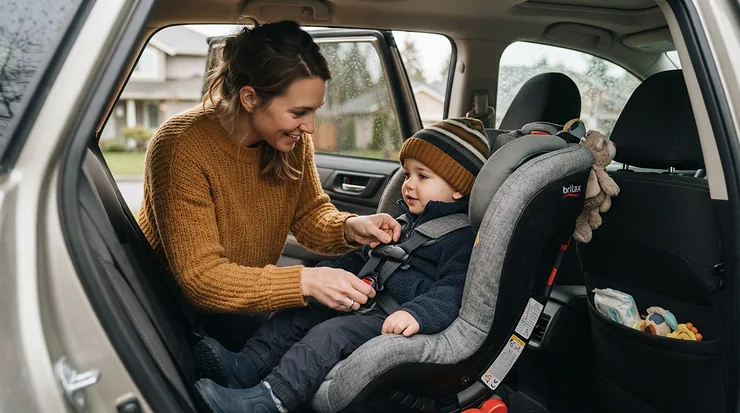
A rotating car seat swivels towards the car door so you can strap in a baby or toddler without contorting yourself, then clicks back to travel rear-facing. The Maxi-Cosi vs Cybex rotating car seat decision comes down to two UK-favourite ranges, both built on R129 i-Size standards and ISOFIX bases. 🚗

Here’s what the shop assistant rarely mentions: the first year is less about crash physics and more about your lower back. Lifting a wriggling baby through a hatchback door twenty times a week adds up fast. Rotation fixes that, at a cost. According to Which?, swivel seats typically cost £200-£400 and mostly weigh over 10kg, so the real question is whose compromises you can live with.
That is what this Maxi-Cosi vs Cybex rotating car seat guide untangles. Maxi-Cosi leans on SlideTech, a base that slides the seat towards you after it spins, plus soft, newborn-friendly padding. Cybex answers with strong independent crash scores, a tidy modular range and one of the better-value all-in-one swivel seats on the high street. Both have fans. Both have blind spots.
Below you’ll find seven real models, an honest read of the spec sheets and a pooled picture of what published reviewers report. Nothing here has been crash-tested by us, so every verdict is analysis built on specs and sourced reviews. Prices are ranges as of November 2026, so check current prices before buying.
Quick Comparison: Maxi-Cosi vs Cybex Rotating Car Seat at a Glance
| Product | Stage | Height range | Base | Best For |
|---|---|---|---|---|
| Maxi-Cosi Pebble 360 Pro2 | Infant carrier | 40-87cm | FamilyFix 360 Pro (separate) | Newborns, sliding-out loading |
| Cybex Cloud T i-Size | Infant carrier | 45-87cm | Base T (separate) | Lie-flat comfort, top crash score |
| Maxi-Cosi Pearl 360 Pro | Toddler seat | Approx. 3 months to 105cm | FamilyFix 360 Pro (separate) | Easy toddler loading, shared base |
| Maxi-Cosi Mica 360 Pro | Baby-to-toddler | 40-105cm | Built-in sliding base | One-seat-to-four-years buyers |
| Cybex Sirona Gi i-Size | Toddler seat | 61-105cm (40cm with inlay) | Built-in ISOFIX base | Value-minded families |
| Cybex Sirona T i-Size | Baby-to-toddler | 45-105cm | Base T (separate) | Cybex travel-system families |
| Maxi-Cosi Emerald 360 Pro | All-in-one | 40-150cm | Built-in sliding base | Buy-once-and-forget parents |
Looking at the table, the Cybex Sirona Gi i-Size is the cheapest route to four years of rotation, while the Maxi-Cosi Mica 360 Pro adds a sliding base for a mid-£300s outlay. Parents who want a lighter carrier for the first year will find the infant models in rows one and two more practical, and any Maxi-Cosi Pebble 360 review will tell you the same story. The Maxi-Cosi Emerald 360 Pro stands alone for sheer lifespan, which makes this Maxi-Cosi vs Cybex rotating car seat shortlist a genuinely varied one.
💬 Just one click — help others make better buying decisions too!😊
Top 7 Picks in the Maxi-Cosi vs Cybex Rotating Car Seat Showdown
Each pick in this Maxi-Cosi vs Cybex rotating car seat shortlist is judged on published specs, independent test results where public, and the aggregated sentiment of real reviewers. Prices are ranges, not quotes.
1. Maxi-Cosi Pebble 360 Pro2 — best newborn carrier for slide-out loading
The headline trick is the base: pair the seat with the FamilyFix 360 Pro and the whole carrier slides out of the car, so you load a sleeping baby without folding yourself into the footwell.
The seat covers 40-87cm and up to 13kg, and weighs around 4.7kg. In practice that is midweight for a carrier: liftable one-handed on a pushchair, but not featherlight. Three recline positions include lie-flat, and retailer listings say it is TÜV-approved for aircraft in every position. Maxi-Cosi’s own ADAC result is “Good” (2.2).
Based on the spec comparison, this suits parents expecting lots of short in-and-out trips with a newborn: the base does the heavy lifting, the carrier does the portability. The catch is shelf life. At 87cm you are done at roughly 15 to 18 months, so a second seat follows.
Reviewer sentiment is warm. In the Maxi-Cosi Pebble 360 review pages I could read, the pattern is consistent. Mumsnet’s testers used the earlier Pro model several times a week for two months and called it sleek and easy to travel with, while the Pro2 averaged about 4.9 out of 5 across 29 John Lewis reviews at the time of research. The recurring grumble is the price of the full system.
Pros:
- ✅ Slide-out base protects your back
- ✅ Lie-flat position for newborn sleep
- ✅ Midweight carrier for pushchair use
Cons:
- ❌ Base sold separately, adding real cost
- ❌ Outgrown by around 15 to 18 months
Price: mid-£200s for the seat alone, roughly £450-£500 with the base. Worth it if your back is the priority; check current prices.
2. Cybex Cloud T i-Size — best lie-flat comfort with a top crash score
Cybex’s infant carrier earns its place on crash data: Made for Mums reports an ADAC score of 1.7, rated “Good”, when the seat is used with the Base T.
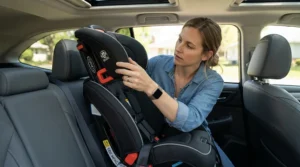
The seat fits 45-87cm and up to 13kg, weighing 4.5kg, with a 7.7kg base. That lightness matters when you are carrying a sleeping newborn from the hallway to the pushchair. Made for Mums lists rotation at 180° on the Base T, so it turns towards the door rather than spinning fully round, which is plenty for loading. The lie-flat setting suits tiny babies, and the deep, cocooning shell keeps them snug.
Here’s what to weigh: the Base T also takes the Cybex Sirona T, so you can step up to a toddler seat without buying a second base. That modular logic is the Cybex sales pitch, and on paper it holds up.
Parent testers quoted by Made for Mums described the deep seat as cocooning and said the carrier lifted out without waking baby. One felt the price was justified. Made for Mums rated it 4.7 stars.
Pros:
- ✅ Strong ADAC 1.7 score with Base T
- ✅ Lie-flat setting and breathable fabrics
- ✅ Works with travel systems and Sirona T
Cons:
- ❌ Expensive for an infant-only seat
- ❌ Shorter lifespan than all-stage seats
Price: around £400 with the Base T. Strong value if you will use the base again; check current prices.
3. Maxi-Cosi Pearl 360 Pro — best for easy toddler loading
Where the Pebble stops at 87cm, the Pearl carries on to roughly four years, using the same FamilyFix 360 Pro base, which is why parents often buy them as a pair.
Maxi-Cosi lists it from around three months, so check the height range against your own newborn. It offers five recline positions, an adjustable headrest with nine positions and one-hand FlexiSpin rotation, plus the SlideTech sliding base. Maxi-Cosi’s ADAC result is “Good” (2.1), the lowest score of the three Pro models Maxi-Cosi lists. Installation is ISOFIX only, which removes the belt-routing guesswork.
Analytically, this is the model for parents who want rotation to survive the toddler years, when buckling a squirming two-year-old is genuinely harder than any newborn. It is not lie-flat, so it is a poor stand-alone newborn choice.
Mother&Baby’s testers found it easy to use and install and gave it a Silver at the 2024 awards; Made for Mums picked it for easy use with a toddler. A small French parent panel averaged 4.7 out of 5, though one tester found the rotation occasionally awkward.
Pros:
- ✅ Rear-facing to roughly four years
- ✅ Nine headrest positions grow with child
- ✅ Shares the base with the Pebble 360 Pro2
Cons:
- ❌ Not lie-flat for newborns
- ❌ Seat plus base costs a lot
Price: roughly £400-£550 with the base, depending on retailer. Pricey, but cheaper if you already own the base.
4. Maxi-Cosi Mica 360 Pro — best all-in-one with a built-in sliding base
One seat, one purchase, no base to buy: the Mica 360 Pro has a sliding base built in, with a newborn inlay for birth onwards.
It covers 40-105cm and up to 18kg, with five recline positions, nine headrest positions and a one-hand 360° spin. The catch is weight: around 14.9kg. Made for Mums noted that nearly 15kg will put you off reinstalling it often. Maxi-Cosi’s ADAC result was “Good” (2.2), described as best in class for baby-to-toddler seats.
Here’s the practical read: this is a one-car-family seat. Install it, leave it, and enjoy the slide. If you swap cars weekly, look elsewhere. It also cannot be detached for a pushchair, so you will need a separate pram solution for the early months.
Mumsnet’s tester used it with a newborn for three months across two cars, including a VW Golf, and found installation straightforward. John Lewis shows around 4.6 out of 5 from 32 reviews. Mother&Baby described installation as a breeze.
Pros:
- ✅ Built-in sliding base, nothing extra to buy
- ✅ Newborn to approx. four years
- ✅ Straightforward installation reported by testers
Cons:
- ❌ Nearly 15kg, awkward to move
- ❌ No detachable carrier for pushchairs
Price: mid-£300s. Fair value for a one-car family; check current prices.
5. Cybex Sirona Gi i-Size — best value rotating seat to four years
The Sirona Gi is the model that drags Cybex into mid-market territory, giving you a rotating, rear-facing seat for a four-year span at a noticeably lower outlay than its stablemates.
It fits 61-105cm (from 40cm with a separately bought newborn inlay) and up to 20kg, weighing 13kg with its integrated ISOFIX base. Cybex cites a “best in class” result in the May 2024 ADAC and Stiftung Warentest round, though I could not verify the numerical score. Linear Side-impact Protection and all-round ventilation channels are standard. Forward-facing becomes an option from 76cm.
Analytically, the Sirona Gi suits cost-conscious parents who want rotation without a base purchase. The trade-off: it sits at 13kg and is a big seat for small cars.
Mumsnet’s reviewer praised the 360-degree rotation as a game-changer, but found the mechanism stiff, saying a Joie model rotated more smoothly. Made for Mums liked the ventilation and multiple recline positions, while flagging the price and size.
Pros:
- ✅ Rear-facing up to 105cm and 20kg
- ✅ Integrated base, no separate purchase
- ✅ Strong ventilation and side-impact protection
Cons:
- ❌ Rotation mechanism reported as stiff
- ❌ Large for compact cars
Price: roughly £215-£250 at the time of research. The strongest value on this list.
6. Cybex Sirona T i-Size — best for Cybex travel-system families
The Sirona T is the toddler half of Cybex’s modular pairing: it clicks on to the same Base T as the Cloud T, so you only buy one base across both stages. Anyone reading a Cybex Sirona review should note that pairing early.
It covers 45-105cm, with 12 headrest positions and covers that wash at 30°C. With the base it weighs around 15kg. Its ADAC result is “Good” (2.3), according to John Lewis’s listing, which leaves it a touch behind the Cloud T’s 1.7 but comfortably in the same band. It rotates fully with the Base T and keeps children rear-facing to about four.
Here’s what to weigh: if you are already committed to a Cybex pushchair or the Cloud T, the Sirona T is the obvious sequel. If you are starting fresh, the Sirona Gi is cheaper and the Mica 360 Pro has the slide.
John Lewis shows about 4.6 out of 5 from 14 reviews, a small sample worth treating cautiously. A retailer review from Chelsea Baby positions it for parents who want extended rear-facing travel and a seat that grows with the child.
Pros:
- ✅ Shares Base T with the Cloud T
- ✅ 12 headrest positions for fine fit
- ✅ Rear-facing to roughly four years
Cons:
- ❌ Base T is an additional cost
- ❌ Heavy at around 15kg with base
Price: Which? lists roughly £450-£500 with the Base T. Best value only if you reuse the base.
7. Maxi-Cosi Emerald 360 Pro — best birth-to-12-years longevity
If “buy once” is your mantra, this is the extreme answer: a rotating seat designed to last from 40cm up to 150cm, roughly birth to 12 years.
It weighs about 15.5kg, takes up to 36kg, rear-faces until four, and combines 360° rotation with SlideTech. The easy-in harness stays clear of the child during loading and the installation indicators are colour-coded. I found no public ADAC score for it, which is worth knowing before you spend.
Based on the spec comparison, it works best for a single primary car and parents who value never researching car seats again. It is very heavy and bulky, so small cars will struggle.
Made for Mums rated it 4.6 stars, and its tester said sliding the seat out after turning eased back strain and her baby seemed more comfortable. Netmums’ shopping editor named it best premium in a March 2026 roundup.
Pros:
- ✅ Usable from birth to around 12 years
- ✅ Rotation plus slide-out loading
- ✅ Colour-coded installation indicators
Cons:
- ❌ Very heavy and bulky
- ❌ No independent ADAC score found
Price: around £400 (about £380-£400 range). Good lifetime value, but check current prices.
Top 7 Specs at a Glance
| Product | Weight | Rear-facing to | Independent score | Price range | Best For |
|---|---|---|---|---|---|
| Maxi-Cosi Pebble 360 Pro2 | Approx. 4.7kg (seat) | 87cm | ADAC Good (2.2) | £450-£500 with base | Newborn back-saving |
| Cybex Cloud T i-Size | 4.5kg (seat) | 87cm | ADAC Good (1.7) | Around £400 with base | Crash-score seekers |
| Maxi-Cosi Pearl 360 Pro | Not verified | 105cm | ADAC Good (2.1) | £400-£550 with base | Toddler loading |
| Maxi-Cosi Mica 360 Pro | Approx. 14.9kg | 105cm | ADAC Good (2.2) | Mid-£300s | One-car families |
| Cybex Sirona Gi i-Size | 13kg | 105cm | Cybex cites best in class | £215-£250 | Value |
| Cybex Sirona T i-Size | Approx. 15kg with base | 105cm | ADAC Good (2.3) | £450-£500 with base | Travel-system families |
| Maxi-Cosi Emerald 360 Pro | Approx. 15.5kg | 4 years | None found | Around £400 | Longevity |
Remember that ADAC scores run lower-is-better, so the Cybex Cloud T i-Size leads on paper at 1.7, but tests were run in different rounds and are not a perfect like-for-like. The Cybex Sirona Gi i-Size gives the lowest entry cost, while the Maxi-Cosi Pebble 360 Pro2 and Maxi-Cosi Pearl 360 Pro only make financial sense as a pair on one base.
✨ Don’t Miss These Exclusive Deals!
🔍 Take your Maxi-Cosi vs Cybex rotating car seat shortlist to the next level with these carefully selected products. Click on any highlighted item to check current pricing and availability. These seats will help you create calmer, back-friendly car journeys your family will love!
Maxi-Cosi Pebble 360 Review: What Testers Actually Report
This Maxi-Cosi Pebble 360 review section gathers published verdicts in one place. Mumsnet’s reviewers used the Pro model multiple times a week for two months, noting the 4.7kg weight and a two-part inlay that is more refined than the older Pebble Plus. Made for Mums, in its roundup of the best swivel and 360° car seats, recommended the Pro as its slide-out base pick.
There are two generations to understand. The original Pebble 360 weighs 4.3kg, fits 40-83cm and works with the FamilyFix 360 base; shoppers on Trolley averaged about 4.3 out of 5 from 57 reviews across two shops. Which? says the updated Pebble 360 gives more room to grow than its predecessor. The Pro line adds compatibility with the sliding FamilyFix 360 Pro base and the higher 87cm limit, which is why a modern Maxi-Cosi Pebble 360 review usually focuses on the Pro2.
The honest limit of this Maxi-Cosi Pebble 360 review is that Which?’s detailed crash scores sit behind a paywall, so I cannot report them. Check them before buying. In short, the original suits tighter budgets, while the Pro2 earns its premium only if you will use the slide.
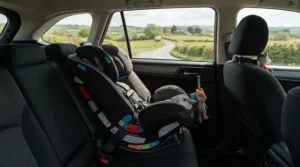
Cybex Sirona Review: Gi vs T in Plain English
Every Cybex Sirona review eventually boils down to one question: integrated base or modular base? That choice shapes the rest of any Cybex Sirona review you will read. The Gi i-Size has the base built in, spans 61-105cm and carries a 20kg limit. The T i-Size uses a separate Base T, starts at 45cm and scores “Good” (2.3) at ADAC per John Lewis’s listing.
This Cybex Sirona review draws on three sources. Mumsnet’s tester loved the rotation concept but found the Gi’s mechanism stiff, even though quality fabrics and a three-year warranty impressed. Made for Mums praised the Gi’s ventilation and recline range but called it pricey and potentially too big for small cars. Which? lists the Gi at roughly £215-£250 at major retailers.
Analytically, the Gi wins on price and simplicity, the T on flexibility. If you will buy the Cloud T first, the T completes the set. If you will buy only one seat, the Gi’s lower outlay is hard to beat. Another Cybex Sirona review might rank them differently, but the maths of base cost points the same way.
Maxi-Cosi vs Cybex Rotating Car Seat: Head-to-Head by Range
| Criteria | Maxi-Cosi | Cybex |
|---|---|---|
| Infant carrier | Pebble 360 Pro2: 40-87cm, lie-flat, around 4.7kg | Cloud T i-Size: 45-87cm, lie-flat, 4.5kg |
| Toddler seat | Pearl 360 Pro or Mica 360 Pro | Sirona T i-Size or Sirona Gi i-Size |
| Signature feature | SlideTech sliding base | Linear Side-impact Protection, lower entry price (Gi) |
| Independent scores | ADAC Good, 2.1-2.2 | ADAC Good, 1.7 (Cloud T), 2.3 (Sirona T) |
| Best For | Back-saving, loading ease | Crash-score focus, value (Gi) |
In this Maxi-Cosi vs Cybex rotating car seat matchup, whether you read a Cybex Sirona review or a Maxi-Cosi Pebble 360 review, Maxi-Cosi wins on loading ergonomics while Cybex has the lowest barrier to entry. An older Natural Baby Shower comparison of earlier ranges found Maxi-Cosi’s newborn seat lighter (4.3kg versus 4.8kg), while Cybex offered the higher weight capacity. Both brands list “Good” at ADAC, so treat independent scores as a safety floor, not a tiebreaker.
How to Choose a Maxi-Cosi vs Cybex Rotating Car Seat: 7 Steps
Choosing a Maxi-Cosi vs Cybex rotating car seat is easier with a checklist than with a spreadsheet of specs.
- Measure your car first. Check boot depth and rear-seat width; bigger seats like the Gi (71 x 44 x 75cm) need clearance.
- Pick your stage. Infant carrier, toddler seat or all-in-one each trade lifespan against weight.
- Decide on the base. Built-in bases (Gi, Mica, Emerald) avoid extra cost; separate bases enable modular upgrades.
- Check independent scores. Look at ADAC and Which? results; lower ADAC means better.
- Weigh the weight. Most swivel seats pass 10kg, so factor in how often you move them.
- Ask about forward-facing safeguards. Which? penalises seats that can be turned forward too early.
- Calculate cost per month. A mid-£300s seat over 48 months is roughly £7 a month.
Rotating Car Seat vs Fixed Rear-Facing Seat: Is Spinning Worth It?
Before you settle the Maxi-Cosi vs Cybex rotating car seat question, it is worth asking whether you need rotation at all.
| Aspect | Rotating seat | Fixed rear-facing seat | Best For |
|---|---|---|---|
| Loading | Turns to the door, easy on your back | Reach in at an angle | Rotating: bad backs, 2+ children |
| Weight | Usually over 10kg | Typically lighter | Fixed: moving between cars |
| Cost | £200-£400 typical | Usually less | Fixed: tight budgets |
| Forward-facing later | Spin to face forward without reinstalling | Reinstall | Rotating: flexibility |
The table shows rotating seats win on daily comfort, while fixed seats win on weight and price. Which? notes that some rotating seats must be unclicked from the base before turning, and that rotating seats without a lock against early forward-facing lose marks in its crash tests. For most families with a single main car, the Cybex Sirona Gi i-Size is the cheapest way to try rotation without much regret.
Features That Actually Matter (And Those That Don’t)
When comparing a Maxi-Cosi vs Cybex rotating car seat, filter the marketing from the engineering.
Matter: rotation that is truly one-handed, a sliding base if your back is already complaining, newborn support (an inlay or lie-flat), side-impact protection such as G-CELL or Linear Side-impact Protection, and breathable fabrics for summer.
Don’t: fabric names. Maxi-Cosi’s Twillic and Essential ranges differ mainly in materials and finish, not in crash performance, according to retailer descriptions. Cup holders and colour names are also marketing garnish.
A word on safety claims. Cybex advertises “up to 50% higher safety” for rear-facing travel, but that footnote compares rear-facing with forward-facing in the same seat using internal testing; it is not a Cybex-versus-Maxi-Cosi claim. Similarly, ADAC scores come from different test rounds, so use them as a rough guide only.
Even the most glowing Maxi-Cosi Pebble 360 review cannot tell you how a seat sits in your own car, so test the fit. Lastly, remember the seat only works if you use it correctly. Green installation indicators, a snug harness and a properly adjusted headrest matter more than any badge.

Safety, Regulations and the Law for Rotating Car Seats
Every Maxi-Cosi vs Cybex rotating car seat on this list follows UN R129 (i-Size), which sets seats by height and requires rear-facing until at least 15 months. GOV.UK sets the legal framework: look for the capital ‘E’ label with R129, and deactivate front airbags before fitting a rear-facing seat in the front. Children must use a seat until they reach 12 years or 135cm, whichever comes first.
Which? goes beyond the legal minimum, recommending rear-facing until about four where possible, and its crash tests are run at higher forces than the regulations demand. Most seats above are ISOFIX-only, so confirm compatibility using each brand’s car-fit tool before purchase.
Long-Term Cost and Maintenance: What You’ll Really Spend
Total cost of ownership is where a Maxi-Cosi vs Cybex rotating car seat comparison gets interesting. The Maxi-Cosi pairing (Pebble 360 Pro2 plus Pearl 360 Pro on one base) lands in the £750-£800 range, based on Mother&Baby’s bundle RRP. The Cybex pairing (Cloud T with Base T, then Sirona T) comes to roughly £700 on the figures above. The Cybex Sirona Gi i-Size alone costs roughly £215-£250, about £5 a month over four years.
The Maxi-Cosi Mica 360 Pro sits in the middle, around £7 a month on a mid-£300s outlay. Maintenance is light: both brands’ covers wash at 30°C, so budget an hour a month for cleaning, plus a harness check. Resale is trickier; since crash history is unknowable, buying second-hand is generally unwise.
Practical Usage Guide: Your First 30 Days with a Rotating Seat
Whichever Maxi-Cosi vs Cybex rotating car seat you buy, the first month sets your habits.
- Day one: Install on ISOFIX, extend the support leg and confirm every indicator is green. The Sirona Gi guide says to click the ISOFIX arms home and extend the load leg to its locking position.
- Week one: Practise rotating with an empty seat. Turn toward the door, buckle, rotate back and listen for the click.
- Week two onwards: Re-check the headrest and harness height regularly as your child grows.
- Common mistakes: Forgetting to rotate fully back, loose straps, and leaving the seat facing the door while driving.
- Maintenance: Machine-wash covers at 30°C and wipe the harness with a damp cloth.
For the Maxi-Cosi Pebble 360 Pro2 with the slide base, add one more habit: pull the carrier out slowly and check the lock indicators on return.
Real-World Scenarios: Which Seat for Which Family?
Three profiles show how the Maxi-Cosi vs Cybex rotating car seat choice plays out in practice, and how a Maxi-Cosi Pebble 360 review or Cybex Sirona review maps to real budgets.
The one-car city couple: A hatchback, two short trips a day, a newborn due next month. The Maxi-Cosi Pebble 360 Pro2 on a FamilyFix 360 Pro base, then the Maxi-Cosi Pearl 360 Pro at nine months. Budget: around £750 across both.
The grandparents’ second car: Weekly school runs, a larger SUV, and a child already two. The Cybex Sirona Gi i-Size is simpler to leave installed and cheaper than a second base.
The buy-once planner: One family car, a tight budget, a four-year horizon. The Maxi-Cosi Mica 360 Pro gives a sliding base built in at about £7 a month. If long-term outlay trumps convenience, the Maxi-Cosi Emerald 360 Pro covers up to 12 years.
Problem → Solution Guide: Common Rotating Car Seat Headaches
Most complaints about a Maxi-Cosi vs Cybex rotating car seat fall into five buckets, each with a practical fix.
- Sore back when loading: choose a SlideTech model such as the Maxi-Cosi Mica 360 Pro.
- Seat too heavy to move: pick the 4.5kg Cybex Cloud T i-Size carrier and keep a spare base in car two.
- Baby overheating: ventilation matters; the Sirona Gi has ventilation channels, Maxi-Cosi has ClimaFlow.
- Stiff rotation: reviewers describe it on the Sirona Gi, so check the mechanism in a shop where possible.
- Misusing forward-facing: Which?’s guide to UK child car seat laws is a handy reminder that rear-facing is required until at least 15 months.
Frequently Asked Questions
❓ Will a Maxi-Cosi or Cybex rotating car seat fit a small car?
❓ Can I take a rotating car seat on a plane?
❓ Is a Cybex rotating car seat cheaper than a Maxi-Cosi?
❓ Do I need to buy a separate base for a rotating car seat?
❓ Is it safe to buy a second-hand rotating car seat?
Conclusion
The Maxi-Cosi vs Cybex rotating car seat debate has no single winner, only better matches. Maxi-Cosi’s SlideTech models are the answer for sore backs and easy loading, with the Maxi-Cosi Pebble 360 Pro2 and Maxi-Cosi Pearl 360 Pro forming a natural pair. Cybex counters with the Cybex Cloud T i-Size for crash-score fans and the Cybex Sirona Gi i-Size for the lowest cost to four years.
If you need one seat for one car, the Maxi-Cosi Mica 360 Pro and Cybex Sirona Gi i-Size are the pragmatic picks. If you plan to buy once and never revisit, the Maxi-Cosi Emerald 360 Pro is your answer. Whatever you pick, confirm the fit, check the green indicators, and keep your child rear-facing as long as possible.
Hopefully this Maxi-Cosi Pebble 360 review and Cybex Sirona review have saved you a few evenings of tab-hopping, and given you a clear route through the Maxi-Cosi vs Cybex rotating car seat maze.
Recommended for You
- Cybex isofix Base Compatible Car Seats: 7 Trusted Picks (2026)
- Maxi-Cosi Isofix Base Compatible Car Seats: 7 Essential Bases (2026)
- Group 2-3 Car Seat With ISOFIX: 7 Best Picks For UK Families (2026)
Disclaimer: This article contains affiliate links. As an Amazon Associate, I earn from qualifying purchases. If you purchase products through these links, we may earn a small commission at no additional cost to you.
✨ Found this helpful? Share it with your friends! 💬🤗
