
In This Article
Here’s the uncomfortable truth nobody tells you at the baby shower: a pushchair is one of those purchases where the price tag and the panic don’t always match up. You’ve seen the £900 travel systems on Instagram, the ones with the matching parent organiser and the wheels that look like they belong on a mountain bike. And then you’ve looked at your actual bank balance. A genuinely usable pushchair under £100 exists, and it isn’t some dodgy knock-off held together with hope and gaffer tape — it’s a real, tested, EN 1888-compliant piece of kit that gets your toddler from the front door to the park without drama.

This guide digs into seven real, currently available options, weighs up what a lightweight pushchair under £100 can and can’t do, and is honest about where the compromises live. We’ll cover the best budget buggy under £100 for different lifestyles, the genuine budget pushchair trade-offs worth knowing before you click “buy,” how to think about safety on a budget, and the second-hand vs new budget buggy debate that every sleep-deprived parent eventually has at 2am on Facebook Marketplace.
A pushchair under £100 is a wheeled child conveyance built to UK/EU safety standards (typically BS EN 1888) that costs under £100 new, usually weighing 5.5–8kg and rated from birth or 6 months up to around 15–25kg. It won’t have the plush suspension of a £600 all-terrain pram, but for pavements, buses and the school run, it can be more than enough.
Quick Comparison Table
| Pushchair | Price Range | Weight | Best For |
|---|---|---|---|
| Red Kite Push Me 2U | Under £50 | 6.5kg | Rock-bottom budget, occasional use |
| Hauck Sport | £60-70 range | 5.9kg | Lightest overall, travel and holidays |
| My Babiie MB02 | £70-90 range | 7.9kg | Style-conscious parents on a budget |
| Joie Nitro | £85-100 range | 7.5kg | Big-brand reliability at a low price |
Looking across the table, the pattern is fairly predictable: the cheaper the pushchair, the lighter and more basic it tends to be, while the models nudging closer to the £100 ceiling start adding suspension, bigger weight limits and brand-name reassurance. The Hauck Sport stands out as the genuine weight-weenie’s choice, while the Joie Nitro trades a few pounds for the kind of engineering pedigree that usually costs three times as much elsewhere.
💬 Comparing your options already? One tap and you’ll see live prices side by side — no guesswork needed!😊
Top 7 Pushchairs Under £100: Expert Analysis
Budget buggies get a bad rap, mostly from people who’ve never actually used one past the first fortnight. The truth is more nuanced: below £100, you’re not buying a worse pushchair so much as a different priority list. Here are seven real, currently sold models that cover the full spread from bare-bones to nearly-premium.
1. Red Kite Push Me 2U — cheapest genuine option on the list
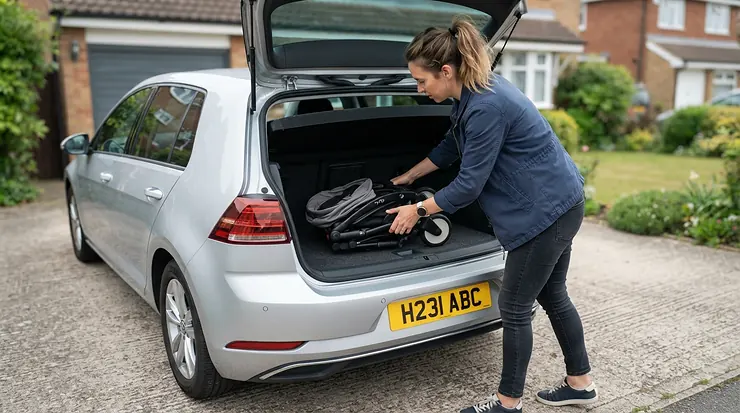
The Red Kite Push Me 2U is about as no-nonsense as pushchairs get, and that’s precisely the point. At well under £50, it strips away almost everything except what’s legally and practically essential — and somehow still throws in a raincover and shopping basket as standard. The frame weighs 6.5kg, comfortably lifted one-handed into a car boot, with an automatic locking clip that stops the fold springing open mid-carry, a genuinely annoying failure mode on cheaper strollers that this one avoids.
Reviewers and retailers consistently frame this as a second buggy or grandparents’-house buggy rather than a daily all-weather workhorse, and that’s exactly where it earns its keep — it’s not trying to be your only pushchair, and it shouldn’t be marketed as such. For a family who already owns a full-size travel system and just needs something cheap and cheerful for the childminder’s car, or a spare that lives permanently folded in the hallway cupboard, this is genuinely hard to beat on price.
Aggregated seller and retailer feedback on the Push Me 2U tends to highlight the value-for-money angle more than any standout feature, with reviewers describing it as functional rather than luxurious — which, at this price point, is precisely the deal being struck.
Pros:
- ✅ Genuinely under £50, the cheapest real pushchair in this lineup
- ✅ Raincover and shopping basket included, not sold separately
- ✅ Lightweight 6.5kg frame, easy to carry one-handed
Cons:
- ❌ No suspension, so rougher pavements transmit more jolts
- ❌ Basic recline range, less ideal for very young newborns
Price range: usually under £50. At this end of the market, the value verdict is simple — if you need a genuinely cheap backup buggy rather than a daily driver, it’s very hard to argue with.

2. Zeta Vooom — best bundle-included value for newborns
The Zeta Vooom has quietly built a cult following among UK parents looking for a lightweight pushchair under £100 that doesn’t nickel-and-dime you on accessories. Unlike many rivals that sell the footmuff and raincover as £15-20 add-ons, the Zeta Vooom typically ships with both included, which genuinely changes the total cost of ownership once you factor in what those extras would cost elsewhere.
Structurally, what most buyers overlook about the Zeta Vooom is the three-layer padded seat unit — a small detail on a spec sheet, but one that translates into a noticeably plusher ride for a newborn than the single-layer fabric used on some rivals at this price. The four-position recline and parent-facing viewing window on the hood are aimed squarely at younger babies, and the drop-down privacy hood is a genuinely useful feature for nap times that pricier strollers sometimes skip.
Aggregated reviewer sentiment on the Zeta Vooom is largely positive on comfort and value, though a recurring theme in customer feedback is variability in build quality — some buyers report wheel issues or a seat that feels snug once a toddler passes the one-year mark, which is worth flagging honestly rather than glossing over.
Pros:
- ✅ Footmuff and raincover bundled in, not sold as extras
- ✅ Three-layer padded seat, unusually plush for the price
- ✅ Four recline positions suit newborns particularly well
Cons:
- ❌ Some reviewers report inconsistent wheel and build quality
- ❌ Seat can feel snug once your toddler passes around 12 months
Price range: typically £45-80 depending on colourway and retailer. Given the included extras, the effective value proposition is stronger than the headline price alone suggests.
3. Hauck Sport — lightest frame in this entire roundup
If featherweight is your priority, the Hauck Sport is the one to beat. At just 5.9kg, it’s genuinely competitive with strollers costing two or three times as much on the weight metric alone — a detail that matters enormously if you’re regularly hauling a folded pushchair up stairs, onto buses, or through narrow shop doorways. Despite the minimal weight, Hauck hasn’t skipped suspension entirely: front and rear suspension is fitted, which on a sub-6kg frame is a genuinely unusual inclusion.
Based on the spec comparison, the Hauck Sport‘s swivel front wheels that lock in place when needed give it real versatility — agile for weaving through supermarket aisles, stable for longer straight-line pushes. It’s rated to 18kg total (15kg in the seat plus a 3kg basket allowance), and complies with the EN 1888 safety standard, the same benchmark used across the premium end of the market.
What reviewers consistently flag is the trade-off that comes with that low weight: the wheels are hard plastic rather than air- or foam-filled, so grass, gravel and cobbles transmit far more vibration than tarmac. This is a pavement pushchair, not an all-terrain one, and it’s honest about that from the spec sheet down.
Pros:
- ✅ Just 5.9kg — among the lightest pushchairs at any price
- ✅ Front and rear suspension fitted despite the minimal weight
- ✅ Ultra-compact fold, genuinely holiday and public-transport friendly
Cons:
- ❌ Hard plastic wheels struggle on gravel, grass or cobbles
- ❌ Smaller seat better suited to younger toddlers than older ones
Price range: around £60-70 on Amazon. For anyone weighing “lightweight pushchair under £100” as their single most important search term, this is arguably the strongest literal match on the list.
4. My Babiie MB02 — best style-conscious budget pick
My Babiie, the brand behind the MB02, has built its reputation on celebrity-designed prints and genuinely competitive engineering underneath the fashion-forward fabrics — and the MB02 distils that formula into a proper lightweight pushchair under £100. It was shortlisted at the Mother & Baby Awards for Best Lightweight Buggy/Stroller, which says something about how the wider parenting press views it relative to pricier rivals.
The spec sheet tells a story that’s more substantial than the trendy prints suggest: front and rear wheel suspension, a multi-position reclining seat, and a two-position adjustable leg rest that most sub-£100 competitors skip entirely. What most buyers overlook about the My Babiie MB02 is that the headline price already includes a raincover and cup holder — accessories that some rivals charge separately for, which quietly narrows the gap between this and pricier “complete bundle” travel systems.
Reviewers and the EN1888-1 & 2:2018 approval mark both point to the same conclusion: this isn’t a corner-cutting budget buy, it’s a genuinely engineered lightweight pushchair wearing a fashion-brand badge. The trade-off is weight — at 7.9kg it’s noticeably heavier than the Hauck Sport, though still very manageable for daily use.
Pros:
- ✅ Suspension front and rear, unusual at this price bracket
- ✅ Raincover and cup holder included as standard
- ✅ Shortlisted for a Mother & Baby industry award
Cons:
- ❌ Heavier than the Hauck Sport at 7.9kg
- ❌ Popular colourways can sell out and restock intermittently
Price range: typically £70-90, occasionally dipping closer to £70 in sales. The value verdict here is strong for parents who want their budget buggy to look as good as it functions.
5. Red Kite Push Me Explor — best compact fold for small cars
The Red Kite Push Me Explor targets a very specific problem: the boot of a small hatchback that simply won’t swallow a bulky pushchair. Its folded depth of just 22cm is genuinely narrow, and at 6.5kg it sits comfortably among the lighter options in this roundup without sacrificing too much in the way of everyday usability.
Here’s what the spec comparison reveals in practice — a compact folded footprint like this means you can realistically fit a weekly shop in the boot alongside the pushchair, something owners of bulkier all-terrain models often complain about on forums and in aggregated reviews. It’s a straightforward, no-frills design, which is honestly refreshing at a price point where some competitors overpromise on features they under-deliver on quality.
Reviewers highlight the ease of folding and the manageable size as the standout benefits, while being realistic that this isn’t a pushchair bristling with premium features — it’s a well-proportioned, boot-friendly option that does the fundamentals competently.
Pros:
- ✅ Extremely compact 22cm folded depth, ideal for small boots
- ✅ Lightweight 6.5kg build for everyday carrying
- ✅ Sits comfortably under £100 even at full retail price
Cons:
- ❌ Feature set is basic compared with suspension-heavy rivals
- ❌ Published spec detail is thinner than more established brands
Price range: around £95. For families whose primary pain point is boot space rather than terrain or luxury, this is a genuinely sensible pick.
6. Joie Nitro — best big-brand pedigree under £100
Joie is one of the more recognisable names in UK pushchair retail, with a wider catalogue that stretches well into the £300-plus travel-system territory — which makes the Joie Nitro an interesting case study in what a major manufacturer does when asked to hit a sub-£100 price point without gutting the engineering. The answer, based on the spec sheet, is: not much gets cut.
All-wheel suspension is fitted, which on rougher urban pavements genuinely smooths the ride in a way that budget-tier competitors without suspension simply can’t match. The UPF 40+ canopy offers real, measurable sun protection rather than a token strip of fabric, and the single-step “ShoeSaver” brake — designed to keep your shoes scuff-free when braking — is the kind of small ergonomic detail that only shows up when a brand has genuine design resource behind a budget line.
What the spec sheet won’t tell you, but aggregated reviewer sentiment across retailers suggests, is that buyers consistently rate the fold mechanism and overall build quality above what the price implies — a reasonable expectation given Joie’s wider reputation. The one genuine limitation is the weight capacity: it’s rated to around 15kg in the seat, suitable from birth to roughly three to four years, which is lower than some rivals rated to 22kg or more.
Pros:
- ✅ All-wheel suspension from a genuinely major pushchair brand
- ✅ UPF 40+ canopy offers real, verifiable sun protection
- ✅ ShoeSaver brake is a small but genuinely useful design touch
Cons:
- ❌ Seat capacity tops out around 15kg, lower than some rivals
- ❌ Storage basket is smaller than bulkier budget competitors
Price range: widely fluctuates between roughly £50 and £100 depending on retailer and sale timing, so it’s worth price-checking across a few sites. When it lands under £100, the brand pedigree alone makes it one of the strongest value picks here.
7. Cosatto Woosh 2 — best stretch pick when it dips under £100
The Cosatto Woosh 2 is the one genuine reach in this list, and it’s worth being upfront about that: its usual retail price sits above £100, typically in the £140-170 range at full price. It earns its place here because it regularly appears at or just under £100 during sales — Black Friday, January and Amazon Prime Day events routinely knock a meaningful chunk off pushchair prices — and because, when it does land in budget territory, it’s genuinely one of the most capable pushchairs on this entire list.
Independent testing body Which? notes the Cosatto Woosh 2 weighs 7.5kg and is world-facing, while its own specifications claim a 25kg weight capacity — a genuinely enormous figure that means this pushchair can realistically be used for years longer than rivals capped at 15-18kg. The UPF100+ hood is the strongest sun protection anywhere in this roundup, and the industry-leading four-year guarantee is unmatched by anything else on this list at any price.
Based on the spec comparison, what most buyers overlook about the Cosatto Woosh 2 is that its lightweight aluminium frame and one-hand concertina fold make it feel far more premium in daily use than the occasional sub-£100 sale price would suggest — you genuinely are getting a taste of the £150-200 tier when the discount lands right.
Pros:
- ✅ Rated to a huge 25kg weight capacity, lasting years longer
- ✅ UPF100+ hood offers the strongest sun protection here
- ✅ Four-year guarantee, unmatched elsewhere on this list
Cons:
- ❌ Only reliably under £100 during sales, not at full RRP
- ❌ Seat isn’t parent-facing, which some newborn parents prefer
Price range: usually £140-170, dropping toward or under £100 during major sales events. Worth watching rather than relying on, but a genuine standout if the timing works out.
Practical Usage Guide: Getting the Most from a Budget Pushchair
Buying the pushchair is only step one — how you use it in the first month genuinely determines whether it lasts two years or two months. Start by fully extending and collapsing the fold mechanism five or six times before you ever load your child in, purely to build muscle memory; budget pushchairs often have a slightly different locking action than premium models, and fumbling it one-handed at a bus stop with a screaming toddler is nobody’s idea of fun.
Check tyre pressure and wheel alignment monthly if your model uses air-filled tyres, and wipe down the frame joints every few weeks — grit and pavement debris are the leading cause of squeaky, stiff hinges on lightweight frames, and it’s a five-minute job with a damp cloth that saves a much bigger headache later. A common mistake in the first 30 days is over-tightening the harness “for safety,” which actually restricts a newborn’s natural movement; aim for two fingers of slack at the shoulder, adjusted as your baby grows.
Store the pushchair folded but not crushed under heavier items — the thinner frame tubing on budget models can develop a slight bend under sustained weight, which then throws off the fold alignment permanently. Finally, rotate which wheel takes the brunt of kerb impacts by occasionally swapping your usual pushing hand; it sounds trivial, but it noticeably extends wheel-bearing life on the cheaper plastic-wheeled models in this roundup.

Real-World Scenarios: Who Actually Suits a Sub-£100 Buggy?
Picture Aisha, a first-time mum living in a second-floor flat with no lift. Her priority isn’t terrain performance — it’s carrying a folded pushchair up two flights of stairs daily without throwing her back out. The Hauck Sport, at 5.9kg, is close to ideal here; anything heavier becomes a genuine daily chore rather than a minor inconvenience.
Then there’s the Patel family, expecting their second child and needing a spare buggy that lives at Grandma’s house for weekend visits. They don’t need suspension or a 25kg weight limit — they need something cheap, functional, and replaceable if it gets left out in the rain once. The Red Kite Push Me 2U or the Zeta Vooom, both comfortably under £80, suit this exact use case without over-investing in a buggy that’ll see occasional weekend use at best.
Finally, consider Tom, a dad commuting into central London on buses and the Underground several times a week with his 18-month-old. He needs genuine manoeuvrability in crowded spaces, a compact fold for tight bus aisles, and enough suspension to smooth out uneven pavements without needing a full all-terrain rig. The Joie Nitro, with its all-wheel suspension and brand-backed reliability, fits this scenario better than a bare-bones budget option would.
Budget Pushchair Trade-Offs: What You Actually Give Up
Every pushchair under £100 makes trade-offs somewhere — the question is whether those trade-offs matter to your specific life. The most common one is suspension quality: budget models either skip it entirely (the Red Kite Push Me 2U) or fit a simplified version that smooths tarmac but transmits far more on gravel or grass. If you live somewhere with well-maintained pavements, this barely registers; if your daily walk includes a muddy park path, it will.
Weight capacity is another quiet trade-off. Several models on this list, including the Joie Nitro, cap out around 15kg, which suits most toddlers up to roughly three years but won’t carry a heavier or older child comfortably. Compare that with the Cosatto Woosh 2‘s 25kg ceiling, and you can see why that model regularly retails above £100 — that extra capacity costs something to engineer.
Storage baskets tend to shrink as prices fall too, and reclining ranges are often more limited, with fewer intermediate positions between “upright” and “flat.” None of these trade-offs make a budget pushchair unsafe or unusable — they simply mean the £100 ceiling buys you the fundamentals well, without the refinements that premium pricing exists to fund.
How to Choose a Lightweight Pushchair Under £100
Picking the right budget pushchair comes down to matching a handful of practical criteria against your actual daily routine, not the marketing photos.
- Weigh your typical terrain honestly. If you’re mostly on smooth pavements, suspension matters less; if you cross grass or cobbles regularly, prioritise models with genuine front-and-rear suspension like the Hauck Sport or My Babiie MB02.
- Check the weight limit against your child’s age, not just today’s weight. A pushchair capped at 15kg will need replacing sooner than one rated to 22-25kg, which affects the real cost per year of ownership.
- Measure your car boot and stairwell before you buy. Folded dimensions vary more than headline weight suggests, and a pushchair that doesn’t fit your actual space is no bargain at any price.
- Confirm the safety standard on the listing. Look specifically for BS EN 1888 compliance, printed clearly on the product page or the item’s permanent label.
- Factor in bundled extras. A raincover, footmuff or cup holder included as standard can be worth £20-40 if bought separately, meaningfully shifting the real value comparison.
- Read aggregated review themes, not star ratings alone. A 4.3-star average tells you less than a recurring complaint about wheel wobble or a recurring compliment about fold ease.
- Decide whether this is a primary or secondary pushchair. That single decision reframes almost every other trade-off on this list.
Safety on a Budget: What Actually Matters
Safety on a budget doesn’t mean compromising — it means knowing exactly what to check rather than assuming price correlates with protection. Every legitimately sold pushchair in the UK, new or second-hand, must comply with BS EN 1888, the safety standard covering wheeled child conveyances, and RoSPA is clear that this compliance marking should be visible on the product regardless of price point. That’s the single most important thing to verify before any budget purchase, full stop.
Beyond the standard itself, RoSPA notes that most pushchair injuries historically trace back to a small handful of causes: faulty brakes, unstable frames, finger-entrapment points and flammable materials — none of which are exclusive to cheap models, and all of which are worth physically checking on any pushchair regardless of price. Pushchairs and buggies carry very high levels of safety overall, though injuries have happened to children, caused primarily by faulty brakes, flammable materials, unstable carriages and finger entrapments.
Every model in this roundup carries EN 1888 compliance where specified on its listing, and none of the trade-offs discussed above — lighter frames, simpler suspension, smaller baskets — relate to fundamental safety. A £45 pushchair with a working brake, a five-point harness and a stable frame is genuinely as safe, structurally, as one costing five times more; it’s simply less padded, less plush and less feature-rich around that safety core.
Second-Hand vs New Budget Buggy: Which Wins?
This is the debate every budget-conscious parent eventually has, usually while scrolling Facebook Marketplace at an unreasonable hour. Buying second-hand can genuinely undercut even the cheapest new pushchair on this list, sometimes by 60-70%, and RoSPA explicitly supports the second-hand pushchair market as a legitimate option, provided buyers exercise real caution rather than grabbing the first listing they see.
The consumer group Which? recommends a specific pre-purchase checklist for second-hand buys: request extra photos of any wear the listing mentions, physically test the fold mechanism several times before committing, and inspect the wheels closely for looseness. If you’re looking to bag a bargain when shopping on pre-owned marketplace sites, it’s worth checking the pushchair is safe and in good condition before you buy it, since there’s a sizeable market for second-hand pushchairs among parents wanting to save money.
A new budget buggy under £100, by contrast, comes with a manufacturer warranty, guaranteed current safety compliance and zero uncertainty about prior damage or recalls — genuine peace of mind that’s hard to put a price on for a first-time parent already anxious about every decision. The honest verdict: second-hand wins on raw price, particularly for a short-term or secondary pushchair, but new wins on certainty, and for a primary everyday pushchair carrying your only child, that certainty is often worth the extra spend.
Common Mistakes When Buying a Budget Pushchair
The single most common mistake is buying on price alone without checking the weight capacity against your child’s likely growth — parents frequently end up replacing a 15kg-capped pushchair within 18 months, effectively paying twice for what a slightly pricier 22kg-rated model would have covered in one purchase. A close second is skipping the fold-mechanism test entirely, whether buying new or second-hand; a stiff or awkward fold sounds minor in a shop but becomes a genuine daily frustration within a fortnight.
Many buyers also overlook storage basket size until they’re standing in a supermarket aisle unable to fit a week’s shopping underneath the seat — worth checking dimensions rather than assuming “basket included” means “basket adequate.” Finally, a surprisingly common error is ignoring the folded dimensions relative to car boot space, only to discover the pushchair genuinely doesn’t fit alongside a pram accessory or a second child’s buggy board.
Budget Buggy Under £100 for Specific Lifestyles
Public-transport-heavy parents should prioritise fold speed and compactness above almost everything else — the Red Kite Push Me Explor‘s narrow 22cm folded depth and the Hauck Sport‘s sub-6kg weight both suit this lifestyle particularly well. Parents doing regular car journeys, by contrast, can prioritise weight capacity and seat comfort over ultimate lightness, making the My Babiie MB02 or Cosatto Woosh 2 (when it dips under £100) stronger fits.
For grandparents or a second household needing occasional-use kit, the calculus flips entirely toward pure price and basic reliability — the Red Kite Push Me 2U or Zeta Vooom cover this use case comfortably without over-investing in features that will rarely get used. And for parents wanting one pushchair to genuinely see them through from newborn to preschool, the Cosatto Woosh 2‘s 25kg capacity offers the longest realistic runway of anything on this list, budget permitting.
Long-Term Cost & Maintenance
A pushchair’s real cost isn’t just its sticker price — it’s price divided by however long it actually lasts you. A £45 pushchair rated to 15kg that needs replacing after 18 months costs roughly £30 per year of use; a £95 pushchair rated to 22kg that lasts three years costs under £32 per year — genuinely comparable once you do the maths, which is why weight capacity deserves more attention than headline price alone.
Ongoing maintenance costs on budget models are generally minimal: replacement wheels typically run £10-20 per pair if bought as spares, and raincovers or footmuffs bought separately (where not already bundled) add another £15-25. Factor these into your total cost of ownership, particularly on models like the Red Kite Push Me Explor that don’t bundle as many extras as the Zeta Vooom or My Babiie MB02 do as standard.
Frequently Asked Questions
❓ Can you get a decent pushchair under £100?
❓ What's the lightest pushchair under £100?
❓ Is it safe to buy a second-hand budget buggy?
❓ How long does a budget pushchair usually last?
❓ Do cheap pushchairs have suspension?
Conclusion
A pushchair under £100 isn’t a compromise so much as a genuinely different set of priorities to a premium travel system — lighter frames, simpler suspension, smaller baskets, but the same fundamental safety standards underneath. Whether you land on the featherweight Hauck Sport, the bundle-heavy Zeta Vooom, or the brand-backed Joie Nitro, the honest answer to “which one’s best” genuinely depends on your stairs, your car boot, your terrain and whether this is a primary or secondary buggy.
What matters most, regardless of which model you choose, is checking that BS EN 1888 compliance marking, testing the fold before you commit, and being realistic about how long you actually need it to last. Get those three things right, and a sub-£100 pushchair will serve your family just as safely, if not quite as plushly, as one costing several times more.
Recommended for You
- Stroller For Special Needs Older Child: 7 Best UK Picks (2026)
- Pushchair High Weight Limit: 7 Best Sturdy Picks For 2026
- Pushchair for Older Child: 7 Sturdy Picks Parents Love (2026)
Disclaimer: This article contains affiliate links. As an Amazon Associate, I earn from qualifying purchases. If you purchase products through these links, we may earn a small commission at no additional cost to you.
✨ Found this helpful? Share it with your friends! 💬🤗
