In This Article
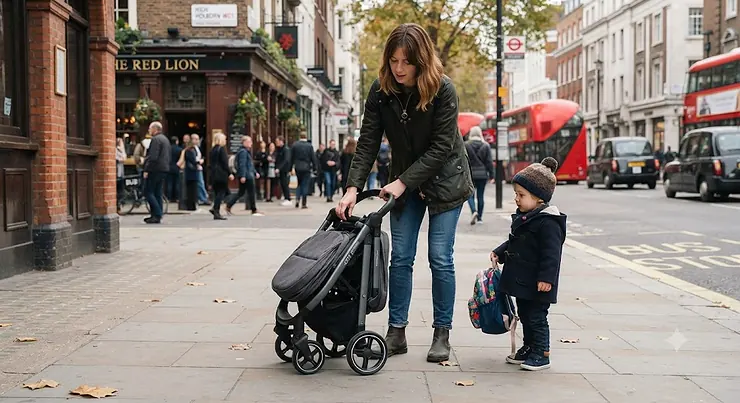
Somewhere between the third flight of stairs and the fifth failed attempt to wedge a full-size pram into a Fiat 500 boot, most parents have the same thought: there has to be something lighter than this. There is. The best lightweight pushchair for your family sits somewhere in a category that barely existed fifteen years ago – buggies built from aircraft-grade aluminium and high-tensile fabric that weigh less than an average carry-on suitcase, yet still fold flat, recline for naps, and survive the school run.

So, what is a lightweight pushchair? In practical UK terms, it’s a pushchair or stroller weighing under roughly 7-8kg, designed to be carried one-handed up stairs, folded in seconds, and stowed in small cars, narrow hallways or overhead lockers, without sacrificing the core comfort and safety features of a full-size travel system. Every model in this guide meets the UK’s BS EN 1888 safety standard, and we’d always encourage a quick read of RoSPA’s safety checks for pushchairs and buggies before you buy, new or second-hand.
This guide isn’t a rewritten spec sheet. We’ve dug into real product data, aggregated genuine review sentiment from parenting communities and retailer reviews, and weighed up seven actual models – from a £150 pocket-sized budget pick to a premium travel stroller that costs more than some prams. Whether you’re chasing the lightest buggy on the market, the best compact pushchair for a one-bed flat, or a lightweight stroller from birth that’ll still be earning its keep at three years old, you’ll find honest, specific analysis below rather than marketing fluff. Let’s get into it.
Quick Comparison Table: Lightweight Pushchairs At a Glance
| Buggy | Weight | Suitable From | Fold Type | Price Range | Best For |
|---|---|---|---|---|---|
| GB Pockit+ | ~5.7kg | 6 months | Two-hand, ultra-compact | Under £200 | Absolute lightest fold |
| Cosatto Yo! | 7kg | Birth | One-hand, freestanding | £150-£220 | Best budget from birth |
| Cybex Orfeo | 6.3kg | 6 months | One-hand, cabin fold | £350-£450 range | City & public transport |
| iCandy Pip | 7kg | Birth (car seat) | One-hand | Mid-£300s-£400s | Everyday UK travel stroller |
| Joolz Aer+ | 6.5kg | Birth (lie-flat) | One-hand, self-standing | £450-£550 range | Lightest full-featured seat |
| Stokke YOYO³ | 6.2-6.7kg | 6 months (birth with pack) | Two-step, cabin fold | £450-£700+ range | Iconic newborn-to-toddler travel |
| Bugaboo Butterfly 2 | 7.3kg | Birth (lie-flat) | One-second fold | £450-£600 range | Fastest fold, best storage |
Look at that spread and a pattern jumps out fast: the lighter the buggy, the more it tends to sacrifice either storage, ride comfort, or “from birth” readiness – and the closer you get to true sub-7kg territory, the steeper the price usually climbs. The GB Pockit+ wins on raw weight and fold size, but reviewers consistently flag it as a second buggy rather than a daily workhorse. Meanwhile the Bugaboo Butterfly 2 and iCandy Pip sit right at or just over the 7kg line because they’re carrying a bit more padding, suspension and basket capacity – the classic lightweight-pushchair trade-off in action.
💬 Found a favourite already? Scroll down for the full breakdown before you decide!
Top 7 Lightweight Pushchairs: Expert Analysis
We’ve picked a genuine spread here – budget, mid-range and premium – plus a couple of specialist picks for very specific needs, because the best lightweight pushchair for a first-time city parent looks nothing like the best one for a family who flies twice a year.
1. GB Pockit+ — the lightest fold in the pushchair world
The Pockit+ holds a Guinness World Record for the smallest folded pushchair, and once you’ve watched it concertina down to the size of a large handbag, you understand why. At around 5.7kg, it’s genuinely one of the lightest buggy options sold in the UK, and its folded footprint means it slides into overhead lockers, under café tables and into the boot of even the smallest hatchback without a second thought. Suitable from 6 months up to around 17kg, it’s built for parents who already own a “proper” pushchair and want a second, ultra-portable option for days out.
Reviewers consistently praise how little space it takes up and how easy it is to sling over a shoulder once folded, but a common complaint in user reviews is the flex in the frame on anything other than smooth pavement – kerbs and cobbles reveal its lightweight construction fairly quickly. The tiny under-seat basket, rated to just a couple of kilos, also comes up again and again as a limiting factor; this isn’t a stroller you do the weekly shop with. Based on the spec comparison with the rest of this list, the Pockit+ is best understood as a specialist travel companion, not an everyday buggy, and it shines brightest for parents whose main daily pushchair already lives in the car.
Pros:
- ✅ Genuinely the smallest fold of any buggy on this list
- ✅ Light enough to carry up stairs with one arm free
- ✅ Fits into most airline overhead lockers with room spare
Cons:
- ❌ Small 2kg-rated basket unsuitable for shopping trips
- ❌ Frame flex noticeable on cobbles and uneven pavement
Priced under £200, the Pockit+ represents strong value if compact size is genuinely your top priority – just don’t expect it to replace a full-time pushchair.
2. Cosatto Yo! — best budget pick that works from birth
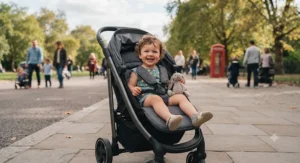
Cosatto has built a reputation on colourful, characterful pushchairs that don’t skimp on substance, and the Yo! is a genuinely clever budget entry into the lightweight category. At 7kg, it sits right on the boundary of “true” lightweight territory, but it earns its place here by offering a fully reclining, lie-flat seat suitable from birth – something several pricier rivals on this list can’t claim without an extra newborn accessory.
What most buyers overlook about this model is the four-year guarantee, which is unusually generous for a buggy at this price point and speaks to real confidence in the build quality. The magnetic five-point harness clicks together quickly with one hand (useful when you’re also holding a squirming toddler), and the double-tiered UPF100+ hood offers genuinely serious sun protection for a stroller under £250. Reviewers on parenting forums repeatedly highlight the 8kg-capacity basket as unusually generous for a lightweight model, and Cosatto’s eco-conscious fabric (made from recycled plastic bottles) adds a small but real sustainability edge.
Pros:
- ✅ Fully reclines flat, genuinely usable from birth
- ✅ Unusually long four-year manufacturer guarantee
- ✅ Roomy 8kg basket for a buggy this light
Cons:
- ❌ At 7kg it’s the heaviest “lightweight” pick here
- ❌ Suspension softer than premium rivals on rough ground
At around £160-£220, the Cosatto Yo! is arguably the best value entry point if you want one buggy from birth without a premium price tag.
3. Cybex Orfeo — best under 7kg buggy for city and transport
Weighing approximately 6.3kg, the Cybex Orfeo is engineered specifically around the modern urban commute: buses, tube platforms, narrow shop aisles and lift doors that close a fraction too fast. Its compact fold is built to airline-friendly dimensions, and the integrated carry strap turns the awkward “buggy under one arm, baby on the other hip” manoeuvre into something genuinely manageable.
Here’s what the spec sheet won’t tell you outright: a lightweight frame this size usually means a compromised ride, but the Orfeo’s suspension setup is tuned well enough that parents on Reddit’s parenting threads regularly single it out for a smoother-than-expected feel on pavements and platforms, even if it’s clearly not designed for muddy parks or gravel tracks. Based on the spec comparison with the Pockit+ above, the Orfeo carves out a smarter middle ground – it’s barely half a kilo heavier but adds noticeably more padding and a sturdier ride quality.
Pros:
- ✅ One of the lightest full-size-feel buggies under 7kg
- ✅ Airline-friendly compact fold with carry strap
- ✅ Smooth ride on pavements and public transport surfaces
Cons:
- ❌ Not designed for gravel, mud or rough terrain
- ❌ Limited under-seat storage compared with budget rivals
In the £350-£450 range, the Orfeo is a strong pick for parents whose daily life revolves around city streets rather than countryside walks.
4. iCandy Pip — best everyday travel stroller for UK families
The iCandy Pip has become one of the most talked-about lightweight pushchairs in the UK over the past year, and the appeal is easy to understand once you’ve used one. At 7kg it’s not the lightest buggy here, but it’s IATA cabin-approved, folds with one hand while you’re still holding your child, and manages to feel noticeably sturdier underfoot than most ultra-compact rivals – a common theme in aggregated reviews is that it “doesn’t feel flimsy” despite the small folded size.
What most buyers overlook is that the Pip is world-facing only unless paired with a compatible car seat, so parents who specifically want a parent-facing newborn stage should factor that in before falling for the styling. Reviewers consistently mention the ease of the one-hand fold as the standout feature – useful evidence that iCandy prioritised real parent pain points, not just headline weight figures. The £364 RRP puts it firmly in the mid-range, competing directly with the Orfeo and Metro-style compact strollers.
Pros:
- ✅ One-hand fold operable while holding a child
- ✅ Feels sturdier than most buggies at this weight
- ✅ IATA cabin-approved, popular for frequent flyers
Cons:
- ❌ World-facing only without a compatible car seat
- ❌ At 7kg, some rivals shave off half a kilo or more
Around the mid-£300s to £400s, the Pip suits parents who travel often but don’t want to feel like they’ve compromised on quality.
5. Joolz Aer+ — the lightest full-featured seat you can buy
At 6.5kg, the Joolz Aer+ manages something genuinely difficult: delivering a longer backrest, a properly adjustable leg rest and a one-hand, one-second, self-standing fold, all while staying near the top of the “lightest buggy” leaderboard. Most ultra-light strollers achieve their weight by stripping features; the Aer+ is one of the few that keeps comfort largely intact.
Aggregated review sentiment across retailer sites consistently praises the fold mechanism as best-in-class – genuinely a single motion, with no wrestling or awkward angles, which matters enormously when you’re juggling a toddler, a nappy bag and a train door. Based on the spec comparison with the Cybex Orfeo, the Aer+ trades a little bit of urban manoeuvrability for a noticeably more comfortable, longer seat that suits taller toddlers for longer. It’s suitable from birth in the fully lie-flat position, or with a compatible foldable cot accessory for very young babies.
Pros:
- ✅ Longer backrest and leg rest than most lightweight rivals
- ✅ Genuinely one-second, one-hand, self-standing fold
- ✅ Among the lightest full-featured seats on the market
Cons:
- ❌ Premium price compared with similarly light competitors
- ❌ Newborn use requires an additional accessory for very young babies
Sitting in the £450-£550 range, the Aer+ is the pick for parents who refuse to choose between “light” and “comfortable.”
6. Stokke YOYO³ — the iconic newborn-to-toddler travel stroller
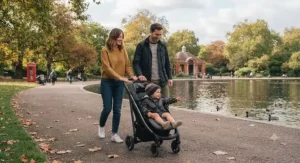
Few buggies have shaped an entire product category the way the original YOYO did, and the third generation continues that legacy. Depending on configuration, the chassis-plus-seat weighs somewhere between 6.2kg and 6.7kg, folding down to a genuinely tiny 52 x 44 x 18cm – small enough to meet most airline overhead-locker limits, and compact enough that Disney theme parks list it as compliant with their stroller size guidelines.
Real parent reviews are close to unanimous on one point: the two-step fold, once learned, is faster than almost anything else here, and the four-wheel “Soft Drive” suspension noticeably smooths out pavements and platform gaps compared with the smaller-wheeled budget alternatives. What the spec sheet won’t tell you, but reviewers note repeatedly, is that it’s strictly world-facing – there’s no parent-facing mode – which some parents miss during the early bonding months. It’s suitable from 6 months with the standard seat, or from birth with the separate newborn pack or bassinet, which pushes the total investment up considerably.
Pros:
- ✅ Ultra-compact, genuinely cabin-baggage-sized fold
- ✅ Smooth four-wheel suspension for its weight class
- ✅ Huge accessory ecosystem and strong resale value
Cons:
- ❌ World-facing only, no parent-facing option
- ❌ Newborn-ready bundles push the price well past £600
Expect to pay from around £449 for the 6-month-plus bundle up to £700 or more with a newborn pack – a genuine investment, but one with strong long-term resale demand.
7. Bugaboo Butterfly 2 — fastest fold, most storage, best all-rounder
At 7.3kg, the Bugaboo Butterfly 2 is technically the heaviest model on this list, and we’ve included it deliberately: it demonstrates exactly what you gain by allowing a few hundred extra grams. Its signature one-second fold is, by aggregated parent testimony, the quickest and least fiddly mechanism here, and it’s IATA-compatible for air travel despite the slightly higher weight.
The generous 8kg-capacity underseat basket plus an additional rear seat pocket makes it the most practical option for actual daily errands, not just weekend trips, and the full lie-flat recline means it’s genuinely usable from birth without extra accessories. Reviewers consistently highlight the large, puncture-proof wheels and full suspension as noticeably smoother across parks, gravel paths and uneven pavements than anything else in this guide – a fair trade for the small weight penalty. Based on the spec comparison with the Aer+ and Orfeo, the Butterfly 2 is best understood as the “lightweight pushchair for people who don’t quite trust lightweight pushchairs” – it borrows genuine all-terrain competence from Bugaboo’s larger travel systems.
Pros:
- ✅ Fastest, simplest one-second fold mechanism tested
- ✅ Largest storage basket of any model on this list
- ✅ Full suspension handles parks and gravel confidently
Cons:
- ❌ Heaviest buggy here, technically over the 7kg mark
- ❌ Premium price bracket similar to full travel systems
At £450-£600, the Butterfly 2 suits parents who want lightweight portability without giving up everyday practicality.
Practical Usage Guide: Getting the Most From Your New Buggy
Buying the right lightweight pushchair is only half the job – using it properly determines whether it lasts eighteen months or four years. In the first week, resist the urge to skip the manual entirely; every model here has a slightly different primary and secondary locking mechanism, and Which?’s pushchair safety testing and advice consistently flags incomplete folding as one of the most common (and most dangerous) user errors, since an unlocked frame can collapse mid-use.
During the first 30 days, get into the habit of a 10-second pre-ride check: brakes engaged and released cleanly, both locks clicked, harness slots at the right height for your child’s shoulders. Lightweight frames rely on precise engineering rather than sheer material bulk for their strength, so a habit of checking the fold-lock properly protects both your child and your warranty. For maintenance, wipe down wheels monthly (grit and grime wear lightweight bearings faster than on heavier all-terrain buggies), and avoid hanging bags on the handlebar – it’s the single most common mistake that causes even well-reviewed lightweight buggies to tip, since a lighter chassis has a lower resistance to a shifted centre of gravity. Store folded buggies upright rather than flat where possible, as this reduces stress on hinge points that lightweight frames rely on more heavily than bulkier alternatives.
Real-World Scenarios: Which Buggy Actually Suits Your Family?
Picture Priya, a first-time mum in a third-floor flat with no lift, who needs something she can carry one-handed while holding her newborn in the other arm. For her, the Cosatto Yo! or Bugaboo Butterfly 2 make more sense than the ultra-light Pockit+, because both offer genuine from-birth recline without needing an extra newborn accessory bought separately.
Now picture Tom and Dan, who fly to visit family three times a year and use public transport daily in London. The Stokke YOYO³ or Cybex Orfeo fit their life far better – both are built specifically around cabin-baggage dimensions and one-hand manoeuvring through ticket barriers, even if neither is the cheapest option available. Finally, consider Aisha, whose toddler has grown out of her first pushchair and who mainly needs a lightweight second buggy for nursery drop-offs and grandparents’ houses. The GB Pockit+ is close to perfect here: she already owns a full-size pushchair for daily use, so the Pockit+’s tiny fold and modest storage aren’t a dealbreaker – they’re the entire point.
Buyer’s Decision Framework: Choose Yours in Under a Minute
If your main priority is the smallest possible fold for occasional use, choose the GB Pockit+, because raw portability beats storage capacity for a secondary buggy. If you need a genuinely capable from-birth pushchair on a tight budget, choose the Cosatto Yo!, because its lie-flat recline and four-year guarantee outweigh its slightly heavier 7kg frame. If daily public transport is your main battleground, choose the Cybex Orfeo or Stokke YOYO³, because both are engineered around cabin dimensions and one-hand manoeuvring through barriers and doors. If comfort matters more than shaving off the last few hundred grams, choose the Joolz Aer+ or Bugaboo Butterfly 2, because both prioritise seat quality, suspension and storage over chasing the absolute lightest spec sheet.
How to Choose a Lightweight Pushchair
- Decide your primary use case first. A daily-driver buggy and an occasional travel companion have very different ideal weights and features – don’t chase the lightest spec if you actually need a big shopping basket.
- Check the “suitable from” age carefully. Several lightweight models need an additional newborn pack or bassinet to be safely used from birth; factor that cost in upfront.
- Test the fold mechanism in person if possible. Weight figures don’t capture how fiddly or intuitive a fold is under real pressure, with a toddler wriggling nearby.
- Weigh up storage against portability. Every kilo shaved off usually costs you basket capacity or seat padding – decide which trade-off you can live with.
- Consider your typical terrain honestly. Ultra-light frames generally handle pavements far better than gravel, cobbles or muddy parks.
- Factor in resale value for premium picks. Brands like Stokke and Bugaboo hold value well on the second-hand market, which softens the higher upfront cost.
- Confirm the safety standard label. Always check for BS EN 1888 compliance, whether buying new or second-hand.
Lightweight Pushchair vs Traditional Pushchair: What Actually Changes
A traditional pushchair or full travel system typically weighs anywhere from 9kg to 13kg or more, built around larger wheels, deeper suspension travel and bigger storage baskets designed to survive years of daily, all-weather use. A lightweight pushchair strips weight primarily from the chassis material and wheel size, which is precisely why it excels on pavements and public transport but starts to struggle on gravel paths, muddy playgrounds or genuinely rough terrain.
The practical difference shows up most clearly in two places: manoeuvring through doorways and lifting into car boots. A lightweight model can be lifted one-handed by most adults; a traditional pushchair often requires both hands and a bit of a shove. On the flip side, traditional pushchairs generally offer parent-facing modes, larger hoods, bigger baskets and smoother rides over bumps – all genuinely useful if you’re mostly walking on uneven pavements, through parks, or living somewhere without lifts and narrow doorways. Neither is objectively “better”; the right choice depends entirely on where you’ll actually use it, day to day.
Common Mistakes When Buying a Lightweight Pushchair
The most frequent mistake is buying purely on weight figures without checking real-world storage capacity – a stroller that’s 400 grams lighter but has a basket a third of the size isn’t automatically the smarter buy. Close behind is skipping the “suitable from birth” small print; several lightweight buggies technically start at 6 months, requiring a separate (and sometimes pricey) newborn accessory that buyers don’t budget for.
Another common misstep is assuming all lightweight buggies handle terrain the same way – reviewers repeatedly note that models optimised for pavements and cabin baggage struggle noticeably on cobbles, gravel or grass, so a family who mainly walks in parks may be better served by a slightly heavier, better-suspended option like the Bugaboo Butterfly 2. Finally, many parents underestimate how quickly toddlers outgrow shorter backrests and leg rests on some ultra-compact models; checking maximum recommended height, not just weight limit, avoids an expensive surprise at eighteen months.
What to Expect: Real-World Performance
On paper, a 500-gram difference between two buggies sounds trivial. In practice, carrying a folded pushchair up two flights of stairs with a nappy bag on one shoulder and a toddler on the other hip, that 500 grams is genuinely noticeable by the second flight. Similarly, the difference between a one-second self-standing fold and a fiddly two-hand fold isn’t really about speed in a showroom – it’s about managing a fold one-handed while a toddler tries to make a break for a busy road.
Ride quality tells a similar story. Cheaper, ultra-light frames tend to transmit far more vibration through the handlebar on uneven pavement, which is fine for short trips but tiring over a long day out. The premium suspension systems on models like the Aer+ and Butterfly 2 genuinely smooth this out, at the cost of a few hundred extra grams – a trade-off that’s easy to dismiss on a spec sheet and much harder to ignore after a three-hour shopping trip.
The Lightest Buggies on the Market: How Low Can You Go Under 7kg?
Chasing the lightest buggy possible is a legitimate priority for some families, but it’s worth understanding what you’re actually trading away as the numbers drop. At the extreme end, the GB Pockit+ sits around 5.7kg by stripping suspension sophistication, basket size and some ride comfort – genuinely the lightest practical option here, and honestly presented by GB as a specialist travel buggy rather than an everyday pushchair.
A meaningful middle tier – the Cybex Orfeo at 6.3kg, the Stokke YOYO³ around 6.2-6.7kg depending on configuration, and the Joolz Aer+ at 6.5kg – manages to stay genuinely under the 7kg threshold while retaining real suspension, adjustable seating and proper from-birth or near-birth usability. This tier represents, in our honest analysis, the sweet spot for most families who want an under 7kg buggy without accepting the Pockit+’s compromises. Beyond 7kg, models like the Cosatto Yo!, iCandy Pip and Bugaboo Butterfly 2 trade the “under 7kg” badge for extra comfort, storage or from-birth readiness – a trade plenty of parents will happily make once they’ve felt the difference in ride quality.
Best Compact Pushchair for Small Flats, Cars and City Living
If your defining constraint isn’t total weight but folded size – fitting a buggy into a narrow hallway, a small car boot, or a lift barely wider than the pushchair itself – the calculation shifts slightly. The GB Pockit+ remains the outright winner on folded footprint, but the Stokke YOYO³’s 52 x 44 x 18cm fold is close behind while offering considerably more comfort and suspension for the same rough footprint.
For city-dwelling families specifically, the Cybex Orfeo and iCandy Pip both strike a strong balance: compact enough for tube barriers and narrow shop doorways, but without the Pockit+’s fragility on rougher pavements. What most buyers overlook when comparing “compact” buggies is folded height, not just width – several ultra-compact models still stand surprisingly tall when folded, which matters if your storage space is a narrow cupboard rather than a spacious hallway.
Lightweight Stroller From Birth: What Newborn Parents Need to Check
Not every lightweight pushchair is genuinely ready for a newborn straight out of the box, and this is one of the most commonly misunderstood specs in the entire category. Babies typically need supported, fully reclined seating until they’ve developed sufficient head and neck control, a milestone that NHS-aligned guidance on gross motor skills in babies and toddlers places gradually between three and six months, varying by individual baby.
Among our seven picks, the Cosatto Yo! and Bugaboo Butterfly 2 offer a full lie-flat recline suitable from birth with no extra accessory required, making them straightforward choices for parents who want one buggy from day one. The Joolz Aer+ manages the same in its fully lie-flat position, though very young or premature babies may still be better served with the optional cot accessory. By contrast, the Stokke YOYO³ and iCandy Pip need an additional newborn pack, bassinet or compatible car seat respectively – not a flaw, but an extra cost that’s easy to miss when comparing headline prices.
Lightweight Pushchair Comparison: Reading Beyond the Spec Sheet
| Buggy | Recline | Wheel/Suspension Type | Storage Basket | Terrain Suitability |
|---|---|---|---|---|
| GB Pockit+ | Limited | Small fixed wheels | ~2kg capacity | Pavements only |
| Cosatto Yo! | Full lie-flat | All-terrain suspension | 8kg capacity | Pavements & light park use |
| Cybex Orfeo | Multi-position | Compact cabin wheels | Limited | Pavements & transport |
| iCandy Pip | Multi-position | Standard suspension | Moderate | Pavements & city use |
| Joolz Aer+ | Full lie-flat | Cushioned suspension | Moderate | Pavements & light park use |
| Stokke YOYO³ | Multi-position | Four-wheel “Soft Drive” | 10kg capacity | Pavements & smooth paths |
| Bugaboo Butterfly 2 | Full lie-flat | Full suspension, large wheels | 8kg capacity | Pavements, parks & gravel |
Reading this table alongside the price table above tells a clearer story than either does alone: the models with genuinely capable suspension and storage – the Butterfly 2, the Yo! and the Aer+ – all sit above 6.3kg, while the true sub-6kg picks sacrifice one or both. If your lightweight pushchair comparison keeps ending in a tie on paper, use terrain and storage as your tie-breakers rather than the final decimal point of the weight spec.
Under 7kg Buggy: Why This Weight Threshold Actually Matters
The 7kg figure isn’t arbitrary marketing shorthand – it roughly corresponds to the point at which most adults can comfortably lift a folded buggy one-handed while holding a child, a bag, or both, repeatedly, without strain. It’s also close to the practical ceiling many airlines apply informally to buggies gate-checked or carried as hand luggage, though airline policies do vary and it’s always worth checking your specific carrier before flying.
Crossing that threshold, even by a few hundred grams as several models on this list do, tends to buy back suspension quality, basket size or seat padding rather than being wasted weight. Our honest read, based on the spec comparison across all seven models: treat “under 7kg” as a strong signal of genuine portability, not a hard requirement, unless your specific circumstances – a walk-up flat, frequent flights, no car – make every gram count.
Easy Fold Pushchair Features That Actually Save You Time
Not all “easy fold” claims are equal, and the difference matters most exactly when you need it – juggling a toddler, shopping bags and a train door simultaneously. One-hand, one-step, self-standing folds (as seen on the Joolz Aer+ and Bugaboo Butterfly 2) are, based on aggregated reviewer feedback, meaningfully faster and less frustrating than two-hand mechanisms like the GB Pockit+’s, which requires both hands and a bit of practice to master.
A genuinely underrated feature is whether a buggy stands freestanding once folded – this sounds trivial until you’re trying to fold a pushchair against a wall with no free hand to lean it. Also worth checking: whether the fold works with the newborn seat, bassinet or car seat adapter still attached, since several models (the YOYO³ among them) require you to remove attachments first, adding real friction to a “quick fold” in practice.
Long-Term Cost & Maintenance
A cheaper lightweight pushchair isn’t automatically the better long-term value once you factor in lifespan and resale. The GB Pockit+, priced under £200, is excellent value if used as intended – a secondary travel buggy – but its lighter build and smaller components may need replacing sooner under daily heavy use. By contrast, premium picks like the Stokke YOYO³ and Bugaboo Butterfly 2 command higher upfront prices but hold their value unusually well on the second-hand market, meaning the effective cost of ownership, after resale, can end up comparable to a cheaper model bought new and discarded after eighteen months.
Maintenance costs across this category are generally low – most repairs involve wheel bearings, fabric replacement or harness parts, all readily available as spares from every brand featured here. Budgeting roughly £20-£40 a year for consumables (rain covers, replacement wheels, footmuffs) is a realistic estimate across the board, regardless of which model you choose.
Safety, Regulations and Compliance in the UK
Every pushchair legally sold in the UK, lightweight or otherwise, must comply with the BS EN 1888 safety standard, covering everything from structural stability and braking performance to entrapment hazards and harness security – full detail on what’s actually being tested is available in Business Companion’s official guide to new and second-hand prams and pushchairs. New products must also carry a UKCA or CE mark confirming this compliance, and it’s always worth checking for this label on the frame or seat covering before purchase, particularly with second-hand buggies.
Lightweight frames aren’t inherently less safe than heavier alternatives, but their reduced material bulk makes correct use more important, not less. Always confirm both primary and secondary locking mechanisms have engaged fully before placing a child in the seat, and never hang bags on the handlebar – a lighter chassis has less resistance to the tipping risk this creates. A five-point harness is strongly recommended across all age ranges, and every model in this guide includes one as standard.

Frequently Asked Questions
❓ What is considered a lightweight pushchair?
❓ Can lightweight pushchairs be used from birth?
❓ Are lightweight pushchairs safe for everyday use?
❓ What's the difference between a lightweight pushchair and a travel stroller?
❓ How much should I expect to pay for a good lightweight pushchair?
Conclusion
There’s no single best lightweight pushchair for every family – only the right trade-off for your particular stairs, car boot, terrain and budget. If raw portability is everything, the GB Pockit+ remains genuinely unmatched. If you need one capable buggy from birth without a premium price tag, the Cosatto Yo! delivers real value. For daily public transport and frequent flights, the Cybex Orfeo and Stokke YOYO³ both earn their higher price tags through cabin-friendly folds and smoother rides, while the Joolz Aer+ and Bugaboo Butterfly 2 prove that “lightweight” doesn’t have to mean “compromised” if you’re willing to spend a little more.
Whichever direction you lean, the honest advice threaded through every section here holds true: weigh up your actual daily terrain, your storage needs and your realistic budget before chasing the lowest number on a spec sheet. A pushchair you’ll still be using happily in two years beats one that impressed you in the shop but frustrated you on the school run.
✨ Don’t Miss These Exclusive Deals!
🔍 Take your search for the best lightweight pushchair to the next level with these carefully compared, genuinely researched picks. Click through on any highlighted model to check current pricing and availability, and give your family the effortless days out you deserve!
Recommended for You
- Best Lie Flat Pram UK 2026: 7 Top Newborn Picks Compared
- Overnight Approved Carrycot: 7 Safest Picks for 2026
- Carrycot for Newborn: 7 Best Picks UK Parents Trust in 2026
Disclaimer: This article contains affiliate links. As an Amazon Associate, I earn from qualifying purchases. If you purchase products through these links, we may earn a small commission at no additional cost to you.
✨ Found this helpful? Share it with your friends! 💬🤗
