
In This Article
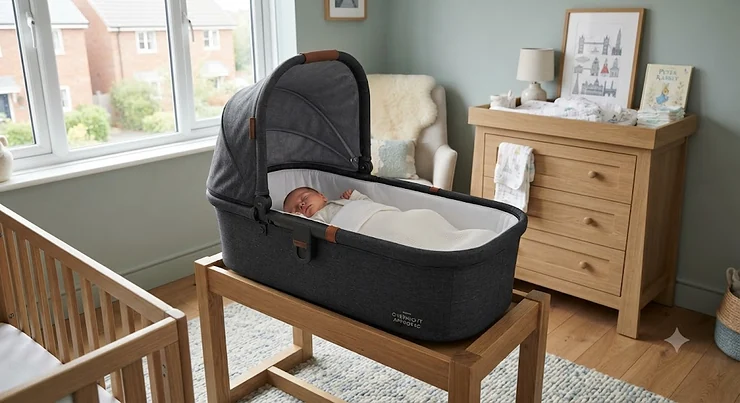
Three weeks into parenthood, most of us are running on broken sleep and a search bar full of half-finished questions at 2am. “Can my baby sleep in the pram overnight?” is one of the big ones, and the honest answer is: it depends entirely on which carrycot you own. An overnight approved carrycot is a carrycot that has been independently tested to the European safety standard BS EN 1466, which checks things like internal depth, ventilation, and entanglement risk so the sleeping space is judged suitable for unsupervised sleep, not just for daytime dozing on the move.
That distinction matters more than most baby-gear marketing lets on. Plenty of carrycots look identical to the ones that have passed this testing, but only a handful of manufacturers have actually put their products through it. Choosing correctly can turn a single purchase into your baby’s daytime pram, night-time bedside crib, and travel cot all in one — which is a genuinely useful bit of multitasking when nursery furniture budgets are already stretched thin.
This guide pulls together real, current products from brands that have gone through EN 1466 testing, alongside honest analysis of specs, aggregated reviewer sentiment, and the safety guidance that actually governs this decision. We’ll cover seven genuine options across budget, mid-range and premium price points, then walk through the standards, the common buying mistakes, and the practical setup advice that Amazon listings never quite get around to mentioning.
Quick Comparison Table
| Carrycot | Overnight Approved | Price Range | Best For |
|---|---|---|---|
| Cybex Priam Lux Carrycot | Yes (EN 1466) | £250-£350 | Premium buyers wanting a matching travel system |
| Silver Cross Coast Carrycot | Yes (EN 1466) | £200-£300 | Families wanting a bamboo-lined, temperature-regulating liner |
| iCandy Peach 7 Carrycot | Yes (EN 1466) | £220-£320 | Parents who want maximum interior space |
| Bugaboo Fox 5 Carrycot | Yes, with stand | £280-£380 | Buyers who want the newest EN 1466 generation |
| egg3 Carrycot | Yes (EN 1466) | £180-£260 | Style-conscious parents on a mid-range budget |
| BabyStyle Oyster 3 Carrycot | Yes (EN 1466) | £150-£220 | Budget-to-mid buyers wanting colour customisation |
| Jané Micro Carrycot | Yes, designed for overnight use | £150-£200 | Compact, lightweight, holiday-friendly sleeping |
Looking at the table, the price gap between the cheapest and priciest overnight approved carrycot here isn’t enormous, which tells you something: EN 1466 testing itself doesn’t hugely inflate cost, it’s the brand, materials and travel-system compatibility that shift the price. The Jané Micro Carrycot stands out as the lightest and most travel-friendly, while the Cybex Priam Lux Carrycot and Bugaboo Fox 5 Carrycot sit at the top for parents who already own the matching frame and want everything to click together.
💬 Bookmark this comparison — you’ll want to come back to it once you’ve read the full breakdown below.
Top 7 Overnight Approved Carrycots: Expert Analysis
1. Cybex Priam Lux Carrycot — matching travel-system elegance
The standout here is how seamlessly it clicks onto the Priam and e-Priam chassis, turning a daytime pram into a genuine overnight sleep space without buying separate nursery furniture. Cybex put its full carrycot range through EN 1466 testing, covering the Priam Lux, Mios Lux, and the Gazelle and Cot S ranges for its other pushchair lines, so the depth, ventilation and entanglement checks that overnight sleep demands have actually been verified by an independent body rather than just claimed in marketing copy. In practice, that means a firmer base and a more considered airflow design than you’d find on a standard daytime-only carrycot from the same era.
Who should care: parents who’ve already invested in a Priam or e-Priam frame and want the carrycot to double as a bedside sleep space on trips away, rather than buying a separate travel cot. Reviewers consistently note the fabric quality and how easy the carrycot is to lift on and off the frame one-handed, though a recurring theme in feedback is that the premium price feels steep if you’re not already committed to the Cybex ecosystem.
Pros:
- ✅ Full EN 1466 testing across the Priam Lux range
- ✅ High-quality, easy-clean fabrics reviewers rate highly
- ✅ One-handed attachment to matching chassis
Cons:
- ❌ Only works with Cybex-compatible frames
- ❌ Among the pricier options in this list
Expect somewhere in the £250-£350 range depending on colourway and bundle, at the time of research. Given it replaces a Moses basket and doubles as a travel cot, the value case stacks up if you’re already in the Cybex system — less so if you’d need to buy a whole new frame to use it.
2. Silver Cross Coast Carrycot — bamboo-lined temperature regulation
What sets this apart on paper is the bamboo-fibre lining, which Silver Cross uses specifically to help manage baby’s temperature overnight — a genuinely useful feature given that overheating is one of the known risk factors reviewers and safety bodies flag repeatedly. The carrycot is EN 1466 tested for unsupervised sleep and pairs with an optional foldable stand, so it can sit safely off the ground indoors, away from pets or toddler siblings, rather than being left on the floor.
Silver Cross has built a strong reputation among UK pram brands for ride comfort and finish quality, and that carries through here: the carrycot feels notably sturdy compared with lighter, more travel-oriented alternatives. Aggregated reviewer sentiment praises the comfort and the bamboo lining specifically, with a common complaint being that the matching stand is sold separately and adds meaningfully to the total outlay.
Pros:
- ✅ Bamboo lining helps regulate baby’s temperature
- ✅ EN 1466 tested for overnight, unsupervised sleep
- ✅ Sturdy build reviewers rate for comfort
Cons:
- ❌ Stand is an additional cost, not included
- ❌ Bulkier to store than lightweight alternatives
Priced in the £200-£300 range at the time of research, with the stand typically adding a further amount on top. For families planning to use it regularly as a bedside sleep space, the temperature-regulating lining alone can justify the extra spend over a basic Moses basket.
3. iCandy Peach 7 Carrycot — most interior space in this line-up
The immediate standout is sheer size: this carrycot has one of the roomier interiors among current UK travel-system carrycots, giving a growing baby more time before they outgrow it. iCandy is one of the brands that has put its carrycots through EN 1466 testing for overnight sleep, and the extra internal depth actually plays into that testing directly, since depth and headroom are among the specific hazards the standard checks for.
Based on the spec comparison with rivals here, the Peach 7’s extra room makes it a sensible pick for babies who are on the taller or heavier side for their age, since some carrycots feel snug well before the stated weight limit is reached. Reviewers consistently mention the plush, padded feel of the interior and the ease of converting between carrycot and pushchair seat modes, though a few note that the extra size makes it one of the heavier carrycots to carry any distance without wheels.
Pros:
- ✅ Roomier interior than most rival carrycots
- ✅ EN 1466 tested for overnight, unsupervised use
- ✅ Reviewers rate the padded interior comfort highly
Cons:
- ❌ Heavier to carry off the frame
- ❌ Premium price for the extra space
Typically found in the £220-£320 range at the time of research. For bigger babies who might otherwise outgrow a snugger carrycot within a couple of months, the extra usable lifespan can offset the higher upfront cost.
4. Bugaboo Fox 5 Carrycot — newest generation to gain EN 1466 approval
This is Bugaboo’s first carrycot to be formally approved for unsupervised sleep, launched alongside a purpose-built carrycot stand and adaptors that lift it to a comfortable, back-saving height off the floor. That’s a genuinely practical detail: a stand at the right height means less bending to settle or lift a sleeping baby overnight, which matters a lot more at 3am than it sounds like on a spec sheet.
What most buyers overlook about this model is that it represents a real shift for the brand — previous Bugaboo carrycots weren’t overnight certified, so this is the first time Fox owners can use the carrycot as a genuine bedside sleep space rather than just a daytime pram accessory. Early aggregated reviewer sentiment highlights the smooth suspension transfer from the chassis and the stand’s stability, with some buyers flagging that the stand adaptors are another accessory to track and store.
Pros:
- ✅ First Bugaboo carrycot approved for overnight sleep
- ✅ Purpose-built stand lifts it to a comfortable height
- ✅ Smooth ride quality reviewers link to the Fox chassis
Cons:
- ❌ Stand and adaptors typically sold separately
- ❌ Among the priciest carrycots covered here
Expect a price in the £280-£380 range at the time of research, stand excluded. Given it’s replacing both a Moses basket and, on trips away, a travel cot, the total cost of ownership compares reasonably against buying three separate pieces of kit.
5. egg3 Carrycot — distinctive design, mid-range price
The egg silhouette isn’t just styling — the rounded shape and magnetic buckle closures are part of what makes this carrycot easy to use one-handed at 2am when you’re half-asleep and don’t want to fumble with awkward clips. egg has had its carrycots through EN 1466 testing, so the unsupervised sleep approval sits alongside a design language that’s genuinely different from the boxier, more traditional carrycots elsewhere in this list.
Here’s what to weigh: the distinctive shape means the egg3 isn’t for everyone stylistically, but reviewers consistently mention how easy the magnetic fastenings make night-time transfers compared with traditional buckle systems, which matters when you’re trying not to fully wake a sleeping baby. A recurring theme in feedback is that the price sits comfortably in the mid-range, undercutting some premium travel-system carrycots while still delivering EN 1466 testing.
Pros:
- ✅ EN 1466 tested for unsupervised overnight sleep
- ✅ Magnetic buckles ease quiet night-time transfers
- ✅ Mid-range price relative to premium rivals
Cons:
- ❌ Distinctive shape won’t suit every taste
- ❌ Fewer colourway options than some rivals
At the time of research, this sits around the £180-£260 range. For parents who want overnight certification without paying premium-brand prices, the egg3 is one of the stronger value cases in this list.
6. BabyStyle Oyster 3 Carrycot — budget-friendly colour customisation
The Oyster 3’s real hook is choice: a wide range of interchangeable colour packs mean the carrycot can be restyled without buying a whole new unit, which is a nice bit of longevity for a product you’ll likely only need for six months or so. BabyStyle has had Oyster carrycots through EN 1466 testing, putting overnight-approved sleep in reach at one of the more accessible price points in this round-up.
On paper this means budget-conscious families don’t have to trade safety certification for affordability, which is exactly the kind of trade-off that shouldn’t have to exist. Reviewers consistently praise the value for money and colour flexibility, with a common complaint being that the padding feels a touch thinner than pricier rivals once the baby is a few months in and moving around more.
Pros:
- ✅ EN 1466 tested at a genuinely budget-friendly price
- ✅ Interchangeable colour packs extend its usable life
- ✅ Reviewers consistently rate the value for money
Cons:
- ❌ Padding felt thinner than premium rivals by some reviewers
- ❌ Smaller brand ecosystem than Cybex or Bugaboo
Priced around £150-£220 at the time of research, making it one of the most accessible EN 1466-tested carrycots on the market. For first-time parents watching the budget, this is a strong starting point that doesn’t compromise on the safety testing that actually matters.
7.Jané Micro Carrycot — lightest, most travel-friendly pick
Unlike most of this list, the Micro is designed specifically with overnight sleep in mind rather than having overnight approval added on afterwards, and its foldable, lightweight build makes it the easiest of the seven to pack for a weekend away or a grandparent’s house. It’s compatible with several Jané pushchair frames including the Rider and Muum, so it can slot into an existing travel system rather than requiring a whole new purchase.
Based on the spec comparison with bulkier alternatives here, the trade-off for that portability is a slightly more compact interior, meaning it may suit families expecting a shorter overnight-use window before baby outgrows it. Reviewers consistently highlight how genuinely useful the fold is for car boot space and how well it performs as a stand-in travel cot on trips, with occasional feedback that the thinner side walls feel less plush than heavier premium carrycots.
Pros:
- ✅ Purpose-built for overnight sleep from the ground up
- ✅ Lightest and most foldable carrycot in this list
- ✅ Compatible with multiple Jané pushchair frames
Cons:
- ❌ More compact interior than premium alternatives
- ❌ Thinner side walls than heavier competitors
At the time of research, this sits in the £150-£200 range, making it one of the best-value picks if travel flexibility matters more to you than maximum interior space.
Practical Usage Guide: Setting Up for Safe Overnight Sleep
Getting an overnight approved carrycot out of the box is the easy part; setting it up properly for actual overnight use is where most of the genuinely useful advice lives. Start by fitting the manufacturer’s own mattress or a compatible replacement rather than adding extra padding “for comfort” — additional padding on top of a tested mattress can undo the depth and firmness calculations the EN 1466 testing was based on. If you’re using a stand indoors, position it well away from radiators, curtains, and any cords a curious toddler or pet could reach, and check it’s on a flat, stable surface before you settle baby down for the night.
In the first 30 days, the most common mistake is treating the carrycot hood, apron, or any loose liner as safe overnight bedding — these are designed for daytime use on the move, not for a baby sleeping unsupervised for hours. Strip the carrycot back to just the fitted mattress and a lightweight, well-tucked sheet for night use. It’s also worth doing a “test settle” during the day first: put baby down fully clothed for sleep for ten minutes while you watch, just to check the mattress fit and check for any gaps at the sides before relying on it overnight. Finally, build a simple maintenance habit — wipe down the waterproof mattress cover weekly and check zips, poppers, and stand joints monthly for wear, since a carrycot that’s been through EN 1466 testing only stays as safe as its weakest fastening.
Real-World Scenarios: Matching a Carrycot to Your Family
If you’re a first-time parent in a two-bedroom flat with no spare room for a separate nursery set-up, a carrycot like the BabyStyle Oyster 3 Carrycot or egg3 Carrycot makes sense as your only bedside sleep space for the first few months — budget-friendly, EN 1466 tested, and one less large piece of furniture to find room for. If you’re the kind of family who visits grandparents most weekends or takes regular short breaks, the Jané Micro Carrycot‘s fold-flat design solves the “do we need a travel cot too” question in one purchase, since it packs down small enough for a car boot alongside everything else.
For parents who’ve already bought into a specific travel system — a Priam, an e-Priam, or a Fox 5 — sticking with the matching carrycot (Cybex Priam Lux Carrycot or Bugaboo Fox 5 Carrycot) usually beats buying a separate bedside crib, since it’s one less thing to store once baby moves into a cot. And if you know your baby is likely to be a bigger-than-average newborn, or you simply want more room to grow into, the iCandy Peach 7 Carrycot‘s extra interior space buys you a few additional weeks of overnight use before you need to transition to a full cot.
Problem → Solution: Common Overnight Sleep Issues, Solved
Problem: baby seems to overheat in the carrycot overnight. Check the room temperature is between 16-20°C, remove hats and extra layers as soon as you’re indoors, and consider a carrycot with a breathable or bamboo-lined liner such as the Silver Cross Coast Carrycot, which is specifically designed to help manage temperature.
Problem: the carrycot feels unstable on its stand. Confirm the stand is fully locked and on a flat surface — carrycots like the Bugaboo Fox 5 Carrycot and Silver Cross Coast Carrycot ship with (or offer) purpose-built stands precisely because balancing a carrycot on random furniture is a genuine fall risk.
Problem: baby has outgrown the carrycot faster than expected. This is common with carrycots that have a snugger interior; the iCandy Peach 7 Carrycot‘s roomier design buys extra weeks, but ultimately every carrycot is a birth-to-around-6-month solution and a full cot is the next step regardless of brand.
Problem: unsure if a specific carrycot is actually overnight approved. Don’t rely on marketing copy alone — check the manufacturer’s own safety documentation or contact them directly, since, as we cover below, not every carrycot on the market has been through EN 1466 testing even if the packaging implies otherwise.
Problem: travelling and no cot available. A genuinely EN 1466-tested carrycot like the Jané Micro Carrycot can double as your travel cot, saving you buying and packing a second piece of sleep furniture for weekends away.
Buyer’s Decision Framework: If This, Choose That
If your top priority is keeping costs down without sacrificing genuine safety testing, choose the BabyStyle Oyster 3 Carrycot or egg3 Carrycot, because both carry EN 1466 approval at a meaningfully lower price than premium-brand alternatives. If travel and portability matter most — regular trips, limited car boot space, frequent overnight stays away from home — choose the Jané Micro Carrycot, because its fold-flat, lightweight design was built around exactly that use case rather than added as an afterthought.
If you’ve already committed to a specific pushchair ecosystem, choose the matching carrycot (Cybex Priam Lux Carrycot or Bugaboo Fox 5 Carrycot) because compatibility and one less piece of furniture to store outweighs shopping around for a marginally cheaper alternative. And if you expect a larger baby or simply want maximum room to grow into before transitioning to a cot, choose the iCandy Peach 7 Carrycot, because its extra interior depth is the standout differentiator among this group of EN 1466-tested options.
Understanding BS EN 1466 (and the Truth About “BS 7194”)
If you’ve searched for a “BS 7194 approved carrycot,” it’s worth clearing something up honestly: there isn’t a British Standard numbered BS 7194 that governs carrycot overnight sleep safety. The actual standard that matters here is BS EN 1466, the UK and European standard covering carrycots, cots, and stands, and it’s this one you should be checking for, not the similar-sounding number that circulates in some searches and product listings.
BS EN 1466 tests things like internal depth, ventilation and airflow, structural stability, and entanglement hazards, and its purpose is to make sure the carrycot’s sleeping environment is comparable to a proper Moses basket or crib for babies under six months. Crucially, there is no UK legal requirement for carrycots to be tested against this standard the way there is for car seats, so manufacturers choose whether to put their products through it, and plenty of carrycots on the market simply haven’t been tested for overnight use at all — they’re perfectly fine for supervised daytime naps but aren’t rated for a baby sleeping unattended all night. If you’re unsure whether a specific model has been tested, the manufacturer’s own product documentation or customer service team is the only reliable place to check, not the box artwork.
How to Choose the Safest Carrycot for Sleeping Overnight
- Confirm EN 1466 testing directly with the manufacturer — don’t assume it from a “suitable for overnight” sticker alone; check the specific model, not just the brand.
- Check the mattress is firm, flat, and has a waterproof cover — a soft or padded mattress undermines the testing even on an otherwise approved carrycot.
- Look for genuine ventilation — mesh panels or breathable base fabric reduce overheating risk, one of the recognised factors in unsafe infant sleep.
- Consider your travel patterns — a foldable, lightweight carrycot suits families who travel often; a frame-matched one suits those settled with one pushchair system.
- Check weight and rolling milestones, not just age — most carrycots are only suitable until baby can push up on hands and knees, typically 3-6 months, regardless of stated age range.
- Factor in a stand if you’ll use it indoors regularly — some carrycots need one to sit safely off the floor overnight; check whether it’s included or an extra cost.
- Cross-reference real reviews, not just star ratings — look specifically for comments about overnight use, temperature regulation, and how the mattress holds up over months of use.
Common Mistakes When Buying a Carrycot Safe for Overnight Sleep
The single biggest mistake is assuming that if a carrycot works with a modern travel system, it must automatically be safe for overnight sleep — plenty of well-known, otherwise excellent pushchairs use carrycots that have never been through EN 1466 testing and are explicitly daytime-only in the manufacturer’s own small print. A close second is adding extra bedding, cushioned liners, or a “cosy” insert on top of the tested mattress, which is one of the more common ways parents unknowingly reintroduce the exact risks the standard was designed to remove.
Another frequent misstep is buying secondhand without checking the mattress condition or asking whether the original mattress is even still included — a compressed, sagging, or missing mattress changes the safety picture entirely, even on a model that passed EN 1466 when new. Parents also commonly overlook stand compatibility, buying the carrycot without checking whether a stand is available or included, then improvising with furniture that isn’t stable or flat enough for safe overnight placement. Finally, some buyers stop checking once baby starts sleeping through — but the moment a baby can roll, push up, or sit unaided, every carrycot on this list (and every EN 1466-tested one on the market) needs to be retired in favour of a proper cot, regardless of how well it’s served you so far.
Overnight Sleep Safe Pram vs Bedside Crib vs Travel Cot
An overnight sleep safe pram — meaning the carrycot component specifically — earns its keep through versatility: it’s the same unit baby naps in during the day, sleeps in at night, and travels in on trips, which a dedicated bedside crib or travel cot simply can’t match. A bedside crib, by contrast, is purpose-built for one job and tends to offer a slightly larger, more stable sleeping footprint for home use, but it can’t fold down for the car boot or clip onto a pushchair frame for a walk into town.
A travel cot sits somewhere in between: genuinely portable and specifically designed for overnight use away from home, but bulkier to pack than a carrycot and typically not usable as a daytime pram at all. For families who split their time between a settled home routine and regular trips away, an EN 1466-tested carrycot like the Jané Micro Carrycot or Silver Cross Coast Carrycot often removes the need to own all three, whereas families who rarely leave the house might get more comfortable long-term use from a dedicated bedside crib instead.
Breathable Mattress Carrycot: Why Ventilation Beats Marketing
“Breathable mattress” is one of those phrases that gets used loosely in baby-gear marketing, so it’s worth being precise about what actually matters. According to The Lullaby Trust’s product guidance, what genuinely reduces risk is a firm, flat mattress with a waterproof, wipeable cover — waterproofing matters more for hygiene and reducing bacterial build-up than breathability claims do, and a mattress being marketed as “breathable” doesn’t override the need for it to also be firm and well-fitting with no gaps.
Where genuine ventilation does matter is in the carrycot’s structure itself — mesh side panels, a breathable base layer beneath the mattress, and enough internal airflow to stop heat building up around baby overnight. Carrycots like the Silver Cross Coast Carrycot, with its bamboo-fibre lining, and the EN 1466-tested models from Cybex, egg, and iCandy are designed with this structural airflow in mind, which is a more meaningful safety factor than the word “breathable” printed on a mattress cover alone. If in doubt, prioritise a firm, flat, waterproof mattress that fits the carrycot snugly with no side gaps over any product claiming breathability as its headline safety feature.
Features That Actually Matter (And Those That Don’t)
Genuinely worth paying for: independent EN 1466 testing, a firm and snugly-fitting waterproof mattress, real mesh or fabric ventilation, and a stable, purpose-matched stand if you’ll use the carrycot indoors regularly. These directly affect whether the carrycot is a safe overnight sleep space, not just a comfortable daytime accessory.
Largely marketing rather than substance: elaborate embroidery or designer fabric prints, extra zip pockets on the carrycot apron, and vague “orthopaedic support” claims that aren’t backed by any recognised testing standard. None of these change whether your baby is safe to sleep in the carrycot overnight, so they’re worth factoring into your budget decision only after the safety essentials are ticked off, not before.
Long-Term Cost & Maintenance
Buying an overnight approved carrycot instead of a separate Moses basket, bedside crib, and travel cot can genuinely save money over the roughly six months most babies use one, since you’re covering three use cases with a single, already-budgeted purchase. Replacement mattresses, when needed, typically cost a modest amount compared with the carrycot itself, and it’s worth budgeting for one if buying secondhand or if the original mattress shows any sagging or wear.
Ongoing maintenance is minimal but matters: wipe the waterproof cover regularly, check stand joints and carrycot fastenings monthly, and inspect for any splits in fabric or padding that could affect firmness. Cost-per-use works out favourably here — a £200 carrycot used nightly for six months works out to roughly £1 per night, which compares well against buying a separate crib and travel cot on top of your pram.
Frequently Asked Questions
❓ Is my carrycot safe for my baby to sleep in overnight?
❓ What is the BS 7194 approved carrycot standard?
❓ How long can a baby use an overnight approved carrycot for?
❓ Do I need a breathable mattress carrycot specifically?
❓ Can I add extra padding to make the carrycot more comfortable overnight?
Conclusion
Choosing an overnight approved carrycot ultimately comes down to one non-negotiable check — has this specific model actually passed BS EN 1466 testing — followed by the more personal decisions around budget, travel habits, and which pushchair ecosystem you’re already invested in. Among the seven genuine options covered here, the BabyStyle Oyster 3 Carrycot and egg3 Carrycot make the safety testing accessible on a tighter budget, the Jané Micro Carrycot wins for families who travel often, and the Cybex Priam Lux Carrycot and Bugaboo Fox 5 Carrycot reward those already committed to a matching frame.
Whichever you choose, the fundamentals stay the same: a firm, flat, waterproof mattress with no gaps, genuine ventilation, and a stable set-up away from hazards — the same advice the NHS gives for reducing the risk of sudden infant death syndrome applies just as much inside a tested carrycot as it does in a cot or Moses basket. Get that right, and a genuinely overnight approved carrycot can comfortably do the job of three separate pieces of nursery kit.
✨ Don’t Miss These Exclusive Deals!
🔍 Take your overnight sleep set-up to the next level with these carefully selected carrycots. Click on any highlighted product to check current pricing and availability on Amazon. A properly tested carrycot could be the one piece of kit that saves your family the most sleep, space, and money in these first few months!
Recommended for You
- Carrycot for Newborn: 7 Best Picks UK Parents Trust in 2026
- Classic Pram for Newborn: 7 Best Traditional Prams (2026)
- 7 Best Luxury Travel System Pushchairs UK 2026: Which Is Worth It?
Disclaimer: This article contains affiliate links. As an Amazon Associate, I earn from qualifying purchases. If you purchase products through these links, we may earn a small commission at no additional cost to you.
✨ Found this helpful? Share it with your friends! 💬🤗
