In This Article
Nobody warns you that the car seat aisle is basically alphabet soup. R129. i-Size. Isofix. Plus Test. Then a friend mentions that her four-year-old still rides backwards, and you start wondering whether you’ve been doing it all wrong. You haven’t. But an extended rear-facing car seat is a purchase worth understanding before you click “buy”. It costs more, takes up more room, and sparks heated debates at the school gates.
What Is an Extended Rear-Facing Car Seat?
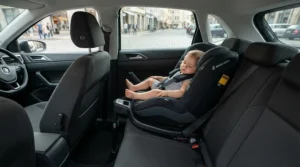
An extended rear-facing car seat is a child seat that keeps your little one facing backwards well beyond the legal minimum of 15 months. That usually means to around four years (105cm), and in the biggest models to roughly seven years (125cm). In a frontal crash, it spreads forces across the child’s back instead of straining the neck.
The law is the floor, not the ceiling. Under GOV.UK’s child car seat rules, a height-based (i-Size) seat must face backwards until your child is over 15 months old. After that, turning them round is legal. Whether it’s wise is the real debate, and we’ll unpack the ERF vs forward-facing toddler car seat question properly further down.
Below you’ll find seven real, currently sold seats from budget to premium. There’s also an Axkid vs BeSafe extended rear-facing seat showdown, fitting guides and honest cost maths. Prices are ranges only, so always check current price and car compatibility before buying.
Extended Rear-Facing Car Seat Quick Comparison: 7 Picks at a Glance
Short on time? Here’s the whole field on one screen.
| Product | Rear-facing up to | Fitting | Best For |
|---|---|---|---|
| Axkid Minikid 4 Max | 125cm / 36kg | Seatbelt + tethers | Narrow rear benches, longest runway |
| BeSafe Stretch | 125cm / 36kg | Seatbelt + tethers | Roomy shell, recline flexibility |
| Axkid One 3 | 125cm / 23kg | Isofix | Foolproof click-in fitting |
| Silver Cross Perform | 125cm / 21.5kg | Isofix + support leg | Birth-to-seven on Isofix |
| BeSafe iZi Modular A X1 i-Size | 105cm | Isofix base (separate) | Households with two cars |
| Joie i-Spin 360 | 105cm | Isofix, swivel | Sore backs, daily loading |
| Graco Enhance | 18kg (about 4 years) | Seatbelt | Tight budgets, grandparents’ cars |
Look at the weight column and a pattern jumps out. The belted seats (Axkid Minikid 4 Max, BeSafe Stretch) go furthest at 36kg, while the Isofix models trade that ceiling for easier fitting. If cash is tight, Graco Enhance keeps your child facing backwards to about four years for a fraction of the price, though it asks more of you at fitting time. Swivel convenience, as on the Joie i-Spin 360, costs you the long runway.
💬 Just one click — help others make better buying decisions too!😊
Top 7 Extended Rear-Facing Car Seat Picks: Expert Analysis
A note on method: everything below comes from published specs, independent test notes and recurring themes in parent reviews. It does not come from hands-on handling. Where reliable review data is thin, we say so.
1. Axkid Minikid 4 Max — compact build, 36kg limit
The standout here is the footprint. At 44cm wide and 54cm deep, Axkid Minikid 4 Max squeezes a seat rated to 125cm and 36kg into a shell that doesn’t colonise the whole back bench.
It’s fitted with the seatbelt plus automatic tether straps rather than Isofix. That’s the engineering reason it can reach 36kg, because Which? notes Isofix seats carry a combined seat-and-child limit of 33kg. Axkid quotes up to 30cm of legroom, a 13-step headrest and a three-step recline. On paper, that’s a long runway before little shins meet the seat back.
Based on the spec comparison, this is the one to shortlist if you want the longest rear-facing window in a narrow package. Mumsnet’s reviewers praised the Swedish Plus pass, durable build and thorough instructions. A MadeForMums parent tester found installation straightforward despite the lack of Isofix, and felt the build was more substantial than a rotating seat. A second tester said the headline 60-second fit took her longer, though she reported no legroom complaints.
Pros:
- ✅ Narrow 44cm shell suits tight rear benches
- ✅ Rear-facing to 125cm and 36kg
- ✅ Swedish Plus Test pass
Cons:
- ❌ Premium price for a belted seat
- ❌ Belt-and-tether fitting takes patience at first
Expect a £450–£500 range at the time of research. Spread over six-plus years, it’s strong value, as our cost section shows.
2. BeSafe Stretch — roomy shell with recline options
Where BeSafe Stretch earns its keep is the cabin. BeSafe quotes up to 26cm of legroom, five recline settings and a ten-step headrest inside a large shell. Which? describes its unique external frame as designed to take most of the impact in a front-on crash.
It covers 61–125cm and up to 36kg (roughly six months to seven years), belted in with a brace and lower tethers. That means it doesn’t depend on Isofix points, so it works in cars where those are awkward. Pushchair Expert’s review notes that, unlike many heavy-limit belted seats, the recline can be changed after installation. That’s handy when a toddler nods off mid-journey.
What most buyers overlook is the bulk. Parent forum threads are mixed. One 2026 poster says a five-year-old at 107cm still fits comfortably with plenty of legroom. A 2023 poster found it very large and a tight squeeze in their car. Treat it as a “must test in your own car” seat. Its successor, BeSafe Stretch 2, sits around the £500 mark.
Pros:
- ✅ Five recline settings for sleepy passengers
- ✅ Belted, so no Isofix dependency
- ✅ Swedish Plus Test pass
Cons:
- ❌ Large; can limit front-seat room in small cars
- ❌ Pricey, with wide retailer variation
Roughly £430–£510 depending on retailer and colour. Check current price.
3. Axkid One 3 — Isofix convenience, rear-facing to seven
Click-in fitting is the headline. Axkid One 3 is billed as the only Isofix seat rated to rear-face up to 125cm, which spares you the belt-routing gymnastics of its belted siblings. Axkid claims fitting takes under 30 seconds. Mumsnet’s tester, after five months with a three-year-old, also described installation as quick and easy.
The catch hides in the weight cap of 23kg, versus 36kg on belted rivals. Isofix means a combined weight limit, so the ceiling is lower even though the height limit matches. For most children that still reaches around seven, but a heavier-than-average child could outgrow it first. Legroom adjusts up to 30cm after installation, according to the brand.
Our analysis: choose this if foolproof fitting matters more than the last few kilograms of headroom. Mumsnet scored it 80/100 (four stars), and the seat carries an ADAC “Good” rating of 2.2 plus a Swedish Plus pass. Retailer star ratings were too few to read anything into. MadeForMums found its predecessor, the One 2, awkward to move between cars, so this is a “fit once and leave” seat.
Pros:
- ✅ Isofix click-in fitting
- ✅ Swedish Plus pass and ADAC 2.2 (Good)
- ✅ Up to 30cm adjustable legroom (brand figure)
Cons:
- ❌ 23kg limit trails belted rivals
- ❌ Priciest seat in this round-up
A £550–£650 range. Worth it only if Isofix ease is non-negotiable.
4. Silver Cross Perform — Isofix from birth with a rebound bar
Silver Cross Perform is the newcomer, a rear-facing-only seat that runs from birth to roughly seven years (up to 125cm or 21.5kg). It uses an integrated Isofix base, support leg and an adjustable rebound bar. The bar steadies the seat in a crash and creates extra legroom as your child grows.
Comfort specs include five recline positions, a nine-position headrest and a bamboo newborn insert. For safety, it has an always-active honeycomb-style side protection system and a Swedish Plus pass. In practice, that insert means it can replace an infant carrier. The Isofix base means no belt wrestling.
The honest caveat is evidence. At the time of research, the detailed write-up we found came from a retailer, not an independent tester, so we can’t summarise genuine owner sentiment. Treat the claims as manufacturer-sourced until Which? or parent-panel results appear. It doesn’t rotate or turn forward, and the 21.5kg cap is the lowest here among the 125cm seats. That suits a lighter child well, but a sturdy five-year-old may reach it first.
Pros:
- ✅ Birth-to-seven coverage on Isofix
- ✅ Swedish Plus Test pass
- ✅ Adjustable rebound bar boosts legroom
Cons:
- ❌ Limited independent reviews so far
- ❌ Lowest weight cap among the 125cm seats
Around £400 at the time of research. Verify fit and check current price.
5. BeSafe iZi Modular A X1 i-Size — a harness that helps you tighten it
Loose harnesses are the quiet villain of child safety. MadeForMums cites a German study suggesting around half of toddlers aren’t buckled tightly enough. BeSafe iZi Modular A X1 i-Size tackles this with an “active retract” system. Once buckled, you lift the straps into the shoulder pads and they tighten with a click.
It’s modular: a seat that clicks on an Isofix base (sold separately). It runs from about six months to four years (105cm), with ten headrest positions. The seat plus base weighs around 15kg, so it’s no featherweight.
Here’s what the spec sheet won’t tell you. The modular design makes it a clever fit for households with two cars. Buy a second base and you move one seat between them. MadeForMums’ reviewer called the retractable straps the feature that sets it apart. Downsides were cost and weight. It hasn’t been ADAC tested, and it can turn forward-facing after 15 months, so the “extended” part depends on you.
Pros:
- ✅ Self-tightening harness assist
- ✅ Extra bases make multi-car use easy
- ✅ Ten headrest positions
Cons:
- ❌ Base costs extra
- ❌ Heavy once seat and base are combined
The seat sits in the low-£200s. The base adds roughly £150–£200, so budget for both.
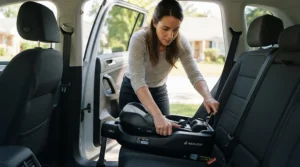
6. Joie i-Spin 360 — 360° swivel for painless loading
Anyone who has contorted over a toddler in a car footwell will appreciate the swivel. Joie i-Spin 360 rotates so the seat faces the door for buckling, then turns back to rear-facing. A lock prevents well-meaning relatives rotating it forwards too early.
It covers birth to about four years (105cm), with six recline positions, six headrest positions and pop-out side-impact “guard surrounds”. It scored a “Good” 1.8 from ADAC, and MadeForMums rated it 4.6. That’s a long way from seven-year ERF, but if daily back strain is your pain point, it’s a worthwhile trade.
Reviewers consistently praised the swivel, the headrest and the padding. The common complaint is weight and bulk, plus uncertainty about which padding to use at each stage. It’s built around a fixed base and a dangling support leg, so it doesn’t move between cars easily. MadeForMums notes the sister model Joie i-Spin Safe has passed the Swedish Plus Test, so shop there if that matters.
Pros:
- ✅ 360° rotation eases loading
- ✅ ADAC 1.8 (Good) and strong parent ratings
- ✅ Six recline positions
Cons:
- ❌ Very heavy and bulky
- ❌ Rear-facing ends at about four years
A £200–£250 range. Strong value for convenience, weaker for longevity.
7. Graco Enhance — budget belted rear-facing to 18kg
Not everyone can spend £450 on a car seat. Graco Enhance is the sensible answer. It’s belted in rear-facing up to 18kg (about four years), and forward-facing afterwards, up to roughly seven.
At 8.47kg it’s light, with four recline positions and a no-rethread harness. Graco highlights side-impact protection and a steel-reinforced frame. That weight makes it easy to move between cars, or hand to grandparents.
The trade-offs are honest ones. MadeForMums’ testers noted it’s not i-Size, and one said it leaves little room in the back when fully reclined for rear-facing, so small cars may struggle. It will also need replacing at about seven. We found no Swedish Plus Test result, and ADAC hasn’t tested it. Reviewers liked the value and the seatbelt fitting in both directions.
Pros:
- ✅ Seatbelt fitting in rear and forward modes
- ✅ Lightweight, easy to move between cars
- ✅ Great value for rear-facing from birth
Cons:
- ❌ Outgrown at about seven
- ❌ May not fit rearwards in smaller cars
Around £130, sold through major UK retailers. Check current price.
Top 7 at a Glance: Price and Test Signals
| Product | Price range | Independent test signals | Best For |
|---|---|---|---|
| Axkid Minikid 4 Max | £450–£500 | Swedish Plus; Mumsnet-tested | Slim cars, long runway |
| BeSafe Stretch | £430–£510 | Swedish Plus; Which? reviewed (full scores paywalled) | Room and recline |
| Axkid One 3 | £550–£650 | Swedish Plus; ADAC 2.2; Mumsnet 80/100 | Easy Isofix fitting |
| Silver Cross Perform | Around £400 | Swedish Plus (per retailer); few independent reviews | Isofix, birth to seven |
| BeSafe iZi Modular A X1 i-Size | Low-£200s plus base | MadeForMums-reviewed; no ADAC test | Two-car families |
| Joie i-Spin 360 | £200–£250 | ADAC 1.8; MadeForMums 4.6 | Swivel convenience |
| Graco Enhance | Around £130 | MadeForMums-reviewed; no ADAC test | Budget and grandparents |
The table shows price doesn’t track test results neatly. Joie i-Spin 360 posts the best ADAC score here at a fraction of premium money, but it only rear-faces to four. If you want the full seven-year runway, you’re choosing between Axkid Minikid 4 Max, BeSafe Stretch, Axkid One 3 and Silver Cross Perform. Fitting style, weight cap and your car then decide.
How to Fit an Extended Rear-Facing Car Seat: Your First-30-Days Playbook
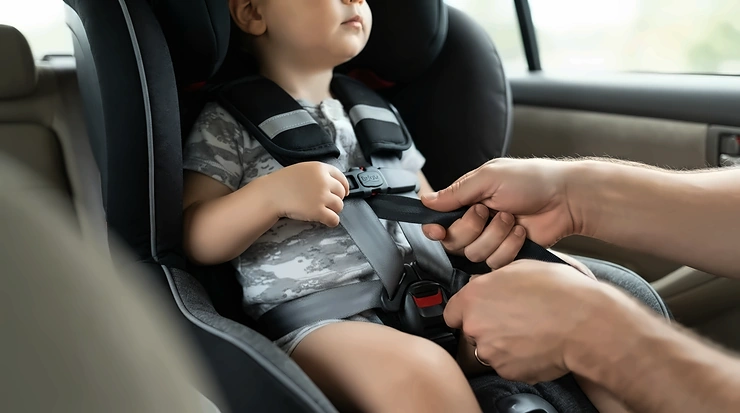
A brilliant seat fitted badly is just an expensive cushion. Which? advises having an extended rear-facing car seat fitted at a specialist retailer. It also warns that some seats are complicated enough that incorrect installs are a genuine risk.
Before you fit: check the manufacturer’s vehicle list, then measure how far the front seat must slide forward. Look for tether anchor points or seat runners if your seat uses tether straps. If it has a support leg, never plant it over underfloor storage, which Which? flags as a weak spot in a crash. Never place a rear-facing seat in the front passenger seat with an active airbag.
During the first week: read the manual twice, then watch the installation video. Check that the belt isn’t twisted and that the seat barely shifts at the belt path. Set the recline for your child’s age, as babies need more angle than older children. Follow the manual’s headrest guidance, which typically has harness straps at or just below the shoulders when rear-facing.
Over the first month: re-check tightness weekly, adjust the headrest as your child grows, and wash covers per the label (the Axkid One 3 cover is washable at 30°C). A seat protector saves upholstery from muddy trainers.
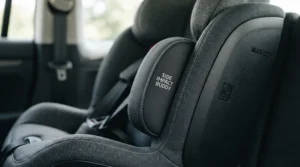
Real-World Scenarios: Which Extended Rear-Facing Car Seat Fits Which Family?
Specs only matter when matched to a life. Here are four typical profiles, with the reasoning.
The narrow-bench family. One hatchback, two car seats, a school run most days. Space is the enemy, so the 44cm Axkid Minikid 4 Max deserves first look. Test it with the front seats where adults actually sit.
The two-car, grandparent-assist family. A dad drives to work, Nan covers Wednesdays, and the seat has to move. BeSafe iZi Modular A X1 i-Size with a second base makes swaps trivial. For a very tight budget, Graco Enhance at about 8.5kg is the lightweight option.
The sore-back commuter. Daily loading in tight car parks makes swivel worthwhile. Joie i-Spin 360 wins here, accepting a four-year rear-facing horizon.
The tall-child, long-journey family. A child at the 95th centile, motorway trips most weekends. Axkid Minikid 4 Max, BeSafe Stretch or Axkid One 3 let you rear-face to 125cm. If your child is heavy, the belted seats’ 36kg limit matters more than Axkid One 3‘s 23kg.
Problem → Solution: Solving Common Extended Rear-Facing Headaches
“My child looks squashed.” Which? says children are flexible and happily sit cross-legged or bend their knees, and the priority is protecting head, neck and organs. Choose seats with adjustable legroom and set it correctly.
“Their head flops when they sleep.” Sloping rear seats can worsen this, says Which?. Pick a seat with recline settings, such as BeSafe Stretch (five) or Silver Cross Perform (five).
“The front passenger has no legroom.” Pre-measure before buying. A slimmer shell such as Axkid Minikid 4 Max can help, though fit varies by car.
“I can’t lift this between cars.” Choose a lighter belted seat like Graco Enhance, or a base-and-seat system like BeSafe iZi Modular A X1 i-Size.
“Muddy shoes are wrecking my seats.” Buy a protective cover, as Which? suggests.
How to Choose an Extended Rear-Facing Car Seat: 7 Steps
The best extended rear-facing car seat is the one that fits your car, your child and your budget, and that you can install correctly every time. Work through these steps.
- Check your car first. Use the manufacturer’s vehicle fit list, then test with front seats set where adults sit.
- Pick belted or Isofix. Belted seats usually reach 36kg. Isofix seats are easier to fit but hit lower weight caps.
- Set your rear-facing horizon. 105cm (about four) is the standard ERF target. 125cm (about seven) needs a bigger seat.
- Look for independent signals. Swedish Plus passes, ADAC scores and Which? reviews help. Which? cautions that a hard-to-install seat can still score poorly.
- Weigh swivel convenience. It eases loading but typically limits the runway.
- Think about comfort. Legroom, recline and washable covers matter on long trips.
- Add up the true cost. Include bases, fitting and accessories.
ERF vs Forward-Facing Toddler Car Seat: What the Evidence Says
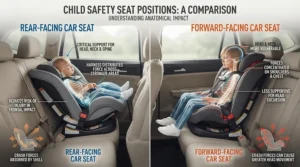
The ERF vs forward-facing toddler car seat debate boils down to one question: where do crash forces go? Which? explains that in a front-on crash with a forward-facing seat, a baby’s neck can face forces equivalent to around 300–320kg. In a rear-facing seat, the shell cradles the head and spreads load across the back.
| Factor | Extended rear-facing seat | Forward-facing harness seat |
|---|---|---|
| Frontal crash protection | Head, neck and spine supported together | Head moves forward on harness |
| Swedish Plus Test | Only rear-facing seats have passed so far | No pass to date |
| Legroom feel | Children bend knees or cross legs | Legs dangle freely |
| Typical cost | Around £130–£650 | Around £65–£300 |
| Best For | Parents prioritising crash protection | Older or larger children, or cars that can’t fit ERF |
The table shows safety on one side and everyday convenience on the other. Forward-facing seats such as the Cybex Pallas S-Fix (with an impact shield) offer a different protective approach, but remain forward-only. Both are legal if approved.
On real-world data, a Folksam study of Swedish child fatalities between 1992 and 2024 estimated that more than one in three child traffic deaths may have been prevented by rear-facing travel. For ages 0–3, up to 48% may have survived. These are retrospective estimates in a Swedish context, so treat them as strong evidence rather than a guarantee.
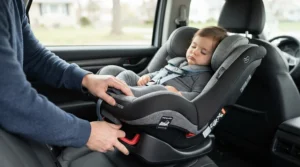
Axkid vs BeSafe Extended Rear-Facing Seat: Which Brand Suits Your Family?
The Axkid vs BeSafe extended rear-facing seat question dominates premium shopping for good reason. Both brands pass the Swedish Plus Test, both rear-face to 125cm/36kg on their flagship belted seats, and both are pricey. The difference is in the details.
| Factor | Axkid Minikid 4 Max | BeSafe Stretch |
|---|---|---|
| Rear-facing limit | 61–125cm / 36kg | 61–125cm / 36kg |
| Fitting | Seatbelt + automatic tethers | Seatbelt, brace + self-tensioning tethers |
| Recline / headrest | 3-step / 13-step | 5 settings / 10-step |
| Legroom (brand figure) | Up to 30cm | Up to 26cm |
| Price range | £450–£500 | £430–£510 |
| Best For | Narrow cars, compact footprint | Roomy shell, flexible recline |
Neither has a clear winner on paper. Axkid Minikid 4 Max leads on compactness and quoted legroom, while BeSafe Stretch offers more recline settings. Our read of parent feedback is that fit in your specific car often decides it. If budget bites, Axkid Minikid 4 Pro (around £390–£400) offers a two-step recline at a lower price.
✨ Ready to shortlist your seat?
🔍 Click any bold product name above to check current pricing and availability, then confirm vehicle fit before you buy. Your child’s next six years of journeys are worth the homework!
Common Mistakes When Buying an Extended Rear-Facing Car Seat
Turning forward at 15 months by default. That’s the legal minimum for i-Size, not the safest option. Revisit the ERF vs forward-facing toddler car seat evidence before switching.
Skipping the car test. Which? stresses checking front-seat legroom, seat angle, underfloor storage and tether anchor points.
Assuming a Plus Test pass equals easy installation. Which? says a hard-to-fit seat can still score poorly.
Ignoring the weight cap. An Isofix seat such as Axkid One 3 stops at 23kg, while belted rivals reach 36kg.
Using a support leg over underfloor storage. It creates a weak point in a crash.
Rear-facing in the front with an active airbag. Don’t.
Buying second-hand. MadeForMums says never; you can’t know the seat’s history.
UK Safety, Regulations and the Swedish Plus Test
UK law requires children to use an approved car seat until they are 12 or 135cm tall, whichever comes first. Seats must meet R44 (weight-based) or R129 (height-based, i-Size). R129 adds mandatory rear-facing until over 15 months, plus side-impact testing.
The Swedish Plus Test is voluntary. Run by Sweden’s VTI research institute, it uses a severe frontal crash with a very short stopping distance and measures neck load. Because the neck-force threshold is so low, only rear-facing seats have passed so far. Which? adds that a pass doesn’t automatically make a seat the safest overall, because installation difficulty still counts.
The Rear Face for Safety campaign, launched during Child Safety Week 2026, encourages parents to keep children rear-facing until at least four years. It’s backed by organisations including CAPT, RoSPA and Road Safety GB.
Long-Term Cost & Maintenance of an Extended Rear-Facing Car Seat
Sticker shock is real, so run the maths. A seat in the £450–£500 range used from about six months to seven years covers roughly six and a half years. That’s around £70–£80 a year. A £200 swivel seat outgrown at four, followed by a booster, could total similar money. The difference is that the longer-lasting seat avoids a mid-childhood changeover.
Maintenance costs are modest. Machine-washable covers cut cleaning bills, and a seat protector is a small extra. If your seat uses a base, like BeSafe iZi Modular A X1 i-Size, add a second base for a second car. For budget families, Graco Enhance around £130 works out cheaper per year, but you’ll replace it sooner.
Check your seat’s age limit, since manufacturers specify lifespans, and replace any seat involved in a crash.

FAQ: Extended Rear-Facing Car Seat Buying Questions
❓ How much does an extended rear-facing car seat cost in the UK?
❓ Where can I buy an extended rear-facing car seat?
❓ Is an extended rear-facing car seat worth the money?
❓ Will an extended rear-facing car seat fit a small car?
❓ Is Axkid vs BeSafe extended rear-facing seat really a close call?
Conclusion: Choosing Your Extended Rear-Facing Car Seat
An extended rear-facing car seat isn’t the cheapest or easiest option, but the evidence from testers and safety campaigners points one way: stay backwards for as long as your child and car allow. For the longest runway in a slim shell, Axkid Minikid 4 Max is hard to beat. If you want roomier comfort and recline choice, BeSafe Stretch is the rival to test. For Isofix simplicity, look at Axkid One 3 or Silver Cross Perform. If back strain rules your day, Joie i-Spin 360 earns its place. For budgets and grandparent duty, Graco Enhance gets the job done.
Whichever you pick, fit it carefully, get it checked, and re-read the manual. Prices and stock change, so check current price and confirm car compatibility.
Recommended for You
- Forward-Facing Toddler Car Seat: 7 Best Safe UK Picks (2026)
- Rotating Toddler Car Seat: 7 Best Picks For UK Parents (2026)
- Baby Car Seat With Isofix Base: 7 Trusted UK Picks (2026)
Disclaimer: This article contains affiliate links. As an Amazon Associate, I earn from qualifying purchases. If you purchase products through these links, we may earn a small commission at no additional cost to you. This guide is general information; always follow the manufacturer’s fitting instructions and consider a professional fitting.
✨ Found this helpful? Share it with your friends! 💬🤗
