
In This Article
Buying a forward-facing toddler car seat feels like a style decision right up until you read a crash-test report. Then it becomes a physics problem with a very small passenger attached. Somewhere between “ooh, lovely fabric” and “will it fit behind my driver’s seat?” sits a decision that’s surprisingly easy to get wrong. A forward-facing toddler car seat is one of the few purchases where “close enough” really isn’t.
The reassuring bit is that UK rules give you a clear framework. According to gov.uk’s child car seat rules, children must normally use a car seat until they’re 12 years old or 135cm tall, whichever comes first. Height-based (i-Size) seats must face the rear until your child is over 15 months old. Only after that can a forward-facing seat in the i-Size range legally come into play. Whether it should is a separate question, and we’ll tackle it honestly.
So I did the legwork. This guide analyses seven real seats sold in the UK, from a belt-fitted budget starter to a swivelling premium convertible. For each one I weighed the manufacturer specs, retailer price ranges at the time of research (late October 2026) and published safety alerts, then translated the jargon into what it means on a wet school run.
If money is tight, there’s a dedicated section on finding a toddler car seat under £200 that doesn’t cut dangerous corners. If you’re packing for a holiday, there’s also a straight-talking look at choosing a toddler car seat for travel, including two popular options I’d steer you away from.
One housekeeping note: prices move constantly, so every figure here is a range. Check the current price before you buy.
What Is a Forward-Facing Toddler Car Seat?
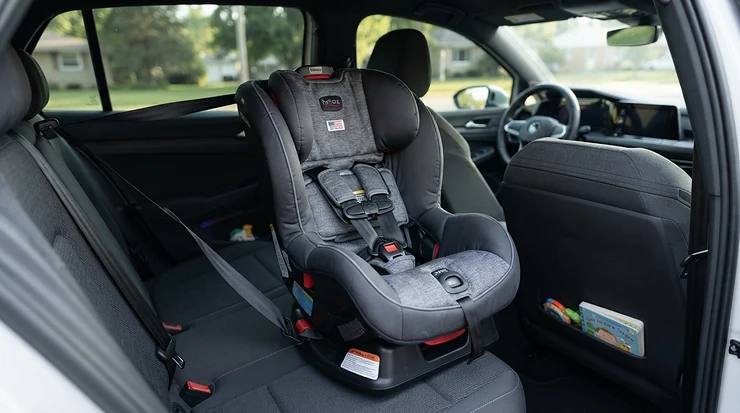
A forward-facing toddler car seat is a child restraint that faces the front of the car, holds your child with a five-point harness or impact shield, and fixes in place with ISOFIX, a top tether or the seat belt. In the UK it’s used from 15 months (i-Size) or 9kg (older weight-based seats).
The obvious difference from the rear-facing seat your baby just outgrew is the direction of travel, and with it how crash forces are spread. In a head-on collision, a forward-facing child’s head and neck take more strain than a rear-facing child’s. That’s why experts keep nagging parents to delay the switch.
i-Size (R129) versus weight-based (R44)
Every legal seat carries an approval label: a capital “E” in a circle, plus either R129 or ECE R44. R129 (i-Size) seats are chosen by your child’s height, include side-impact testing as standard and require rear-facing until over 15 months. R44 seats are chosen by weight. Joie Stages and Joie Every Stage FX sit in this older but still-legal camp.
Forward-only versus convertible
Forward-only seats, such as Joie i-Bold, start at 76cm and can’t face backwards. Convertibles, such as Joie i-Harbour, let you keep a toddler rear-facing and turn them round later. The difference matters more than most shop displays suggest.
Quick Comparison: Seven Seats at a Glance
Short on time? This table puts all seven seats side by side on the things that decide most purchases: approval standard, forward-facing range, how each fits in your car and roughly what it costs. Prices are ranges at the time of research.
| Seat | Standard | Forward-facing range | Fitting | Price range | Best For |
|---|---|---|---|---|---|
| Joie Stages | R44 (weight) | 9–25kg | Vehicle belt | around £80–£120 | Tight budgets, second cars |
| Joie Every Stage FX | R44 (weight) | 9–36kg | ISOFIX + top tether, or belt | around £130–£200 | Buy-once, long-term value |
| Joie i-Bold | R129 (i-Size) | 76–150cm | ISOFIX + top tether, or ISOFIX + belt | around £160 | Entry-level i-Size |
| Britax Römer Evolvafix | R129 (i-Size) | 76–150cm | ISOFIX + top tether, or belt | around £160 | Big-brand, long-life i-Size |
| Cybex Pallas G3 | R129 (i-Size) | 76–150cm | ISOFIX + top tether | around £185–£210 | Parents who dislike harnesses |
| Cosatto On the Go i-Size | R129 (i-Size) | 76–150cm | ISOFIX + top tether | around £130–£180 | Holidays, grandparents’ cars |
| Joie i-Harbour | R129 (i-Size) | 76–105cm (rear-facing to 105cm) | Swivel ISOFIX base | seat alone around £250 | Extended rear-facing first |
Looking at the comparison above, Joie Stages and Joie Every Stage FX are the cheapest routes to a harnessed seat, but both rely on the older weight-based R44 approval. If you’d rather have height-based i-Size without crossing £200, Joie i-Bold and Britax Römer Evolvafix are the obvious pair, with Cybex Pallas G3 hovering right on the budget line. Joie i-Harbour is the outlier: it costs more because it’s built to keep your child rear-facing until 105cm, and only turns forward when you decide the time is right.
💬 Just one click — help others make better buying decisions too!😊
Top 7 Forward-Facing Toddler Car Seats: Expert Analysis
A quick word on method. Each entry blends published specs with aggregated sentiment from parenting sites and retailer reviews, where enough genuine reviews exist. Where they don’t, I say so rather than fill the gap. Independent Which? scores sit behind a paywall, so I haven’t quoted them. I did check every seat against the most recent Which? Don’t Buy list I could access (updated April 2026), and none of these seven appears on it.
1. Joie Stages — cheapest way in, easy to swap
At just under 9kg, Joie Stages is the easiest seat here to carry between cars, and it’s the cheapest by a comfortable margin.
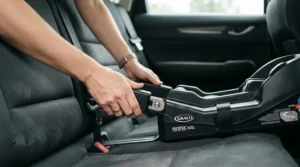
It’s a Group 0+/1/2 seat with R44 approval: rear-facing from birth to 18kg, forward-facing from 9kg to 25kg, so one purchase can stretch from newborn to roughly seven. There’s no ISOFIX. The vehicle’s three-point belt does all the work, routed through colour-coded paths and dual lock-offs. That makes it universal and cheap, but it also puts fitting quality squarely in your hands, and a twisted belt is the classic way a good seat becomes an average one. The harness and headrest rise together in five positions with one hand, so you won’t be re-threading straps in a car park.
Here’s my read: a smart choice for budget-first families or a grandparent’s car. What the spec sheet won’t tell you is that 9kg is a legal floor, not a target. Keep your toddler rear-facing towards that 18kg limit if you can.
Reviewers are largely positive. One major retailer listing averaged close to 4.8 out of 5 from roughly a hundred reviews at the time of research, with the occasional comment that the straps are slightly frustrating.
Pros:
- ✅ Very low price for a five-point harness seat
- ✅ Rear-facing to 18kg, forward-facing to 25kg
- ✅ One-hand headrest and harness adjustment
Cons:
- ❌ Belt-only fitting raises the risk of installation errors
- ❌ Older R44 approval rather than i-Size
Price range: around £80–£120, which is superb value if you take your time over the fitting.
2. Joie Every Stage FX — one seat, birth to 12 years
The pitch for Joie Every Stage FX is “buy once and forget about it”, and on paper it nearly delivers.
It’s a Group 0+/1/2/3 seat covering 0–36kg. It rear-faces to 18kg, then faces forward from 9kg, with ISOFIX and a top tether available for forward-facing Group 1 use and the vehicle belt for the other modes. Retailer Q&A notes that ISOFIX can’t be used while rear-facing, so factor that in if you’ll keep your toddler backwards for longer. At around 14kg it’s a heavyweight, built for staying put rather than shuttling between cars. Six recline positions help sleepy passengers, and the long lifespan means you skip the mid-childhood booster purchase.
Based on the specs, I’d call it the best long-term value among the budget picks: pay once, use until roughly age 12. The trade-off is approval. It’s R44, so you’re on weight-based rules rather than i-Size height limits.
Parent testers quoted by Mother & Baby highlight easy cleaning and a comfy feel. One retailer listing averaged 4.4 out of 5, but from only 14 reviews, so treat that as a hint rather than a verdict.
Pros:
- ✅ One purchase can cover up to 12 years
- ✅ ISOFIX and top-tether option when forward-facing
- ✅ Six recline positions for sleepy passengers
Cons:
- ❌ Around 14kg and awkward to move between cars
- ❌ R44 approval, and no ISOFIX when rear-facing
Price range: around £130–£200, which is strong value if you’d otherwise buy two or three seats.
3. Joie i-Bold — entry-level i-Size at a sensible price
If you want height-based i-Size without paying premium-brand money, Joie i-Bold is the first seat to look at.
It covers 76–150cm, so there’s no weight maths. You simply measure your child. It fits with ISOFIX and a top tether, and Which? also lists an ISOFIX-plus-vehicle-belt option, so check the manual for which applies at each stage. It weighs about 10.3kg and has four recline positions, with the harness rising alongside the headrest. In real terms, ISOFIX removes much of the guesswork of a belt-only install, and that matters, because a seat that isn’t fitted correctly won’t perform properly in a crash.
Looking at the spec, Joie i-Bold suits families who want one i-Size seat to see them through nursery, reception and beyond. The limitation is that it faces forward only. It enters the story after your child has outgrown a rear-facing seat and can’t extend that safest phase.
I couldn’t find enough independent review volume to summarise honestly. Which? first reviewed it in October 2024, but the score is paywalled, so read that alongside recent retailer feedback before buying.
Pros:
- ✅ i-Size approval at a mid-£100s price
- ✅ ISOFIX and top-tether fitting
- ✅ 76–150cm range lasts for years
Cons:
- ❌ No extended rear-facing option
- ❌ Around 10kg with no swivel
Price range: around £160, which I’d call good value for an i-Size seat.
4. Britax Römer Evolvafix — big-brand i-Size built to last
Britax Römer Evolvafix is the sensible shoes of this list: not flashy, built to last, and from a brand most parents recognise.
It covers 76–150cm with integrated ISOFIX connectors and a top tether, or the vehicle belt. There’s a five-point harness that rises with the headrest, plus a recline function. At about 9.8kg it’s lighter than Joie i-Bold, a small but welcome difference when you’re lifting it between two cars. Integrated connectors also mean there’s no separate base to buy, store or lose.
My analysis: this is the pick for parents who prefer a familiar name and want one seat from 15 months through primary school. Which?’s own review teaser acknowledges the long lifespan and flags comfort and crash protection as the questions its lab tests answer. The score itself is paywalled, so I can’t report the verdict. Check it before buying.
I couldn’t verify enough retailer reviews to summarise fairly, and I’d rather say that than guess.
Pros:
- ✅ Integrated ISOFIX plus top-tether fitting
- ✅ Long 76–150cm lifespan
- ✅ Under 10kg for easier car swaps
Cons:
- ❌ No swivel or extended rear-facing mode
- ❌ Forward-facing only, so it starts after 15 months
Price range: around £160, a fair price for a long-lived seat from a big name.
5. Cybex Pallas G3 — impact shield instead of a harness
Most seats here use a five-point harness. Cybex Pallas G3 goes a different way, with a padded impact shield that sits across your child’s torso.
It’s an i-Size seat for 76–150cm, fitted with ISOFIX and a top tether, and at around 8.9kg it’s the lightest long-life seat on this list. Cybex positions the shield as a way to reduce neck loads in a frontal crash. In day-to-day terms, shields generally speed up loading: no chest clip, no twisted straps. The flip side is that fit depends on your child’s torso, so it’s worth trying in person if you can.
My take: it suits parents who find harness wrestling the worst part of the school run. This is reasoning from the design rather than test data, because the seat only launched in late 2025. Which? first reviewed it in May 2026 and the score is paywalled, so long-term owner feedback is thin.
Pros:
- ✅ Impact-shield design aimed at lowering neck loads
- ✅ Lightweight at around 8.9kg
- ✅ ISOFIX and top-tether fitting up to 150cm
Cons:
- ❌ Often priced just over £200
- ❌ Newer seat with limited owner feedback
Price range: around £185–£210 depending on retailer, so it’s good value mainly when it dips under £200.
6. Cosatto On the Go i-Size — folds into its own carry bag
Most car seats are brick-shaped inconveniences. Cosatto On the Go i-Size is deliberately the opposite: it folds up and comes with its own carry bag.
At 5.7kg it weighs roughly half as much as the full-size seats here. It still covers 76–150cm with ISOFIX and a top tether, a five-point harness (tested by Cosatto to 20kg), five recline positions and a built-in top-tether warning system. It later converts to a high-back booster. Cosatto says it’s approved for airline overhead lockers and tested to ADAC-level standards. Those are manufacturer claims I couldn’t verify independently.
In practice, it suits a second seat for grandparents, holidays or hire cars. Because it needs ISOFIX, confirm your destination vehicle has it first.
Retailer review counts are tiny, from single digits to roughly a dozen, so any aggregate would be meaningless. I couldn’t locate a verified Which? verdict either.
Pros:
- ✅ Just 5.7kg with an included carry bag
- ✅ ISOFIX and top-tether fitting
- ✅ Converts to a high-back booster up to 150cm
Cons:
- ❌ Needs ISOFIX points in the vehicle
- ❌ Independent crash-test verdict not verified
Price range: around £130–£180 depending on colour and retailer.
7. Joie i-Harbour — 360° swivel with extended rear-facing
Joie i-Harbour is the odd one out, because it’s really a rear-facing seat that happens to turn forward when you’re ready.
It rear-faces from 40cm up to 105cm (under 18kg) and can face forward from 76cm and at least 15 months. That means you can keep a toddler backwards for years, then flip the seat when the time comes. A 360° swivel base, the i-Base Encore, turns the seat towards the door and saves your back at every buckle-up. The seat shell weighs 7.4kg, the harness and headrest adjust together in six positions, and there’s a support leg for stability.
My honest analysis: this is the seat for parents who see forward-facing as a “when we need to” rather than a “when we legally can”. The catches are price and the compulsory base, so budget for both.
It’s a relatively recent range and I couldn’t verify enough independent reviews to summarise fairly.
Pros:
- ✅ Rear-facing all the way to 105cm
- ✅ 360° swivel eases loading
- ✅ Seat shell is just 7.4kg
Cons:
- ❌ Requires the separate i-Base Encore base
- ❌ Well over £200 once the base is included
Price range: seat alone around £250 at one UK retailer, with the base extra unless bundled. Check current bundle pricing.
✨ Ready to Narrow Down Your Shortlist?
🔍 Match the seat to your child’s height or weight, your car and your budget, then click any highlighted seat name to check current pricing and availability. A well-chosen, well-fitted seat is the best peace of mind you’ll buy this year! 🚗
How to Choose a Forward-Facing Toddler Car Seat
Choose by height or weight, confirm the approval label, keep your child rear-facing as long as the seat sensibly allows, then match the seat to your car and budget. In detail:
- Check the label. Look for a capital E in a circle with R129 or ECE R44. Seats approved elsewhere, such as US models, aren’t legal here.
- Measure or weigh. i-Size seats go by height, R44 seats by weight. Move up only when your child has genuinely outgrown the current limits.
- Decide on direction. An i-Size seat can legally turn forward after 15 months, but many experts advise staying rear-facing for as long as the seat allows.
- Match the fitting to your car. ISOFIX plus a top tether removes much of the guesswork. Belt-fitted seats work in more cars but demand careful installation.
- Test it in your car. It should sit flush, tighten firmly and still leave room for front-seat passengers. Shops that let you try before buying earn their keep here.
- Check independent crash tests. Legal approval is the minimum. Which? runs tougher tests and publishes a Don’t Buy list of seats that passed the regulations but failed its own.
- Weigh lifespan against price. A 76–150cm seat costs more upfront but may save a second purchase. A cheaper seat that fits properly beats a pricier one that doesn’t.
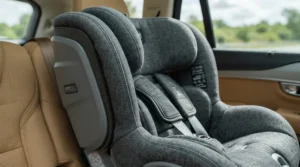
Safety and Regulations: R129, R44 and the 15-Month Rule
UK law is short on loopholes. Your child must use an approved seat suited to their height or weight, fitted according to the manufacturer’s instructions. Which? reports that drivers can face fines of up to £500 if a child under 14 isn’t in the correct seat or wearing a seat belt.
The 15-month rule is the one parents trip over. Height-based i-Size seats must face the rear until your child is over 15 months old. Weight-based seats allow forward-facing from 9kg, depending on the group, but that is a minimum and not a recommendation. A 2025 survey of 1,000 UK parents, reported by insurer Ageas, found 44% were unaware of the 15-month rule, and many switch to forward-facing too soon.
Then there’s the gap between “legal” and “tested well”. Which? is the only UK site I found crash-testing seats in two simulations: a front crash equivalent to a head-on collision at 31mph, and a side crash equivalent to 37mph. Those speeds go beyond the legal minimum. A seat can pass the regulations and still disappoint in the lab, which is why a certification sticker is a starting point and not the finish line.
Forward-Facing vs Rear-Facing: What Experts Say and What It Costs
Both are legal after 15 months. The question is whether you should switch yet. Which?’s car seat expert is blunt that you shouldn’t turn a child forward-facing too early. There are plenty of extended rear-facing seats now that let you keep your child backwards until around four.
That doesn’t make forward-facing wrong. It makes it a decision. Once your child has genuinely outgrown the rear-facing limits, a well-fitted forward-facing seat is a perfectly legitimate next step.
| Factor | Forward-facing seat | Extended rear-facing seat | Best For |
|---|---|---|---|
| Legal start (i-Size) | Over 15 months and 76cm | From birth | Rear-facing for babies, forward after outgrowing |
| Expert stance | Fine once rear-facing limits are outgrown | Advised for as long as the seat allows, up to around four | Rear-facing where budget and space allow |
| Typical cost | Joie i-Bold at around £160 | Joie i-Harbour at around £250 seat-only, plus base | Forward-facing for tighter budgets |
| Lifespan | Britax Römer Evolvafix covers 76–150cm | Typically stops at 105cm, so a second seat follows | Forward-facing for buy-once families |
| Car space | Typically more rear legroom | Typically needs more front-to-back room | Forward-facing for smaller cars |
The table shows a clear trade-off: forward-facing wins on price and lifespan, while extended rear-facing wins on expert backing. If your budget stretches, Joie i-Harbour lets you have both, rear-facing now and forward-facing later. If it doesn’t, Joie i-Bold or Britax Römer Evolvafix are sensible options as long as you wait until your child has outgrown their previous seat.
Features That Actually Matter (And Those That Don’t)
Seat marketing loves a gimmick. Here’s how I’d sort the genuinely useful from the decorative.
Worth paying for:
- ISOFIX with a top tether, as found on Britax Römer Evolvafix and Joie i-Bold. It reduces fitting errors, and fitting errors are where protection quietly leaks away.
- Side-impact protection, which is standard testing on i-Size seats.
- A harness or shield that adjusts with one hand and moves with the headrest, so you don’t re-thread straps every growth spurt.
- Washable covers. Toddlers treat car seats as snack bars.
- Reasonable weight. A seat you can’t lift won’t get moved between cars, which matters if you rely on grandparents.
Nice, but optional:
- A 360° swivel base, as on Joie i-Harbour. Lovely for backs, not a safety feature.
- Multiple recline positions. Great for sleepers, and each one still needs to fit your car.
- Impact shields versus harnesses, as on Cybex Pallas G3. It’s preference, not a verdict.
Mostly marketing:
- Cup holders and fancy fabric names.
- Vague “ADAC-level” or “tested beyond the standard” claims. They’re only as good as the published result, so look for independent scores rather than slogans.
Toddler Car Seat Under £200: Where the Value Really Sits
The good news is that £200 buys a lot of seat. The better news is that price isn’t a safety rating. Every seat here meets the legal standard, so what differs is lifespan, fitting method and how well each seat copes under tougher independent tests.
For a toddler car seat under £200, the shortlist is Joie Stages, Joie Every Stage FX, Joie i-Bold, Britax Römer Evolvafix and Cosatto On the Go i-Size, with Cybex Pallas G3 hovering near the line.
| Seat | Price range | Realistic span | Value verdict | Best For |
|---|---|---|---|---|
| Joie Stages | around £80–£120 | 9–25kg, roughly 9 months to 7 years | Lowest cost per year | Tightest budgets |
| Joie Every Stage FX | around £130–£200 | 9–36kg, up to about 12 years | Best if you’d otherwise buy a booster | Buy-once families |
| Joie i-Bold | around £160 | 76–150cm | Cheapest i-Size here | Entry-level i-Size |
| Britax Römer Evolvafix | around £160 | 76–150cm | Strong for a big brand | Brand-conscious buyers |
| Cosatto On the Go i-Size | around £130–£180 | 76–150cm | Pays off if you travel | Second seat, holidays |
| Cybex Pallas G3 | around £185–£210 | 76–150cm | Borderline on budget | Harness-averse parents |
On paper, spreading the cost over realistic years of use makes Joie Stages and the i-Size pair surprisingly similar per year. The extra money buys you ISOFIX and height-based rules rather than more years. Meanwhile Cosatto On the Go i-Size is the best value only if you’ll genuinely use that portability.
One warning: don’t chase savings second-hand. Which? points out that hidden damage, missing instructions and out-of-date approval labels are common risks. Most manufacturers also advise replacing a seat after a significant crash, and a used seat’s history is rarely knowable.

Toddler Car Seat for Travel: Taxis, Hire Cars and Flights
Travelling with a toddler is where seat choices go wrong fastest. Which? notes that taxis, minicabs and Ubers carry legal exceptions, yet still recommends finding a firm that supplies a seat or bringing your own. A lap is not a restraint.
Two popular travel seats deserve a caution. Maxi-Cosi Nomad Plus, a foldable belt-fitted seat, passed the legal i-Size tests but was automatically downgraded by Which? to a 0% Don’t Buy. In its front-crash test the connection between the seat base and backrest broke, letting the dummy move too far forward. WAYB Pico, beloved of US travel bloggers, is certified to American standards. Which? states that seats approved outside the EU can’t be used in the UK, so however light it is, it isn’t legal here.
For a toddler car seat for travel, I’d shortlist Cosatto On the Go i-Size (5.7kg, ISOFIX, carry bag included), with the caveat that its independent verdict isn’t verified. Joie Stages is heavier at just under 9kg but belt-fitted, so it works in cars without ISOFIX. If you’re driving to a UK holiday, your everyday Joie i-Bold or Britax Römer Evolvafix is the simplest answer.
Before you go, check your airline’s policy and practise the fitting at home. Which? also notes EU-approved seats can’t be used in countries such as the US, so check local rules for long-haul trips.
How to Fit a Forward-Facing Toddler Car Seat: Your First-30-Days Guide
A great seat fitted badly is just an expensive cushion. Work through this checklist.
- Read the manual and your car handbook first. Confirm which rear seats are approved for your seat and where the top-tether anchor lives.
- For ISOFIX seats, push the connectors in until the indicators confirm engagement, then attach the top tether and pull it taut. The tether limits how far the seat can pitch forward in a crash.
- For belt-fitted seats such as Joie Stages, follow the colour-coded belt paths, avoid twists, engage the lock-offs and press the seat down firmly while tightening. A common rule of thumb is no more than about 2.5cm of side-to-side movement at the belt path.
- Set the harness as the manual advises, generally at or just above shoulder height when forward-facing. It should be snug enough that you can’t pinch the strap at the collarbone. Avoid bulky coats under it.
- Re-check tightness weekly for the first month, and again after growth spurts. Raise the headrest as your child grows, and keep the manual in the glovebox.
Common first-month mistakes include forgetting the top tether, leaving a loose belt, twisting harness straps and adding unapproved padding. All of them are easy to fix once you spot them.
Real-World Scenarios: Which Seat Suits Which Family?
These illustrative profiles show how the analysis plays out. They’re composites, not case studies of real families.
The budget-first family. One car, a daily 20-minute nursery run, roughly £100 to spend, and a grandparent who occasionally drives. Joie Stages moves easily between cars at just under 9kg and offers a long range. The key discipline is staying rear-facing towards its 18kg limit and fitting the belt carefully.
The buy-once family. A two-year-old, a baby on the way and a wish to avoid another purchase before secondary school. With ISOFIX in the car and under £200 to spend, Britax Römer Evolvafix or Joie i-Bold cover 76–150cm. Check the fit alongside the new baby’s seat before you commit.
The holiday-heavy family. Two flights a year, hire cars at both ends and a daily seat that stays at home. Cosatto On the Go i-Size works as a second seat while Joie i-Bold stays on everyday duty. Confirm ISOFIX in the hire car, and steer clear of WAYB Pico and Maxi-Cosi Nomad Plus.
If your back seat is tight, Cybex Pallas G3‘s lighter shield design is worth trying in person.
Common Mistakes When Buying a Forward-Facing Toddler Car Seat
- Turning forward too soon. The 15-month rule is a legal minimum, not a milestone to celebrate.
- Buying on style alone. A seat that doesn’t fit your car’s rear bench properly is a safety problem, however pretty the fabric.
- Skipping the top tether. It’s the cheapest safety feature on the seat and the easiest to forget.
- Trusting slogans over scores. “Tested beyond the standard” sounds reassuring, but only a published independent result tells you how it performed.
- Assuming i-Size automatically means best. Which?’s Don’t Buy list includes seats that passed the regulations.
- Buying second-hand to save money. Hidden damage is invisible, and the history is rarely knowable.
- Ignoring the vehicle. Check ISOFIX availability before buying an ISOFIX-only seat.
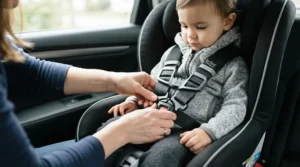
FAQ
❓ Which forward-facing toddler car seat is lightest for swapping between cars?
❓ Is a second-hand toddler car seat worth the saving?
❓ Do I need ISOFIX for a toddler car seat for travel?
❓ How long will a forward-facing toddler car seat last?
❓ Can I use an American toddler car seat in the UK?
Conclusion
Choosing a forward-facing toddler car seat comes down to four honest questions: what does your child measure or weigh, what does your car support, how long do you want the seat to last, and what can you spend?
If budget leads, Joie Stages is the cheapest way in and Joie Every Stage FX the best buy-once option, though both use the older R44 system. If you want height-based i-Size under £200, Joie i-Bold and Britax Römer Evolvafix are the sensible pair, with Cybex Pallas G3 worth a look when it dips below the line. For holidays, Cosatto On the Go i-Size is my shortlist pick, with the caveat that I couldn’t verify an independent crash score. If you can stretch your budget, Joie i-Harbour lets you keep your child rear-facing to 105cm before turning forward.
Whichever you choose, treat a forward-facing toddler car seat as the second act of a safety story that began rear-facing. Fit it carefully, re-check it often, and check current pricing before you buy.
Recommended for You
- Rotating Toddler Car Seat: 7 Best Picks For UK Parents (2026)
- Baby Car Seat With Isofix Base: 7 Trusted UK Picks (2026)
- I-Size Infant Car Seat: 7 Best Picks For UK Parents (2026)
Disclaimer: This article contains affiliate links. As an Amazon Associate, I earn from qualifying purchases. If you purchase products through these links, we may earn a small commission at no additional cost to you.
✨ Found this helpful? Share it with your friends! 💬🤗
