In This Article
There’s a particular kind of panic that hits somewhere around week 30 of pregnancy, usually while scrolling a baby forum at 2am, when you realise “pushchair” is not one product but an entire ecosystem of buckles, wheel sizes and strong opinions. Somewhere in that scroll, you’ll bump into the term reversible seat pushchair, and if you’re anything like most new parents, you’ll wonder whether it’s a genuine game-changer or just clever marketing dressed up in nice fabric.
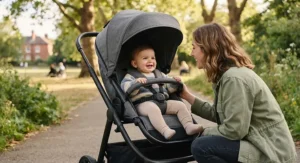
Here’s the short, honest answer: a reversible seat pushchair is one where the seat unit clicks off and re-attaches facing either you (parent facing) or the world ahead (forward facing), without needing a different seat or a trip back to the shop. It typically works from birth through to around four years old, and it’s the single feature parents most often say they wish they’d prioritised sooner. This guide walks through seven genuinely available models on amazon.co.uk, from budget-friendly to properly premium, so you can weigh the trade-offs with your eyes open rather than your wallet closed.
Why does orientation matter so much? Because, as researchers at the University of Dundee found in a widely cited study on buggy orientation and parent-infant interaction, parents were roughly twice as likely to talk to a baby who was facing them than one facing outward. Below, we’ll unpack what that means practically, not just emotionally, and help you choose a parent facing pushchair that suits your life rather than someone else’s Instagram feed.
What Is a Reversible Seat Pushchair?
A reversible seat pushchair is a buggy whose seat unit can be turned to face the pushing parent or the direction of travel, usually by releasing two side buttons and flipping the unit round on the same chassis. Most reversible pushchairs work from birth to roughly 22kg, making them a genuine newborn-to-toddler solution rather than a stopgap you’ll outgrow by six months.
Quick Comparison Table
Before we go deep on all seven, here’s the shortlist for anyone who wants the headline numbers without the essay.
| Pushchair | Weight | Suitable From | Best For |
|---|---|---|---|
| My Babiie MB450 | 13-14.8kg | Birth to 22kg | Tightest budgets |
| Baby Jogger City Sights | 11.3kg | Birth to approx. 4 years | All-rounder families |
| Joolz Hub² | 8.8-9kg | Newborn to 4 years | Narrow doorways, flats |
| Bugaboo Dragonfly | 7.9-10.4kg | Birth to approx. 4 years | Lightest premium fold |
Looking at this snapshot, the pattern that jumps out is weight versus price: the cheapest pushchair here is also the heaviest to lug up stairs, while the lightest, the Bugaboo Dragonfly, costs roughly four times as much. That’s not a coincidence – lighter aluminium and magnesium frames cost more to engineer than steel-heavy budget chassis, so if you’re a second-floor flat dweller without a lift, the extra spend on a lighter frame may be the single best money you spend on baby kit. Families who mostly transfer the pushchair in and out of a car boot, rather than up stairs daily, can safely prioritise price over grams.
💬 Ready to compare these buggies properly? Check current prices before you decide!😊
Top 7 Reversible Seat Pushchairs: Expert Analysis
We’ve deliberately spread this list across budget, mid-range and premium price brackets, plus a couple of lesser-known but genuinely well-specced alternatives, so there’s a realistic option whatever your circumstances.
1. My Babiie MB450 — best budget reversible pushchair
The MB450 proves you don’t need to spend big to get a proper reversible seat pushchair, and that’s precisely why it opens this list. Key specs with real-world meaning: the seat is suitable from birth to 22kg with an aluminium frame (box weight 14.8kg), a telescopic handle adjustable between 91-104cm, and front-and-rear wheel suspension with puncture-proof all-terrain tyres – meaning tall or short parents both get a comfortable pushing position, and you’re not gambling on a flat tyre mid-walk. My Babiie built its reputation on celebrity-backed but genuinely affordable ranges, and the MB450 is aimed squarely at first-time parents who want the newborn-to-toddler flexibility of premium brands without the premium invoice.
Reviewers consistently highlight the magnetic buckle system as unexpectedly premium for the price point, since fumbling a five-point harness with a squirming toddler is nobody’s idea of fun. A recurring theme in aggregated feedback is that the large storage basket genuinely holds a proper shop, not just a nappy bag, though some buyers note the fabric quality feels more “high street” than “boutique” after a year of daily use – which, frankly, is a fair trade at this price bracket.
Pros:
- ✅ Genuinely reversible seat at a budget price point
- ✅ Magnetic buckle makes strapping in fast and fuss-free
- ✅ Adjustable handle suits parents of different heights
Cons:
- ❌ Heavier than most mid-range and premium rivals
- ❌ Fabric feels less premium after extended daily use
At around £160-£230 depending on retailer and colourway, the MB450 represents strong value if you want the reversible feature without the four-figure price tag some premium brands demand.
2. Lorelli Makaya 360 Rotation Stroller — best 360-degree instant flip
Where most reversible pushchairs need you to lift the seat off the chassis to change direction, the Makaya’s headline trick is a genuine 360-degree rotating seat that flips between parent and world facing without detaching anything. In practice, that means a quicker change when your toddler suddenly wants to see the ducks, rather than the usual two-handed unclip-and-reattach routine. The seat itself has a three-position reclining backrest and EPS memory foam padding, rated from birth to 22kg, with swivel front wheels for manoeuvring around supermarket aisles.
What most buyers overlook about budget-tier strollers like this is that “lightweight” cuts both ways: at 9.15kg it’s genuinely easy to lift into a car boot, but that lighter build generally means less robust suspension for rough pavements and cobbles compared with the heavier all-terrain models further down this list. Aggregated customer sentiment tends to praise the instant rotation mechanism as a genuine point of difference versus similarly priced rivals, while some reviewers flag that the synchronised rear brake requires a firmer stamp than expected to engage fully.
Pros:
- ✅ True 360-degree seat rotation, no detaching required
- ✅ Very lightweight at 9.15kg for easy lifting
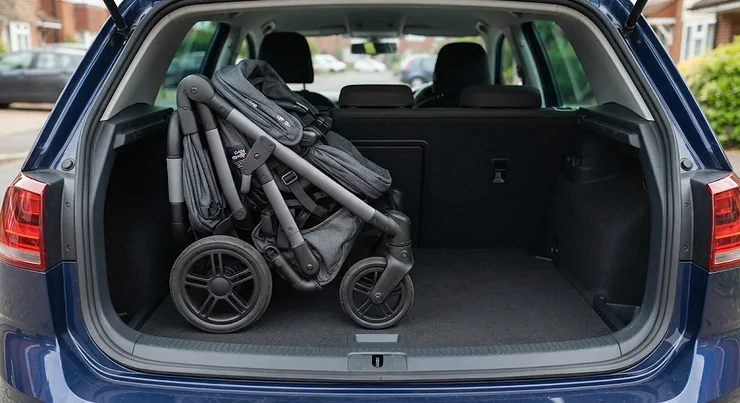
- ✅ Compact one-hand fold suits smaller car boots
Cons:
- ❌ Less suited to rough or uneven terrain
- ❌ Rear brake needs a firm press to engage properly
Priced under £150 in most cases, the Makaya undercuts nearly everything else on this list, making it a smart pick for families prioritising day-to-day city and pavement use over rugged countryside walks.
3. Baby Jogger City Sights — best all-rounder for growing families
The City Sights earned a Red Dot Design Award in 2022, and on the spec sheet it’s easy to see why: an 11.3kg reversible bucket-style seat, foam-filled all-terrain tyres, a height-adjustable handle, and compatibility with a carrycot, infant car seat or glider board for up to eight total configurations. Suitable from birth (with the optional carrycot or car seat adapters) through to around four years old, this is the pushchair equivalent of a Swiss Army knife – not the lightest tool in the drawer, but rarely the wrong one for the job.
Based on the spec comparison with pricier rivals, the City Sights punches well above its bracket: it delivers a lifetime frame warranty and genuinely capable foam-filled tyres at a fraction of premium-brand pricing. Reviewers who tested it over several weeks reported the fold mechanism takes a handful of attempts to master, with a pinch-release that isn’t immediately intuitive, and the carrycot at 4.4kg can be a genuine struggle to lift with a sleeping newborn inside, particularly for parents recovering from a caesarean.
Pros:
- ✅ Reversible seat plus carrycot and car-seat compatibility
- ✅ Lifetime warranty on the frame gives long-term confidence
- ✅ Foam-filled tyres handle pavements and light off-road well
Cons:
- ❌ Fold mechanism takes practice to master quickly
- ❌ Carrycot is awkward to lift one-handed
Typically priced from around £280-£330 for the pushchair alone, or up to the mid-£600s bundled with a carrycot, the City Sights sits comfortably as a mid-range workhorse for families who want genuine long-term versatility.
4. Joolz Hub² — best for narrow doorways and flat living
If you live somewhere with a lift the size of a phone box, or shop aisles where standard buggies feel like tanks, the Joolz Hub² was built with you in mind. At just 8.8-9kg with the seat attached, it’s one of the lighter reversible pushchairs on the market, backed by a 10-year transferable warranty that genuinely stands out in an industry where most guarantees run two or three years. The reversible seat unit reclines through several positions and is rated newborn to four years, with a notably lower handlebar starting height that suits shorter parents better than many taller-handled rivals.
Here’s what the spec sheet won’t tell you, but reviewers consistently note: the compact frame that makes the Hub² brilliant in tight spaces also means the tighter suspension can feel jarring over kerbs and potholes compared with bigger-wheeled all-terrain buggies. One parent tester who used it daily for two children over eight weeks described it as “the best slimline stroller” for city life, while flagging that folding it with the seat still attached takes a bit of practice to do smoothly and quickly.
Pros:
- ✅ Genuinely lightweight at under 9kg with seat attached
- ✅ Industry-leading 10-year transferable warranty
- ✅ Compact enough for narrow doorways and public transport
Cons:
- ❌ Tighter suspension struggles more over kerbs and potholes
- ❌ Folding with the seat attached needs some practice
At around £600-£700 for the chassis and seat, the Hub² sits in the upper-middle bracket, justified largely by its warranty and city-specific engineering rather than raw features.
5. Nuna Mixx Next — best mid-premium travel system pick
Nuna built a genuine reputation for engineering thoughtfulness, and the Mixx Next shows it: a reversible, fully removable seat with a “true-flat” sleeper recline across five positions, Free Flex rear suspension paired with progressive front suspension, and a chassis that folds compactly even with the seat still attached, regardless of which way it’s facing. The seat itself sits notably high on the frame – Nuna even markets it as table-height, so older toddlers can sit at a normal dining table without a booster.
What most buyers overlook about the Mixx Next is how much that seat height changes the daily experience: no more crouching to lift a baby out, which matters more than it sounds like on the fortieth nappy change of the week. Reviewers who tested it across uneven pavements, forest walks and grassy fields reported the enhanced rear suspension noticeably smooths out rough terrain compared with the previous Mixx generation, though some noted it’s on the heavier side for a mid-range stroller and the bassinet is sold separately rather than included as standard.
Pros:
- ✅ True-flat, five-position reversible sleeper seat
- ✅ Table-height seating suits toddlers at meals too
- ✅ Compact fold works with seat attached, either direction
Cons:
- ❌ Heavier than several rivals in the same price bracket
- ❌ Carrycot/bassinet costs extra on top of the RRP
At roughly £600-£700 for the pushchair alone, rising toward the £800s with a carrycot bundled in, the Mixx Next undercuts flagship names like Silver Cross and Bugaboo while borrowing several of their better engineering ideas.
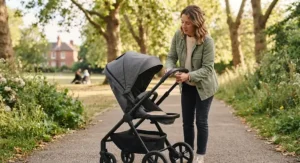
6. Silver Cross Reef 2 — best premium British heritage pick
Silver Cross has been building prams since Victorian times, and the Reef 2 wears that heritage as more than marketing gloss. It’s an all-terrain travel system with a reversible, lie-flat seat, a magnetic “Genius” buckle, four-wheel suspension and genuinely large wheels built for rural paths as much as city pavements, rated from birth to around 22-25kg depending on configuration. The one-hand fold works regardless of which way the seat is facing, and the whole unit self-stands once folded, keeping the handlebar off dirty pavements.
Honest analysis here has to acknowledge the price tag: this is a buggy for parents who see it as a multi-year investment rather than a disposable purchase, backed by a five-year guarantee that’s genuinely generous by industry standards. Aggregated reviewer sentiment praises the ride quality on rougher terrain and the premium, sustainably sourced fabrics, though one recurring theme across independent reviews is that the magnetic buckle system takes a session or two of practice before it clicks (quite literally) for tired new parents.
Pros:
- ✅ Genuinely capable four-wheel suspension for varied terrain
- ✅ Five-year guarantee is unusually generous
- ✅ One-hand fold works in either seat orientation
Cons:
- ❌ Among the priciest options on this list
- ❌ Magnetic buckle has a learning curve at first
Prices range widely from around £700 for the pushchair alone up toward the low four figures for a full bundle with carrycot and accessories, positioning the Reef 2 firmly as a considered, premium purchase.
7. Bugaboo Dragonfly — best lightest premium city fold
Bugaboo’s Dragonfly earned the nickname “future city pushchair” for good reason: at 7.9-10.4kg it’s one of the lightest prams the brand has ever made, yet it retains a patented one-hand fold that works with the seat or carrycot still attached, in any direction the seat happens to be facing. The underseat basket holds up to 10kg, which is genuinely enough for a proper weekly shop, and it’s compatible with car seat adapters from Nuna, Cybex, Maxi-Cosi and Bugaboo’s own Turtle range, making it a flexible travel-system hub rather than a single-brand commitment.
What the spec sheet won’t tell you, but user reports suggest, is that this lightness comes with a trade-off: several reviewers note the Dragonfly feels best suited to genuine city use rather than serious all-terrain adventuring, and the frame is on the larger side once assembled, which can be awkward for smaller flats despite the light carry weight. Aggregated feedback consistently praises the fold mechanism as close to instantaneous once mastered, and the vegetarian-leather handlebar as a genuinely comfortable, premium touch.
Pros:
- ✅ Among the lightest full-size premium pushchairs available
- ✅ One-hand fold works with seat or carrycot attached
- ✅ Wide car-seat compatibility across multiple brands
Cons:
- ❌ Better suited to city use than rough terrain
- ❌ Frame footprint is larger than the low weight suggests
Typically priced from around £650-£700 for the seat unit, rising to the mid-£900s bundled with a carrycot, the Dragonfly sits at the top of this list’s price range but justifies it with genuinely class-leading engineering.
Top 7 at a Glance: Full Specification Comparison
| Pushchair | Weight | Price Range | Best For |
|---|---|---|---|
| My Babiie MB450 | 13-14.8kg | Under £230 | Tightest budgets |
| Lorelli Makaya 360 | 9.15kg | Under £150 | Instant seat flips |
| Baby Jogger City Sights | 11.3kg | £280-£330 (pushchair only) | All-round versatility |
| Joolz Hub² | 8.8-9kg | £600-£700 | Flats and narrow doorways |
| Nuna Mixx Next | Around 12kg | £600-£700 | Table-height, smooth ride |
| Silver Cross Reef 2 | 13.6kg | £700-£1,000+ | Rural, all-terrain families |
| Bugaboo Dragonfly | 7.9-10.4kg | £650-£950 | Lightest premium city fold |
Read across this table and a clear value curve emerges: weight and price rise together up to a point, then premium engineering – like the Bugaboo Dragonfly‘s patented one-hand fold or the Joolz Hub²‘s 10-year warranty – starts commanding a premium that has nothing to do with raw kilograms. The Baby Jogger City Sights stands out as the value sweet spot, borrowing several premium-feeling touches (lifetime frame warranty, foam-filled tyres) at a genuinely mid-range price. If your budget caps out under £250, the My Babiie MB450 and Lorelli Makaya remain the only realistic reversible options on this list, and neither compromises on the core reversible mechanism to hit that price.
Benefits vs Traditional Forward-Only Buggies
| Factor | Reversible Seat Pushchair | Forward-Facing-Only Buggy |
|---|---|---|
| Newborn suitability | Often usable from birth with flat recline | Usually needs a separate carrycot |
| Parent-baby interaction | Higher, per Sutton Trust research | Lower reported interaction |
| Long-term flexibility | Grows with changing needs to age 4 | Fixed orientation throughout |
| Typical weight | Slightly heavier due to dual-facing mechanism | Often lighter, simpler frame |
| Resale value | Generally higher given versatility | Can be lower on the second-hand market |
The clearest takeaway from this comparison is that reversible pushchairs trade a small weight penalty for a meaningful gain in flexibility and, according to the research discussed later in this guide, parent-child interaction during the early months. Forward-facing-only buggies still have a place – typically for older toddlers who’ve already outgrown the newborn stage and simply need a lighter, simpler frame for nursery runs and days out. For families buying one pushchair to last from birth to preschool, though, the reversible category remains the more future-proof choice.
Best Parent Facing Buggy: Practical Usage Guide
Getting the most from a parent facing pushchair isn’t just about the purchase – it’s about the first thirty days of actually using it. Start by practising the seat-flip mechanism at home, empty, before your first proper outing; nearly every reversible pushchair has a slightly different release-and-click sequence, and fumbling with it on a rainy high street with a crying baby is not the moment to learn. Set the handlebar height correctly for whoever pushes it most, since an incorrectly angled handle is one of the most common causes of shoulder and lower back strain reported by new parents.
A common early mistake is leaving the seat in whichever direction the shop assistant set it up, rather than actively choosing parent facing for the newborn months when eye contact and reassurance matter most. Build a light maintenance habit too: wipe wheels after wet walks to stop grit building up in the axles, check the harness buckle monthly for wear, and re-tighten any loose bolts on the frame every few weeks, since regular pavement vibration can work fixings gradually loose. None of this takes more than a few minutes, but skipping it is exactly how a smooth-folding buggy turns into a squeaky, sticky one by month six.
Reversible Pushchair Newborn to Toddler: Real-World Scenarios
Picture three very different households, all shopping for the same type of product. First, a first-time couple in a third-floor flat with no lift, expecting their first baby in six weeks: for them, the lightweight Joolz Hub² or Bugaboo Dragonfly makes daily life materially easier, since every kilogram matters when you’re hauling a folded buggy up three flights with a baby on your hip. Second, a family with a toddler already in nursery and a newborn on the way, living in a semi-detached house with a driveway: the Baby Jogger City Sights or Nuna Mixx Next suit them well, since their frames handle mixed terrain and the reversible seat lets the toddler face forward for independence while a younger sibling still rides parent facing in future.
Third, a rural family who walks daily on unpaved footpaths and often needs the buggy to double as a shopping trolley: here, the Silver Cross Reef 2‘s four-wheel suspension and large storage basket earn their higher price tag, while a budget-conscious family doing mostly short local errands may find the My Babiie MB450 or Lorelli Makaya perfectly adequate without the premium spend. Matching the buggy to your actual daily terrain and storage constraints, rather than to what looks best in a showroom, is the single biggest factor in long-term satisfaction.
✨ Don’t Miss These Exclusive Deals!
🔍 Take your pushchair shopping to the next level with these carefully selected reversible buggies. Click through to check current pricing and availability, and find the parent facing pushchair that actually fits your family’s daily routine!
Forward and Parent Facing Pushchair: Buyer’s Decision Framework
If eye contact and bonding during the newborn months are your top priority, choose a reversible seat pushchair and keep it parent facing until your baby is confidently sitting up and showing curiosity about their surroundings, typically somewhere between six and twelve months. If you’re regularly navigating narrow shop doorways, tight flats or crowded public transport, prioritise weight and folded size over raw features – the Joolz Hub² and Bugaboo Dragonfly both suit this brief. If your daily walks involve genuine rough terrain, kerbs or gravel paths, choose a model with proper four-wheel suspension and larger tyres, such as the Silver Cross Reef 2 or Baby Jogger City Sights, since lighter city-focused frames trade off some ride comfort for portability.
If budget is the deciding factor and you mostly walk on pavements, a well-specced budget reversible pushchair like the My Babiie MB450 or Lorelli Makaya genuinely delivers the core reversible functionality without the four-figure spend. And if you already own an infant car seat from a specific brand, check car-seat-adapter compatibility before anything else, since travel-system flexibility can save you buying a second full unit later.
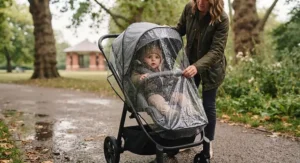
How to Choose a Reversible Seat Pushchair
Working through these criteria in order will save you hours of comparison-site scrolling later.
- Confirm the weight limit and age range. Most reversible pushchairs run birth to 22kg (roughly four years), but always check whether a carrycot or car seat adapter is needed for true newborn use.
- Weigh the pushchair itself, not just the box. A three-kilogram difference barely registers in a showroom but matters enormously on the fortieth staircase climb.
- Check the fold mechanism with the seat attached. Some models only fold neatly in one seat orientation, which is a genuine daily inconvenience if you regularly switch direction.
- Assess suspension against your actual terrain. Four-wheel suspension and larger tyres matter far more on cobbles and gravel than on smooth pavements.
- Look at the warranty length. A 10-year warranty, as offered on the Joolz Hub², signals real manufacturer confidence in long-term build quality.
- Check car-seat and carrycot compatibility. If you already own compatible car seats, this alone can steer your decision toward one brand over another.
- Read aggregated review sentiment, not just star ratings. A 4.5-star average can hide a recurring, specific complaint – like a stiff buckle – that matters enormously to your daily use.
Parent Facing vs Forward Facing Buggy: What the Research Actually Shows
This is the debate that genuinely divides parenting forums, so it’s worth grounding it in real evidence rather than opinion. The most frequently cited research remains a 2008 University of Dundee study, which found parents spoke to their babies roughly twice as often when the seat faced them, with more laughing and interaction recorded on both sides. The same research noted forward-facing babies showed slightly higher heart rates – though researchers were careful to point out that heart rate isn’t automatically a marker of distress, since excitement and stimulation raise it too. Independent lab-based product testing from consumer body Which? reinforces that seat orientation is just one factor among many worth weighing, alongside ride comfort and ease of use.
Here’s what most buyers overlook about this debate: it isn’t really “parent facing is safe and forward facing is harmful.” It’s closer to “parent facing creates more natural opportunities for talking, which matters for language development, and forward facing offers stimulation from the wider world, which matters too.” A sensible middle path, and one several charities including the Early Years Alliance recommend, is to default to parent facing for the youngest babies and switch to forward facing occasionally for specific outings, like trips to a farm or park, once your child is old enough to engage with what they’re seeing. A genuinely reversible seat pushchair is what makes that flexible compromise possible in the first place, rather than locking you into one orientation for years.
Eye Contact Pushchair: What to Expect in Real-World Performance
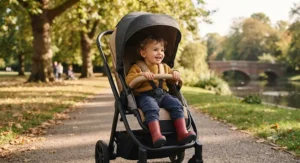
On paper, “eye contact” sounds like a soft, feel-good feature rather than a practical one – until you’re actually three weeks into newborn life and realise how much reassurance a simple glance can offer both of you. In everyday use, a parent facing seat means you’ll notice a dummy has fallen out, a hat has slipped over eyes, or a nap has genuinely started, all without stopping to check. It also means idle conversation happens more naturally: narrating your shopping list, pointing out a dog trotting past, singing half-remembered nursery rhymes at a bus stop – all things that happen more when a small face is looking straight back at you.
The trade-off, worth being honest about, is that parent facing seats on some models sit slightly lower or more upright than forward-facing configurations, which can mean marginally less legroom for a taller toddler nearer the upper end of the weight limit. If your child seems cramped in parent facing mode by around two and a half years old, that’s the natural cue to switch the seat round rather than a sign anything’s gone wrong with your buggy.
Convertible Seat Direction Pram: Features That Actually Matter (And Those That Don’t)
Marketing copy loves to pile on adjectives, so it’s worth separating genuinely useful convertible seat direction features from the ones that mostly look good in a product photo. Features that actually matter: a fold mechanism that works regardless of seat orientation (saves genuine daily hassle), a seat that reclines flat in either direction (crucial for early naps), and a handlebar that adjusts enough for both parents if height differs significantly. A washable seat liner also matters enormously more than it sounds, given the realities of milk spit-up and inevitable nappy leaks.
Features that matter less than they appear: an excessive number of recline positions beyond four or five (most parents settle on two or three they actually use), elaborate cup-holder and phone-mount attachments (nice, but rarely decisive), and flashy colourways that add cost without adding function. Before paying extra for a headline feature, ask honestly whether it solves a problem you’ll actually have on a wet Tuesday in February, or whether it simply photographs well in a showroom.
Common Mistakes When Buying a Reversible Pushchair
The most frequent misstep is buying based on newborn needs alone and forgetting the toddler years entirely – a pushchair that’s perfect for a six-week-old lying flat may feel cramped for a sturdy three-year-old, so always check the full weight and age range rather than just the “suitable from birth” label. A close second is underestimating storage: measuring the folded dimensions against your actual car boot or hallway cupboard, rather than assuming “compact” means the same thing across every brand, avoids a genuinely common and expensive returns headache.
Many parents also skip testing the fold mechanism in person or via a detailed video before buying, only to discover it needs two hands and a knee wedged against the wheel to release properly. Finally, don’t overlook running costs: replacement raincovers, footmuffs, car seat adapters and cup holders can add a surprising amount to the true cost of ownership, so factor a modest ongoing budget into your decision rather than judging purely on the headline price.
Safety, Regulations & Compliance Guide
Every reversible pushchair sold legally in the UK must meet the BS EN 1888 safety standard, which covers everything from harness strength and folding-mechanism locks to entrapment hazards and bumper-bar bite tests. According to guidance summarised by Business Companion, which reflects UK trading standards advice, you should always check for a label referencing this standard on the frame or seat fabric, whether buying new or second-hand, and inspect the folding chassis for both a primary and secondary locking device that engage properly.
Beyond the label, a few habits genuinely reduce risk day to day: always use the five-point harness even for a sleeping toddler, never hang heavy shopping bags from the handlebar (it can tip the whole pushchair backward), and check the parking brake engages firmly on a slope before letting go. If you’re buying second-hand, inspect wheels for uneven wear and confirm the harness webbing isn’t frayed, since damaged safety components are one of the few genuine deal-breakers regardless of how good a bargain the price seems.
Frequently Asked Questions
❓ What is a reversible seat pushchair?
❓ Can I use a parent facing pushchair from birth?
❓ Is a reversible pushchair worth the extra cost over a standard buggy?
❓ Which reversible seat pushchair is best for newborns to toddlers?
❓ Do all reversible pushchairs fold with the seat attached?
Conclusion
Choosing a reversible seat pushchair ultimately comes down to being honest with yourself about your actual daily life, not the idealised version of it. If you’re hauling a buggy up flights of stairs daily, weight trumps almost everything else; if you’re navigating gravel paths and kerbs, suspension and wheel size matter more than a few hundred grams. Budget options like the My Babiie MB450 and Lorelli Makaya prove that genuine reversible functionality doesn’t require a four-figure spend, while premium picks like the Silver Cross Reef 2 and Bugaboo Dragonfly earn their price tags through engineering that genuinely holds up over years of daily use.
Whatever you choose, the core benefit remains the same: the ability to keep your baby facing you during those early, precious months, then flip the seat round as curiosity about the wider world takes over. That flexibility, more than any single spec, is what makes a reversible pushchair worth the investment.
✨ Ready to Find Your Perfect Match?
🔍 Compare current prices on these reversible pushchairs and pick the one that actually fits your daily routine, not just your Pinterest board!
Recommended for You
- 7 Best City Pushchairs for 2026: Compact Buggies That Actually Cope
- Best Travel Buggy 2026: 7 Cabin-Approved Pushchairs That Fly
- Lightest Pushchair Under 6kg: 7 Ultralight Buggies Tested (2026)
Disclaimer: This article contains affiliate links. As an Amazon Associate, I earn from qualifying purchases. If you purchase products through these links, we may earn a small commission at no additional cost to you.
✨ Found this helpful? Share it with your friends! 💬🤗
