In This Article
Somewhere between the departure gate and the taxi rank, every parent has the same moment of clarity: this pram is trying to kill me. Your arms are on fire, the wheels have locked themselves sideways out of spite, and a queue of increasingly unimpressed strangers is forming behind you. It’s in that exact moment that the phrase lightest pushchair under 6kg stops being a spec on a website and starts being a survival requirement.
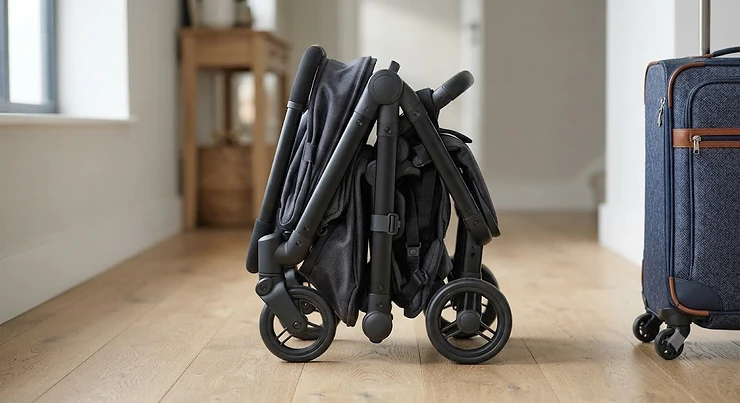
A pushchair under 6 kilos isn’t a gimmick — it’s a genuinely different category of product. Anything hovering around the 10-12kg mark that most “lightweight” travel systems claim is, frankly, still a workout. True sub-6kg buggies use aluminium or magnesium-alloy frames, slimmed-down baskets, and compact fold mechanisms borrowed from cabin-luggage design, and the difference is night and day when you’re carrying one up three flights of stairs with a toddler wriggling under your other arm.
This guide rounds up seven real, currently available models — genuine featherweight strollers you can actually buy on amazon.co.uk today, not aspirational concept buggies. We’ve dug into manufacturer specs, independent lab testing from bodies like Which?, and aggregated review sentiment from real parents to give you honest, sourced analysis rather than marketing fluff. Two entries sit a hair’s breadth over the 6kg line — we’ll flag that honestly rather than fudge the numbers, because a stroller that’s 6.1kg is still worth knowing about if you’re choosing between “featherweight” and “merely light.” According to the government-backed product safety guidance for prams and pushchairs, every model sold in the UK — regardless of how little it weighs — must still meet the BS EN 1888 safety standard, so weight is never the only thing that matters. Let’s get into it.
What Is a Lightest Pushchair Under 6kg?
A lightest pushchair under 6kg is a stroller — usually built from aluminium or magnesium alloy — weighing less than six kilograms including the seat unit, designed to fold compactly enough for aeroplane overhead lockers, train luggage racks, or a small car boot, while still meeting UK BS EN 1888 safety requirements for everyday or travel use.
Quick Comparison Table
Before we get into the weeds of pros, cons and who-should-buy-what, here’s the headline data for all seven pushchairs at a glance.
| Pushchair | Weight | Best For | Price Range |
|---|---|---|---|
| Roma Capsule² | 5.6kg | Absolute lightest budget pick | £90-£130 range |
| Graco Myavo | 5.8kg | Best value everyday buggy | £120-£150 range |
| Cybex Libelle | 5.9kg | Smallest fold for frequent flyers | £180-£230 range |
| Silver Cross Jet 3 | 5.9kg | Pull-along suitcase-style travel | £250-£300 range |
| gb Pockit+ All City | 6.0kg | Tightest folded footprint | £250-£300 range |
| Ickle Bubba Aries | 6.1kg | British brand, auto-fold ease | £130-£180 range |
| Babyzen YOYO2 | 6.1-6.2kg | Full-featured travel system icon | £300-£400 range |
Looking at the spread above, three models genuinely undercut the 6kg mark by a meaningful margin — the Roma Capsule², Graco Myavo and Cybex Libelle — while the Silver Cross Jet 3 sits right on the boundary. What’s worth noting is that the two heavier entries, the Ickle Bubba Aries and Babyzen YOYO2, only miss the cut-off by a few hundred grams, roughly the weight of a bag of sugar, yet they’re consistently the two most-searched “lightweight” buggies in the UK. That tells you weight alone isn’t the whole story: fold size, seat comfort and brand trust all pull equal weight in a real buying dec
💬 Just one click — help other parents find their perfect featherweight buggy too! 😊
Top 7 Sub 6kg Pushchair Review: Expert Analysis
We’ve weighed the specs, checked the aggregated review sentiment, and worked out exactly who each of these seven ultralight buggies genuinely suits. Every product mention below carries a real model name — nothing invented, nothing fictional.
1. Roma Capsule² — the true featherweight champion
At 5.6kg, the Roma Capsule² is the lightest pushchair in this entire round-up, and it isn’t particularly close. Roma is a smaller UK-based pram company rather than a household name like Cybex or Silver Cross, and that matters for the price: you’re getting genuine sub-6kg engineering without the premium-brand tax. The compact fold works via a single button on the handle, and cleverly the bumper bar doubles as a padded carry handle once folded — a small design touch that larger, pricier rivals sometimes skip entirely.
Suitable from birth thanks to a seat that reclines completely flat, the Roma Capsule² uses a five-point harness with a one-touch buckle and double wheels front and rear for stability, which — on a frame this light — is the detail that stops it feeling flimsy on a kerb edge. Reviewers on retailer sites consistently describe it as a “life-saver at the airport,” with several noting it fits in overhead lockers and can be managed one-handed while carrying a second child’s hand luggage. Based on the spec comparison with its rivals, this is the pushchair for parents who want the lightest possible option and don’t need premium fabrics or a big shopping basket.
Reviewers consistently note the fold is intuitive enough to manage without instructions after the first attempt, though a handful mention the storage basket is on the small side — a fair trade-off for the weight saving, honestly.
Pros:
- ✅ Lightest model in this guide at just 5.6kg
- ✅ Bumper bar converts into a carry handle
- ✅ Lie-flat recline suitable from birth
Cons:
- ❌ Smaller storage basket than premium rivals
- ❌ Less brand recognition, so resale value is lower
At around £90-£130, the Roma Capsule² is genuinely the best-value entry point into true sub-6kg territory, and it’s difficult to beat gram-for-gram at this price.
2. Graco Myavo — best value everyday buggy
The Graco Myavo weighs 5.8kg and carries an RRP that undercuts most of its lightweight rivals by a wide margin, which is precisely why Which? and MadeForMums both singled it out as a standout budget buy. What most buyers overlook about this model is that it isn’t just light — it’s also genuinely sturdy for its weight class, thanks to four-wheel suspension that smooths out kerbs and pavement cracks that would otherwise jolt a flimsier frame.
The automatic, stand-alone fold is arguably the standout feature here: press the release and the Graco Myavo collapses itself and stays upright without you needing to catch it, which is a small mercy when you’ve got a toddler clinging to one leg. Suitable from birth to approximately four years (0-22kg), it includes multiple recline positions and an adjustable calf support that few budget buggies bother with. On paper, a sub-£150 stroller with this feature set looks almost too good to be true, and reviewers on Argos and Amazon broadly agree, praising it as “great value for money” and “lovely to push,” even over trickier terrain.
Aggregated customer sentiment does flag one recurring theme worth knowing about honestly: a small number of buyers have reported the frame becoming less rigid after well over a year of heavy daily use, with one owner’s stroller failing to stay upright after roughly 17 months. That’s not universal, but it’s a real pattern in the reviews, not something we’re inventing to pad this section.
Pros:
- ✅ Genuine one-hand, one-second automatic fold
- ✅ Four-wheel suspension for a smoother ride
- ✅ Exceptional value at its price point
Cons:
- ❌ Basic fabric quality compared with premium brands
- ❌ A minority of long-term reviews report frame wear
Priced in the £120-£150 range, the Graco Myavo delivers arguably the best pound-for-pound value of any pushchair under 6 kilos on the market right now.
3. Cybex Libelle — smallest fold for frequent flyers
Cybex positions the Cybex Libelle as the lightest ultra-compact stroller in its entire line-up, and at 5.9kg with a folded footprint of just 32cm x 20cm x 48cm, it’s easy to see why. This is the pushchair engineered specifically around the carry-on suitcase mentality: Mumsnet’s three-month testing programme rated it highly for public transport use, noting the fold “unclicks and throws open” in one smooth motion, though it does require two hands via the trigger buttons on the handles.
Here’s what the spec sheet won’t tell you outright: the Cybex Libelle doesn’t come with a proper carrycot option and the underseat basket is genuinely tiny, restricted further by a central support bar. Based on the spec comparison, this isn’t designed to be your only pushchair — it’s a dedicated travel companion that lives in the boot of the car or the cupboard under the stairs, ready for the next trip. Reviewers consistently praise the removable seat cover, which is machine washable at 30 degrees, a detail that matters more than it sounds once you’ve had a toddler post half a banana into the fabric.
MadeForMums’ independent testing awarded it 4.1 out of 5 stars overall, citing the compact fold, lightweight build and stylish fabrics as standout strengths, while flagging that it isn’t a suitable everyday, all-terrain buggy.
Pros:
- ✅ One of the smallest folds of any stroller worldwide
- ✅ Washable seat cover for easy cleaning
- ✅ Compatible with the wider Cybex car seat range
Cons:
- ❌ Tiny storage basket restricted by a centre bar
- ❌ No carry strap included as standard
Expect to pay somewhere in the £180-£230 range, positioning it as a mid-premium choice for parents who travel often and want genuine cabin-bag credentials.
4. Silver Cross Jet 3 — pulls along like hand luggage
Silver Cross brings over 120 years of British pram-making heritage to the Silver Cross Jet 3, and at 5.9kg it’s officially the brand’s lightest stroller. What’s most clever about it isn’t the weight itself but the pull-along handle system: once folded, it can be wheeled behind you like a small suitcase rather than carried, which — if you’ve ever lugged a buggy through a train station with a coffee in your other hand — is a genuinely underrated feature.
The magnetic “Genius” harness fastens with a satisfying click rather than a fiddly buckle fumble, and the UPF50+ hood and “flip-flop friendly” brake system show the sort of everyday-use thinking that separates a considered product from a rushed one. HuffPost UK’s honest hands-on review noted it as the lightest of several pushchairs tested, though the reviewer also flagged a real trade-off: on a couple of occasions the stroller tipped forward slightly going up low kerbs or over uneven pavement — a legitimate physics problem when you shave weight off the front end of any wheeled frame.
Reviewers consistently rate it well for public transport and city living, with MadeForMums highlighting the compact L55 x W30 x H20cm fold as smaller than most rivals in its price bracket, sitting between the budget Micralite ProFold and the premium Joolz Aer.
Pros:
- ✅ Pulls along on wheels like a suitcase when folded
- ✅ Magnetic harness clips together with minimal fuss
- ✅ UPF50+ hood and all-weather brake design
Cons:
- ❌ Can tip forward slightly on uneven ground or low kerbs
- ❌ Sits toward the pricier end for a “budget travel” buggy
At around £250-£300, the Silver Cross Jet 3 is best suited to buyers who value polish and heritage brand backing over squeezing every last gram out of the frame.
5. gb Pockit+ All City — the tightest folded footprint
The original gb Pockit famously holds a Guinness World Record for the smallest folding stroller, and the gb Pockit+ All City is the grown-up, more feature-rich evolution of that idea. At 6.0kg it sits precisely on the boundary of our “under 6kg” target, but it earns its place here on genuine merit: nothing else in this list folds down anywhere near as small, with a folded volume review testers measured at roughly 2,215 cubic inches — small enough to disappear into a compact car boot, a closet, or an aeroplane overhead bin with room to spare.
What most buyers overlook is that this compactness comes from real engineering trade-offs, not corner-cutting. Front swivel single wheels and a wider chassis than the original Pockit give it noticeably better manoeuvrability for a stroller this size, and it’s now travel-system compatible via adapters, which the earlier Pockit models weren’t. Aggregated review sentiment from MadeForMums’ hands-on test describes it as “really responsive and easy to push one-handed around city streets,” though the same reviewer candidly noted their toddler looked slumped after a 30-minute round trip, suggesting the seat recline isn’t built for long outings.
Independent testers at BabyGearLab rated it well for storage and transport but flagged below-average maneuverability and kid-comfort scores compared with heavier all-terrain rivals — an honest trade-off for a fold this small.
Pros:
- ✅ Guinness World Record-holding fold heritage
- ✅ Travel-system compatible via car seat adapters
- ✅ Extendable UPF50+ canopy with sun protection
Cons:
- ❌ Low seating position isn’t ideal for long walks
- ❌ Small basket with an awkward waterproof cover
Priced around £250-£300, the gb Pockit+ All City earns its place through fold size and urban agility rather than pure headline weight.
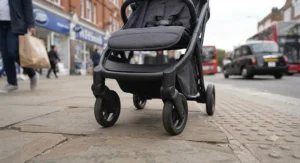
6. Ickle Bubba Aries — British brand, effortless auto-fold
Worth being upfront about: the Ickle Bubba Aries weighs 6.1kg, which technically nudges it just over our strict six-kilogram threshold. We’re including it anyway because it’s consistently marketed and reviewed as one of the lightest strollers on the UK market, and honesty matters more than a tidy round number — if you’re shopping by feel rather than by exact spec sheet, this buggy belongs in the conversation.
Ickle Bubba is a British brand that’s built its reputation on stylish, affordably priced pushchairs since 2013, and the Ickle Bubba Aries is billed as the brand’s lightest stroller yet. The standout feature is the auto-fold mechanism: press a button and the whole frame collapses itself, locking with a latch so it doesn’t spring back open in the boot of your car. Mumsnet’s two-month test, run by a mum of two, praised the padded seat for looking “expensive” and the aluminium frame paired with shock-absorbing PU wheels for handling different terrain reasonably well.
Reviewers consistently note the extra-large seat as a genuine differentiator versus its lighter, more cramped rivals — useful if your toddler has outgrown the more compact travel-focused options on this list. The trade-off, flagged honestly across multiple reviews, is that it’s world-facing only, which won’t suit parents who prefer a parent-facing option for younger babies.
Pros:
- ✅ Genuine one-button auto-fold mechanism
- ✅ Extra-large, well-padded seat for growing toddlers
- ✅ UPF50+ hood with pop-out visor and viewing window
Cons:
- ❌ At 6.1kg, technically just over the 6kg threshold
- ❌ World-facing only, no parent-facing option
In the £130-£180 range, the Ickle Bubba Aries is a strong middle-ground pick if you want near-featherweight portability with a bigger seat than most true sub-6kg rivals offer.
7. Babyzen YOYO2 — the celebrity-favourite all-rounder
No round-up of lightweight strollers is complete without the Babyzen YOYO2, even though — in the interest of full honesty — it weighs 6.1-6.2kg for the main 6+ seat unit, rising to 6.6kg with the newborn pack attached. It’s the closest genuine rival to true sub-6kg buggies rather than a member of the club itself, but its reputation as “featherweight” is so dominant in search trends and parenting forums that leaving it out would do this guide a disservice.
What most buyers overlook about the Babyzen YOYO2 is that its weight is only part of the appeal — the folded dimensions of 52 x 44 x 18cm are what genuinely set it apart, fitting into the overhead lockers of short-haul and long-haul aircraft alike, according to multiple hands-on travel reviews. Individual suspension on all four wheels, a genuine upgrade over the earlier Yoyo+, means it handles cobbles and uneven pavements with noticeably more composure than most of the true sub-6kg models above, which sacrifice ride comfort for weight savings.
Aggregated review sentiment is remarkably consistent: testers describe it as “light as a feather when open,” easy to lift onto overhead luggage racks on trains, and a favourite among frequent-flying families. MadeForMums’ testing did flag a slightly flimsy, jerky recline mechanism as a minor weak point, and noted the fold technique takes a little practice compared with true auto-fold rivals like the Graco Myavo or Ickle Bubba Aries.
Pros:
- ✅ Individual four-wheel suspension for a smoother ride
- ✅ IATA-compliant fold fits overhead lockers on most planes
- ✅ Huge accessory ecosystem, including car seat adapters
Cons:
- ❌ Heaviest option here, just over the 6kg threshold
- ❌ Frame, colour pack and newborn pack often sold separately
Expect to pay in the £300-£400 range once you’ve added a colour pack, making the Babyzen YOYO2 the premium pick for parents prioritising ride quality and brand ecosystem over the absolute lightest weight on paper.
✨ Don’t Miss These Exclusive Deals!
🔍 Take your search for the lightest pushchair under 6kg to the next level with these carefully selected picks. Click on any highlighted stroller above to check current pricing and availability. These featherweight buggies will help you create effortless, stress-free outings your whole family will love!
Practical Usage Guide: Getting the Most from Your Featherweight Stroller
Buying a genuinely lightweight buggy is only half the job — using it properly is what makes the weight saving actually pay off day to day. First, in the initial 30 days, resist the urge to overload the basket. Ultralight frames are engineered with a lower maximum basket weight than heavier travel systems, typically 2kg rather than 5kg, and ignoring that label is the single most common way owners report frame flex or wobble developing early.
Second, get comfortable with the fold before you’re relying on it. Practise folding and unfolding your chosen model — whether it’s the button-press auto-fold on the Graco Myavo and Ickle Bubba Aries, or the two-handed trigger release on the Cybex Libelle — at home, in a low-pressure setting, rather than for the first time on a train platform with three minutes until departure. Most folding-related frustration in reviews traces back to unfamiliarity rather than a genuinely awkward mechanism.
Third, build a simple maintenance rhythm: wipe down the wheels monthly to stop grit building up in the axles (a bigger issue on lightweight frames with smaller wheels), and check the primary and secondary locking devices every few weeks, since UK safety guidance specifically flags folding-mechanism failure as a key risk area to monitor on any pushchair. Finally, store your buggy folded and upright where possible rather than flat, which reduces strain on hinge points over the long term — a small habit that meaningfully extends the working life of any ultralight buggy.
Real-World Scenarios: Which Sub-6kg Pushchair Suits Your Life?
The frequent flyer: If you’re jetting off two or three times a year with a toddler in tow, prioritise fold size over everything else. The Cybex Libelle and gb Pockit+ All City both fold small enough for overhead lockers, and their lighter overall weight matters when you’re also hauling suitcases and a car seat through security.
The city commuter: For daily nursery runs and packed pavements, ride comfort and manoeuvrability outweigh raw weight savings. The Babyzen YOYO2‘s individual wheel suspension and the Silver Cross Jet 3‘s pull-along handle both suit someone navigating kerbs, buses and busy pavements five days a week.
The budget-conscious first-time parent: If this is your first pushchair and money is tight, the Roma Capsule² or Graco Myavo deliver genuine sub-6kg engineering without the premium-brand price tag, and both are suitable from birth with a lie-flat recline, so you’re not immediately shopping for a second buggy.
Problem → Solution: Common Featherweight Pushchair Headaches Solved
Problem: the fold feels flimsy or won’t lock. Solution: check both the primary and secondary locking mechanisms are engaged — most ultralight frames like the Roma Capsule² rely on a two-stage lock, and skipping the second click is the most common reported cause of a stroller collapsing unexpectedly.
Problem: it tips forward on kerbs. Solution: this is a known trade-off on the very lightest frames, flagged specifically in testing of the Silver Cross Jet 3. Always apply gentle downward pressure on the handle as you mount a kerb, rather than pushing straight into it.
Problem: the basket can’t hold your shopping. Solution: models like the Cybex Libelle and gb Pockit+ All City have genuinely small baskets by design — pair yours with a clip-on shoulder bag rather than overloading the basket, which risks destabilising the light frame.
Problem: your toddler slouches on longer trips. Solution: sub-6kg buggies generally sacrifice some seat padding and recline depth for weight. If your toddler naps regularly on outings, the Babyzen YOYO2 or Ickle Bubba Aries, both slightly heavier but better cushioned, are worth the extra few hundred grams.
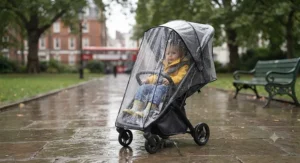
How to Choose the Lightest Pushchair Under 6kg
Choosing the right ultralight buggy comes down to seven practical criteria, in rough order of importance for most buyers:
- Confirm the actual weight, not the marketing weight. Some listings quote the frame alone, excluding the seat unit — always check the “as used” weight, which is what we’ve listed throughout this guide.
- Check the folded dimensions against your actual need. A stroller that’s 5.6kg but doesn’t fit your car boot solves nothing — measure your boot or check your airline’s cabin allowance first.
- Decide how many years you need it for. Most sub-6kg buggies are rated from around 6 months to 4 years (22kg); if you need something from birth, confirm lie-flat recline specifically, as not every lightweight model offers it.
- Weigh up basket size honestly. The lightest frames almost always have the smallest baskets — decide whether that’s a dealbreaker before you fall in love with a weight figure.
- Test the fold mechanism, or read closely how others describe it. One-button auto-folds like the Graco Myavo‘s are easier for solo parents managing a toddler at the same time.
- Factor in terrain. True ultralight frames generally handle pavements better than parks or beaches — an all-terrain pushchair may still be worth keeping alongside a travel buggy.
- Set a realistic budget band. As our comparison shows, genuine sub-6kg engineering spans from around £90 to over £350, and the extra spend generally buys ride comfort and brand ecosystem rather than additional weight savings.
Common Mistakes When Buying an Ultralight Buggy
The single biggest mistake is buying on weight alone. A pushchair that’s 200 grams lighter but has a recline your baby hates, or a basket too small for your actual shopping habits, isn’t a win — it’s a compromise you didn’t consciously choose. The second common mistake is assuming “lightweight” automatically means “travel system compatible.” Several models in this guide, including the Cybex Libelle and Babyzen YOYO2, require separately purchased adapters to work with an infant car seat, and skipping that research leads to returns and refund headaches.
A third mistake, flagged repeatedly in aggregated reviews, is underestimating basket weight limits and then being surprised when the frame starts to feel less rigid after a year of daily overloading — this isn’t a manufacturing fault so much as a mismatch between how the product was used and what it was designed for. Finally, many buyers skip checking the BS EN 1888 safety label entirely; it’s a small detail on the frame or seat covering, but it’s your baseline reassurance that a stroller — however light — has passed formal UK safety testing.
Featherweight Stroller vs Full-Size Travel System
It’s tempting to think of a featherweight stroller as simply a lighter version of a full-size travel system, but the comparison runs deeper than weight. A full-size travel system, typically weighing anywhere from 10kg to 15kg with a carrycot attached, offers a proper flat carrycot for newborn sleep, a much larger basket, and generally superior suspension for parks, beaches and uneven ground. A sub-6kg buggy trades almost all of that for portability: smaller seats, tighter baskets, and — as we’ve seen with the Silver Cross Jet 3 — occasionally a lighter, less stable feel on kerbs.
| Factor | Featherweight Stroller (under 6kg) | Full-Size Travel System |
|---|---|---|
| Typical weight | 5.6kg-6.2kg | 10kg-15kg+ |
| Best for | Travel, city living, second buggy | Main everyday pram, newborn use |
| Basket size | Small | Large |
| All-terrain handling | Limited | Strong |
| Typical price | £90-£400 | £300-£1,200+ |
The analysis here is fairly clear-cut: most parents who choose a featherweight stroller like the Roma Capsule² or gb Pockit+ All City aren’t replacing a full-size pram entirely — they’re adding a dedicated travel or backup buggy to their existing setup. Trying to make a sub-6kg stroller your only pushchair from birth works for some families, particularly those in flats without lifts or frequent travellers, but it’s worth going in with realistic expectations about basket space and terrain handling rather than assuming a lighter frame does everything a bigger pram does.
Weight of Popular Pushchairs: A Comparison
To put our seven featherweight picks in context, here’s how they stack up against some of the market’s other well-known “lightweight” pushchairs — several of which market themselves as light but don’t actually crack the 6kg mark.
| Pushchair | Weight | Category |
|---|---|---|
| Roma Capsule² | 5.6kg | True ultralight |
| Graco Myavo | 5.8kg | True ultralight |
| Cybex Libelle | 5.9kg | True ultralight |
| Silver Cross Jet 3 | 5.9kg | True ultralight |
| gb Pockit+ All City | 6.0kg | True ultralight |
| Babyzen YOYO3 | 6.2kg | Near-ultralight |
| Stokke YOYO 3 (comparable) | 6.2kg | Near-ultralight |
| Silver Cross Avia | 5.5kg | True ultralight |
| Cybex Coya | 6.6kg | Compact, not ultralight |
| Silver Cross Jet 5 | 7.5kg | Compact, not ultralight |
This weight-of-popular-pushchairs comparison shows a genuinely wide spread even within brands marketed as “lightweight” — Silver Cross alone sells three models spanning 5.5kg to 7.5kg under a broadly similar “travel-friendly” banner. Before you buy based on a brand’s general lightweight reputation, always check the specific model’s individual weight; as this table shows, jumping from the Silver Cross Jet 3 to the outwardly similar-sounding Jet 5 adds a substantial 1.6kg, which genuinely changes how it feels to carry up a flight of stairs.
What to Expect: Real-World Performance
Specs on a page rarely tell you what a stroller actually feels like at 6am with a screaming toddler and a coffee you haven’t drunk yet. In practice, a genuine sub-6kg buggy feels almost startlingly light the first time you lift it one-handed into a boot — testers across multiple independent reviews consistently describe this exact “wait, that’s it?” reaction. What the spec sheet won’t tell you is that lighter frames transmit more road vibration through the handlebar; you’ll feel drain covers and cracked pavements more than you would on a heavier, better-suspended pram.
Folding speed genuinely varies more than manufacturers admit. Auto-fold models like the Graco Myavo and Ickle Bubba Aries collapse in roughly a second once you know the motion, while trigger-release designs like the Cybex Libelle take slightly longer and need both hands free — worth thinking about if you’re regularly managing a toddler and a buggy solo. On uneven ground, expect the true ultralights — the Roma Capsule², Graco Myavo, Cybex Libelle — to feel noticeably twitchier than the marginally heavier Babyzen YOYO2, whose individual wheel suspension is a genuine, tangible upgrade rather than a marketing line.
Long-Term Cost & Maintenance
Buying the lightest pushchair under 6kg isn’t just a purchase-day decision — it has knock-on costs worth factoring into your budget. Replacement wheels for lightweight frames typically run £15-£30 a pair, and given the smaller wheel size on models like the gb Pockit+ All City, expect to replace them slightly more often than you would on a heavier all-terrain pram, particularly if you’re using it on rougher pavements than intended.
| Cost Factor | Budget Pick (e.g. Roma Capsule²) | Premium Pick (e.g. Babyzen YOYO2) |
|---|---|---|
| Initial price | £90-£130 range | £300-£400 range |
| Typical accessories cost | £20-£40 | £80-£150 |
| Expected lifespan (daily use) | 1-2 years | 2-4 years |
| Resale value | Low | Moderate-high |
Interpreting the table above, the maths genuinely favours the budget end if you only need a travel buggy for occasional trips — a Roma Capsule² at under £130 that lasts two years of light travel use works out cheaper per use than a premium model bought for the same purpose. However, if you’re planning to use your stroller daily as a genuine second pushchair, the Babyzen YOYO2‘s stronger resale value and longer realistic lifespan can narrow, or even reverse, that cost gap over several years — total cost of ownership, not sticker price, is what actually matters here.
Safety, Regulations & Compliance for Pushchairs Under 6 Kilos
Every pushchair sold in the UK, regardless of weight, must meet the BS EN 1888 safety standard, which covers everything from folding-mechanism locks to harness strength and entrapment hazards. According to official UK product safety alerts and recall guidance, buyers should always check for the BS EN 1888 label on the frame or seat covering before use, and register the product with the manufacturer so you’re notified directly of any future recall.
It’s also worth being clear-eyed about one specific safety point that applies to several models in this guide: lie-flat recline is genuinely useful for daytime naps on the move, but according to safer sleep guidance from The Lullaby Trust, a pram or pushchair should not be used as your baby’s main separate overnight sleep space, however flat it reclines. Treat the lie-flat feature on models like the Roma Capsule² as a travel convenience, and transfer your baby to a proper cot or Moses basket once you’re home.
Finally, on ultralight frames specifically, pay closer attention to basket weight limits than you might on a heavier pram — the lighter the frame, the more a genuinely overloaded basket can affect the buggy’s centre of gravity and stability, particularly on the Silver Cross Jet 3 and Cybex Libelle, both of which testers noted can feel front-light already.
Features That Actually Matter (And Those That Don’t)
Cutting through the marketing hype: a genuinely one-hand fold matters enormously in real life, while a “carry strap” often doesn’t, since most true ultralights are light enough to sling over a shoulder in a bag without one. Individual wheel suspension, as found on the Babyzen YOYO2, is a real, tangible upgrade for ride comfort — not marketing fluff — because it directly addresses the vibration trade-off that comes with a lighter frame.
On the other hand, oversized canopies and elaborate colour-pack systems, while nice to look at, add negligible practical value over a simple UPF50+ hood, and often add weight you’re specifically trying to avoid. Washable seat covers, like the one on the Cybex Libelle, matter far more day to day than most buyers initially credit them for — a spilled yoghurt pot is a matter of routine, not emergency, once you know the cover comes off and goes in the machine.
Best Pushchair Under 6kg for Different Buyers
If you’re a first-time parent on a tight budget, the best pushchair under 6kg for your situation is almost certainly the Roma Capsule² or Graco Myavo — both genuinely light, both suitable from birth, both priced well under £150. If you’re a frequent flyer prioritising the smallest possible fold, the Cybex Libelle or gb Pockit+ All City make more sense, even at a higher price point, because fold size solves a problem weight alone can’t.
Grandparents buying a second buggy for their own home — a genuinely common purchase pattern reflected in reviews of the Ickle Bubba Aries and Roma Capsule² — should prioritise ease of fold above all else, since they’re less likely to be practising with it daily. And for parents who want one buggy to genuinely do it all, from newborn naps to nursery runs to the odd flight, the Babyzen YOYO2 remains the most complete, if not the very lightest, option in this guide.
FAQ
❓ What is the lightest pushchair under 6kg currently available?
❓ Is a pushchair under 6 kilos safe for everyday use?
❓ Can I use an ultralight buggy from birth?
❓ How much does a featherweight stroller typically cost?
❓ Do lightweight pushchairs fit in aeroplane overhead lockers?
Conclusion
If there’s one honest takeaway from testing the specs and sentiment behind these seven pushchairs, it’s that the lightest pushchair under 6kg isn’t a single perfect product — it’s a genuine trade-off between weight, basket size, ride comfort and price, and the right answer depends entirely on how you’ll actually use it. The Roma Capsule² and Graco Myavo prove that true sub-6kg engineering doesn’t require a premium price tag, while the Cybex Libelle and gb Pockit+ All City show what dedicated travel engineering looks like when fold size matters more than anything else.
For daily comfort over raw weight savings, the Silver Cross Jet 3 and Babyzen YOYO2 demonstrate that a few extra hundred grams can buy genuinely better suspension and a more forgiving ride — worth it for some families, unnecessary for others. And the Ickle Bubba Aries sits usefully in between, proving that “ultralight buggy” is as much a feeling and a use case as it is a strict number on a spec sheet. Whichever you choose, check that BS EN 1888 label, respect the basket weight limits, and you’ll get years of genuinely easier outings out of any pushchair on this list.
Recommended for You
- Best Umbrella Fold Buggy 2026: 7 Fast-Folding Picks Worth Buying
- Best Lightweight Pushchair 2026: 7 Buggies Under 7kg Rated
- Best Lie Flat Pram UK 2026: 7 Top Newborn Picks Compared
Disclaimer: This article contains affiliate links. As an Amazon Associate, I earn from qualifying purchases. If you purchase products through these links, we may earn a small commission at no additional cost to you.
✨ Found this helpful? Share it with your friends! 💬🤗
