
In This Article
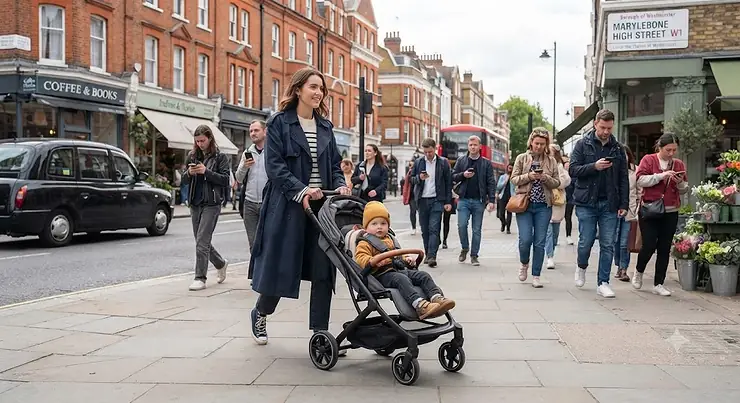
Anyone who has ever tried to wrestle a full-size travel system through a packed tube carriage knows the truth: not every pushchair is built for city life. A best city pushchair, in the simplest terms, is a compact, lightweight buggy engineered to fold small, steer through narrow aisles and survive kerbs, cobbles and buses without becoming a two-person job. That’s it — no gimmicks, just clever engineering aimed squarely at pavement reality rather than country-lane strolls.
If you live somewhere with more Victorian terraces than driveways, you already know the pain points: the buggy that won’t fit through your front door sideways, the one that tips the second you hang a shopping bag off the handles, the one so heavy that carrying it up three flights feels like a gym session. A genuinely good compact city pram solves these problems by prioritising fold size, carry weight and manoeuvrability over the bells and whistles that matter more in a suburban driveway than on Oxford Street.
This guide breaks down seven real, currently available buggies — from budget-friendly folders to premium all-rounders — with honest analysis of what each one is actually like to live with, not just what the spec sheet claims. We’ll also look at how public transport rules around wheelchair spaces and buggies affect which pushchair you should buy, because in a city, “does it fold in three seconds on a moving bus” is a genuinely important spec. Prices below are given as ranges rather than exact figures, since retail pricing shifts constantly — always check the current price before you buy.
Quick Comparison Table
| Buggy | Weight | Fold Size | Best For | Price Range |
|---|---|---|---|---|
| GB Pockit+ All-City | ~6.1kg | Ultra-compact, cabin-bag sized | Tightest flats and frequent flyers | Budget-mid |
| Cybex Libelle | ~5.9kg | Smallest two-step fold | Lightest possible carry | Budget-mid |
| Baby Jogger City Tour 2 | ~6.4kg | Compact, self-standing | All-round daily use on rough pavements | Mid-range |
| Silver Cross Jet 3 | ~5.9-6.2kg | One-motion compact fold | British-brand buyers wanting flair | Mid-range |
| Joolz Aer+ | ~6kg | One-second one-hand fold | Newborns and eco-conscious parents | Mid-premium |
| Bugaboo Butterfly | ~7.3kg | One-hand, stands unaided | Solo parents juggling bags and prams | Premium |
| Stokke YOYO³ | ~6.6kg (seat) | Modular, expandable system | Families wanting one system for years | Premium |
Looking at the spread here, the lighter budget options like the Cybex Libelle and GB Pockit+ All-City win on sheer portability but trade away some ride comfort on rough pavements. The Baby Jogger City Tour 2 and Silver Cross Jet 3 sit in the sensible middle, balancing weight against a smoother, more forgiving ride over potholes and drain covers. Meanwhile, the Bugaboo Butterfly and Stokke YOYO³ cost more precisely because they solve the everyday annoyances — one-handed folding, better suspension, expandability — that the cheaper models ask you to simply live with.
💬 Already got a favourite? Scroll down to see today’s availability and lock in your pick before stock shifts!
Top 7 Best City Pushchairs: Expert Analysis
1. GB Pockit+ All-City — smallest fold for cabin bags and tight halls
The standout here is the fold: press two buttons and the GB Pockit+ All-City collapses into a package roughly the size of a large handbag, which is why it’s become a favourite for anyone short on hallway space. At around 6.1kg with a folded footprint of roughly 48 x 32 x 20cm, it’s genuinely one of the smallest folding buggies sold in the UK, and the aluminium frame with single front wheels keeps weight down without feeling flimsy on smooth ground. Where it makes real sense is for parents in small flats, frequent flyers, or anyone using it as a lightweight second buggy alongside a bigger everyday model — it’s less convincing as your only pushchair from day one, since the seat isn’t the most padded option going and the ride firms up noticeably once you’re off tarmac. Aggregated reviews consistently praise the fold and portability but flag the small basket and a seat that some parents find under-cushioned for long outings, and a few reviewers mention the canopy doesn’t fully shrug off UK rain. On paper, the compact city pram category exists precisely for buggies like this one, where “does it fit under a café table” matters more than off-road grip.
Pros:
- ✅ Genuinely the smallest fold on this list
- ✅ Under 6.5kg, easy to carry one-handed
- ✅ Works with GB and Cybex car seat adapters
Cons:
- ❌ Small basket limits shopping-run practicality
- ❌ Seat padding feels thin on longer walks
Expect to pay in the low-to-mid £200s, and given how few buggies fold this small, it’s solid value for anyone whose main problem is storage space rather than terrain.
2. Cybex Libelle — lightest at under 6kg for one-handed lifting
What immediately stands out about the Cybex Libelle is the weight — at roughly 5.9kg, it’s among the lightest folding pushchairs sold anywhere, and that number matters far more in real life than it sounds on a spec sheet. A two-step fold collapses it into a shape that’s compliant with most airline hand-luggage rules, at around H32 x W20 x L48cm, so it slots into overhead lockers and cupboard-under-the-stairs storage with equal ease. The trade-off, and it’s an honest one, is that the ultra-light frame means smaller, less robust wheels than heavier rivals, so this is best suited to smooth urban pavements and station concourses rather than gravel paths or aggressive cobbles. Reviewers note it’s not suitable from birth and needs a baby who can sit with some head control, and a common theme in aggregated feedback is that the recline is more “nap-friendly nudge” than full lie-flat. If your daily reality is buses, trains and smooth high streets rather than parks and puddles, this is about as easy to live with as compact buggies get.
Pros:
- ✅ One of the lightest buggies available in the UK
- ✅ Cabin-bag compliant fold for travel days
- ✅ Quick, intuitive two-step folding mechanism
Cons:
- ❌ Not suitable for newborns without accessories
- ❌ Small wheels struggle on rougher, uneven ground
Priced in the £300-£350 range typically, the Libelle earns its keep if lightness is your single biggest priority.
3. Baby Jogger City Tour 2 — best all-rounder wheels for real streets
The Baby Jogger City Tour 2 leads with genuinely usable wheels — its slightly larger tyre profile and better suspension geometry mean it soaks up cracked pavement and dropped kerbs noticeably better than the ultra-light folders above it. At around 6.4kg with a near-flat recline and a one-hand auto-fold, it manages to feel like a proper everyday pushchair rather than a stripped-back travel accessory, while still folding compactly enough for a car boot or a train vestibule. This is the buggy for parents who want most of the comfort of a full-size pushchair but refuse to carry the weight of one up three flights of stairs daily; it’s a sensible middle ground rather than a specialist tool. Aggregated customer feedback consistently highlights the smooth ride and generous UV50+ canopy as strong points, with the more common criticisms centred on a slightly bulkier folded size than the true ultra-compacts and a basket that’s functional rather than generous. As a daily-driver compact city pram, it’s arguably the least compromised option here.
Pros:
- ✅ Noticeably smoother ride over rough pavement
- ✅ One-hand auto-fold that stands unaided
- ✅ Near-flat recline suits younger babies better
Cons:
- ❌ Bulkier folded size than the smallest rivals
- ❌ Storage basket smaller than full-size pushchairs
Sitting around £300-£380, it’s a strong mid-range pick for anyone who values ride quality as much as fold size.
4. Silver Cross Jet 3 — British heritage brand with magnetic buckle
The headline feature on the Silver Cross Jet 3 is its magnetic “Genius” buckle, which clicks together with three simple movements — a small detail that makes a genuine difference when you’re fastening a wriggling toddler with one arm full of shopping. Weighing roughly 5.9-6.2kg with a full lie-flat recline and a redesigned wider front-wheel stance for extra stability, it manages to feel more substantial than its weight suggests, and the one-motion fold is quick enough to manage solo at a bus stop. Silver Cross’s 120-plus years in British pram-making shows in small design choices — the bumper bar doubles as a pull-along handle once folded, turning the buggy into something closer to hand luggage than dead weight. Aggregated reviews are broadly positive on portability and styling, though several long-term testers report the fold mechanism can feel less robust after a year or so of daily commuter use, and a few note the storage basket is trickier to access than rivals. For parents after a stylish, unmistakably British option in the compact space, this earns its position as a genuine best buggy for city living contender rather than a pure travel accessory.
Pros:
- ✅ Fast, secure magnetic buckle for one-handed use
- ✅ Doubles as a pull-along suitcase when folded
- ✅ Full lie-flat recline, unusual at this weight
Cons:
- ❌ Long-term durability queried in some owner reviews
- ❌ Basket access more fiddly than competitors’
Expect a price somewhere in the £300-£380 bracket, positioning it as a premium-feeling buy without quite reaching flagship pricing.
5. Joolz Aer+ — lightest premium pick ready from birth
What sets the Joolz Aer+ apart is that it’s ready from birth without needing a separate carrycot for most families, thanks to a genuinely flat recline and a retention net that keeps a newborn secure while lying down. At roughly 6kg it’s lighter than most of its premium rivals, and the one-second, one-handed fold — activated via a central button on the push bar — means you can collapse it while holding a baby on one hape and a coffee in the other. Built using recycled fabrics as part of Joolz’s sustainability push, the four-wheel suspension setup handles London’s notoriously patchy pavements and the odd stretch of cobbles with more composure than the ultra-lightweight budget folders manage, without adding much bulk. Aggregated owner feedback repeatedly praises the smooth push and the security of the harness, with the recurring gripes being a narrow viewing window in the canopy and a recline mechanism some parents find fiddlier than expected. If you want one buggy that works from the maternity ward through to nursery drop-offs without an upgrade, this is arguably the strongest all-rounder on this list.
Pros:
- ✅ Usable from birth without extra accessories
- ✅ Lightest of the premium compact options
- ✅ Recycled materials for eco-conscious buyers
Cons:
- ❌ Narrow canopy window limits visibility
- ❌ Recline mechanism fiddlier than some rivals
Priced around £400-£450, it sits at the upper end but justifies it with genuine from-birth flexibility most compact rivals lack.
6. Bugaboo Butterfly — best one-hand fold for solo parents
The party trick of the Bugaboo Butterfly is a genuinely one-handed fold that collapses the whole frame and leaves it standing unaided — useful when you’re juggling a toddler, a nappy bag and a set of keys on a doorstep. At around 7.3kg it’s heavier than the ultra-light folders on this list, but that extra weight buys a bigger, more supportive seat, a larger storage basket (roughly 75% more capacity than closest rivals in independent testing), and noticeably better manoeuvrability thanks to a wider wheelbase and more generous tyre profile. This makes it less of a pure travel accessory and more of a genuine everyday pushchair that happens to fold small — a distinction that matters if your “city life” means daily nursery runs rather than the odd flight abroad. Aggregated reviews from side-by-side testing consistently rate it as one of the most manoeuvrable compact buggies available, with the main criticisms centred on the recline not going quite as flat as some newborn-focused rivals and a price tag that puts it firmly in premium territory. For a genuinely manoeuvrable buggy city parents can rely on daily, this is hard to beat.
Pros:
- ✅ True one-hand fold that stands by itself
- ✅ Larger basket than most compact rivals
- ✅ Excellent manoeuvrability on tight corners
Cons:
- ❌ Heavier than the lightest folding options
- ❌ Recline doesn’t go fully flat for newborns
At roughly £450-£500, it’s one of the pricier entries here, but the fold-and-basket combination earns its keep for daily solo-parent use.
7. Stokke YOYO³ — most flexible modular travel system
The defining feature of the Stokke YOYO³ is flexibility — beyond the pushchair seat, the same chassis accepts a newborn bassinet, a car-seat adapter, a sibling board and even a connect kit that turns it into a tandem double, all sold as accessories you add only when you need them. The seat unit alone weighs around 6.6kg, and the compact fold — refined again in this third generation — remains small enough for most overhead lockers, while the redesigned wheels handle scuffed pavements with more confidence than the very first YOYO generation managed. This modularity is precisely why it repeatedly comes up as a favourite among parents who move house, have a second baby, or simply hate the idea of buying an entirely new pushchair every time their circumstances change. Aggregated review sentiment is strongly positive on build quality and longevity, with the most common complaints being the cost of accessories adding up quickly and a narrower seat than some toddlers outgrow sooner than expected. As a long-term investment for genuinely varied city family life, it’s the most future-proof pick on this list, even if the upfront outlay for the full system stings.
Pros:
- ✅ Modular system grows with your family
- ✅ Compact fold refined over three generations
- ✅ Strong resale value thanks to brand demand
Cons:
- ❌ Accessories add significantly to total cost
- ❌ Seat can feel narrow for larger toddlers
The seat unit alone typically sits around £450-£500, climbing toward £600-plus once a newborn bundle or car-seat adapters are added — a genuine investment rather than an impulse buy.
Practical Usage Guide: Setting Up and Maintaining Your City Pushchair
Getting a new compact buggy set up right in the first 30 days makes a bigger difference than most parents expect. Start by practising the fold and unfold sequence at home, on carpet, before you’re doing it one-handed on a moving bus — muscle memory here saves genuine stress later. Check the tyre pressure or wheel tension weekly if your model has air-filled tyres, since soft tyres are the single biggest cause of a “suddenly heavy to push” buggy. Wipe down the frame joints monthly, particularly if you’re pushing through wet British pavements often, since grit works its way into folding mechanisms and eventually stiffens them. A common first-month mistake is overloading the handlebar with shopping bags, which can tip lighter compact models — most manufacturers rate handle-hook weight at under 2kg for good reason. Finally, register your product with the manufacturer; it’s the easiest way to hear about safety recalls, which do occasionally happen even with reputable brands.
Real-World Scenarios: Matching the Best Buggy for City Living to Your Family
Picture Priya, who lives in a third-floor flat with no lift and commutes by tube — for her, weight under 6.5kg and a one-handed fold aren’t nice-to-haves, they’re the entire brief, making the Cybex Libelle or GB Pockit+ All-City the obvious shortlist. Then there’s Marcus, a new dad working from home who wants one pushchair that’ll take his daughter from birth through toddlerhood without an upgrade purchase — the from-birth recline on the Joolz Aer+ or the modular flexibility of the Stokke YOYO³ solves that far better than a pure travel buggy would. Finally, consider Aisha, juggling two under three and a dog on daily park loops over patchy pavement — she needs the sturdier ride and bigger basket of the Baby Jogger City Tour 2 or Bugaboo Butterfly more than she needs the absolute smallest fold. The lesson across all three: the best buggy for city living isn’t a single model, it’s whichever one matches your specific building, your commute and your daily radius.
Problem → Solution: Solving Common Urban Pushchair Headaches
City parents tend to hit the same handful of frustrations, and most have a straightforward fix. If your buggy constantly snags on bus doors, the issue is usually width rather than length — check the folded and unfolded width in centimetres before buying, since even 5cm makes a real difference squeezing down a train aisle. If cobbles or tram tracks make the ride feel jarring, the solution is typically bigger front wheels with genuine suspension, which is exactly where the Baby Jogger City Tour 2 and Bugaboo Butterfly outperform the ultra-light folders. If you’re constantly fighting the fold one-handed with a baby on your hip, prioritise a genuine one-hand mechanism like the Bugaboo Butterfly‘s or the Joolz Aer+‘s rather than a two-step fold that needs both hands free. And if storage at home is the real problem rather than portability on the move, the GB Pockit+ All-City or Cybex Libelle solve that specific issue better than anything else on this list, since their folded footprint is dramatically smaller than the rest.
How to Choose the Best Pushchair for Urban Use
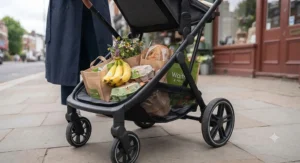
Choosing the best pushchair for urban use comes down to weighing a handful of criteria against your actual daily routine, rather than chasing the single “best” spec on paper.
- Weigh your building, not just the buggy. If you’re carrying it up stairs daily, prioritise anything under 6.5kg over extra features.
- Measure your tightest doorway or aisle. A pushchair that’s 2-3cm too wide becomes a daily irritation, not a one-off inconvenience.
- Check the fold mechanism against your reality. One-handed folds matter far more if you’re regularly alone with a toddler and bags.
- Match the recline to your child’s age. Newborns need near-flat recline; toddlers can manage with a more upright, view-friendly seat.
- Test the wheels against your actual pavements. Cobbled streets and pothole-heavy pavements punish tiny wheels far more than smooth new estates do.
- Consider the basket size honestly. If your city life involves regular shopping runs, a small basket becomes a genuine daily annoyance.
- Factor in resale value. Premium brands like Stokke and Bugaboo hold their value far better on the second-hand market than budget alternatives.
Compact City Pram vs Full-Size Pushchair: What’s the Real Difference
A compact city pram and a traditional full-size pushchair solve overlapping but genuinely different problems, and confusing the two leads to buyer’s remorse either way. Full-size pushchairs, generally starting around 9-12kg, prioritise a plush, pram-like ride, generous under-seat storage and multi-year usability with accessories like carrycots and car-seat travel systems — brilliant if you have a car boot and a driveway, less brilliant on a narrow staircase. Compact city models trade some of that comfort and storage for a folded footprint that’s often less than half the size, wheels that prioritise manoeuvrability over rough-terrain comfort, and a carry weight that a tired parent can actually manage one-handed. The honest verdict: if your daily radius is mostly pavements, buses and lifts rather than long countryside walks, a compact model like the Joolz Aer+ or Baby Jogger City Tour 2 will serve you better day-to-day than a full-size pushchair ever could, even if it feels like a slight downgrade in showroom comfort tests.
Manoeuvrable Buggy for the City: Why Wheels and Turning Circle Matter
A genuinely manoeuvrable buggy city parents can rely on daily comes down to two things most shoppers overlook: wheel swivel range and wheelbase width. Swivel front wheels that lock for straight-line pushing but pivot freely for tight turns make an enormous difference navigating narrow shop aisles or crowded pavements — it’s the difference between smoothly weaving around a lamp post and getting stuck fighting the handlebar. A narrower wheelbase, like that on the GB Pockit+ All-City or Cybex Libelle, threads through ticket barriers and shop doorways more easily, while a slightly wider stance, as seen on the Bugaboo Butterfly, trades a touch of narrowness for genuinely superior stability on cambered pavements and around corners at speed. What the spec sheet won’t tell you, but reviewers note repeatedly, is that manoeuvrability often matters more day-to-day than outright weight — a buggy that’s 500g heavier but turns effortlessly beats a featherweight model that constantly needs wrestling around bollards.
Narrow Buggy for London: Navigating Tubes, Buses and Tight Doorways
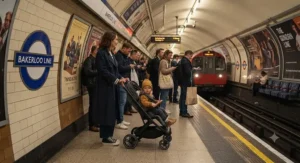
If you’re specifically hunting for a narrow buggy for London life, the priority list looks a little different to general “city” advice, because London’s infrastructure has its own quirks — Victorian terraced doorways, packed rush-hour carriages, and buses with a designated space shared with wheelchair users. On the last point, Transport for London has previously run initiatives specifically encouraging parents toward smaller, lighter, easily-folded buggies, precisely because a bulky pushchair that won’t fold quickly creates real friction over shared wheelchair space on buses. For genuine narrowness, the GB Pockit+ All-City and Cybex Libelle are the standout picks, both measuring notably slimmer folded and unfolded than mid-size rivals. It’s also worth checking your local station list for step-free access before committing to a heavier model — if you’re regularly lifting a pushchair up stairs at an older tube station, every kilogram counts double.
City Pram Cobblestones: What to Expect on Uneven Ground
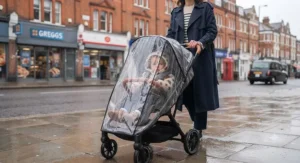
Cobbled streets, tram tracks and worn Victorian pavements are where budget ultra-light buggies show their limits fastest, so it’s worth setting expectations honestly here. Smaller, harder wheels — the kind fitted to save weight on models like the Cybex Libelle — transmit far more vibration over cobbles, which can be uncomfortable for a napping baby and genuinely tiring to push over any distance. Buggies with slightly larger wheels and basic suspension, such as the Baby Jogger City Tour 2 or Bugaboo Butterfly, absorb far more of that jolt, making them the better city pram for cobblestones despite weighing a little more. If cobbles are a daily reality rather than an occasional street to cross, it’s worth prioritising ride comfort over ultimate fold size — a buggy that’s brilliant in the hallway but miserable on your actual commute isn’t really doing its job.
Common Mistakes When Buying a City Pushchair
The most common mistake is buying based purely on weight, without checking the folded dimensions — a pushchair can be light but still awkward if it doesn’t collapse into a genuinely small shape. A close second is skipping the in-store test, since folding mechanisms that look simple in a video can feel fiddly in real hands, especially one-handed with a squirming toddler. Parents also frequently underestimate how often they’ll use public transport, buying a bulkier “everyday” pushchair and then discovering it barely fits through ticket barriers. Another frequent slip is ignoring the basket size entirely, only to find weekly shopping runs become a genuine hassle. Finally, many buyers skip checking second-hand resale value, missing out on brands like Stokke and Bugaboo that hold value well if family plans change.
Safety, Regulations and Compliance for UK Pushchairs
Every pushchair sold in the UK must meet the British safety standard BS EN 1888, which covers everything from harness strength and folding-lock mechanisms to entrapment hazards and fire-resistance requirements under separate furniture flammability regulations. According to RoSPA’s safety guidance, buyers — whether purchasing new or second-hand — should always check for a visible compliance label on the frame or seat pad, confirm the harness has a full five points, and test that the parking brake genuinely holds in both directions before relying on it near roads or platform edges. New products must also carry a CE or UKCA mark confirming they meet current legal safety requirements. If you’re buying second-hand, which is common with premium brands like Stokke and Bugaboo given their resale value, official trading standards guidance on buying new and second-hand prams and pushchairs recommends checking the product hasn’t been subject to a manufacturer recall and that the folding lock mechanism still engages securely, since wear here is the most common safety issue on older models.
Frequently Asked Questions
❓ What is the best city pushchair for a small flat?
❓ Is a lighter pushchair always better for city use?
❓ Can I take a compact city pushchair on the bus?
❓ What weight should a city pushchair be?
❓ Are compact city prams suitable from birth?
Conclusion
Choosing the best city pushchair really comes down to being honest about your actual daily life rather than chasing the single most-hyped model. If your world is stairs, buses and small storage, the ultra-light folders like the Cybex Libelle and GB Pockit+ All-City solve real problems. If comfort and ride quality over rough pavements matter more, the Baby Jogger City Tour 2 and Bugaboo Butterfly earn their extra weight. And if you want one system that flexes with your family for years, the Stokke YOYO³ and Joolz Aer+ are the more considered long-term investments. None of these seven are objectively “wrong” — they simply solve slightly different versions of the same city-living puzzle, and the right one is whichever matches your building, your commute and your budget most honestly.
✨ Ready to Find Your Perfect City Buggy?
🔍 Compare today’s availability on any of these seven picks and check current pricing before you decide. A little research now saves a lot of regret on your first tricky staircase.
Recommended for You
- Best Travel Buggy 2026: 7 Cabin-Approved Pushchairs That Fly
- Lightest Pushchair Under 6kg: 7 Ultralight Buggies Tested (2026)
- Best Umbrella Fold Buggy 2026: 7 Fast-Folding Picks Worth Buying
Disclaimer: This article contains affiliate links. As an Amazon Associate, I earn from qualifying purchases. If you purchase products through these links, we may earn a small commission at no additional cost to you.
✨ Found this helpful? Share it with your friends! 💬🤗
