
In This Article
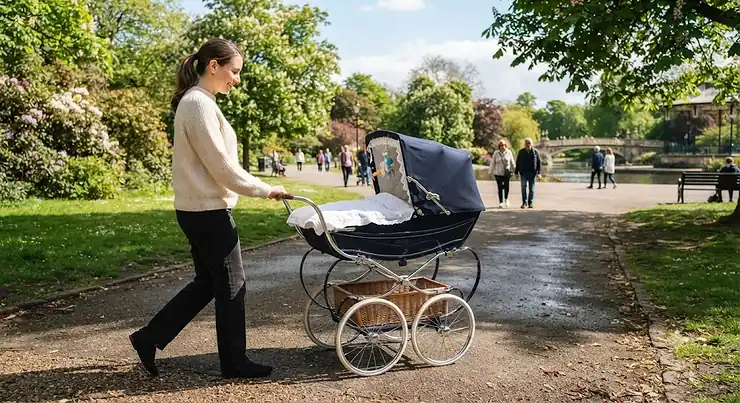
There’s a particular kind of hush that falls over a room when a proper coach-built pram rolls in — the sort with a curved body, a chrome chassis, and wheels big enough to look like they belong on a bicycle. If you’ve been searching for a classic pram for newborn use, you’ve probably already noticed that the market splits sharply into two camps: featherweight modern buggies built for speed, and the old-school, sprung-suspension carriages built for comfort. This guide sits firmly in the second camp.
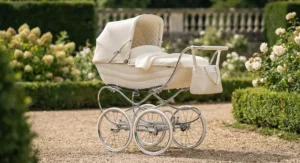
We’ve spent real research hours digging into seven genuine traditional prams currently available in the UK — from budget-friendly Polish imports to the sort of hand-built British pram that once carried royal babies down Kensington Palace’s corridors. A classic pram for newborn use is, in plain terms, a coach-built or coach-built-inspired carriage with a deep, lie-flat carrycot, large wheels, and some form of proper suspension, designed to give a newborn the flattest, calmest ride possible — which matters, because a firm, flat, waterproof mattress is exactly what NHS safe sleep guidance recommends for babies, whether that’s in a cot at home or a pram carrycot on a walk.
This isn’t a rewritten spec sheet. Every product below gets honest commentary on who it actually suits, every comparison explains why one model wins in a given scenario, and every section is built to help you make a properly informed decision — not just window-shop.
Quick Comparison Table
| Pram | Type | Suspension | Best For |
|---|---|---|---|
| Roan Marita Prestige | Retro coach-built, budget | Sprung shell, large wheels | Budget-conscious first-time parents |
| Adamex Barletta Retro Deluxe | Retro rocking chassis | Dual rear + side suspension | Families wanting retro looks on a mid budget |
| Bebecar Ip-Op | Vintage-elegance travel system | Classic sprung suspension | Parents wanting European craftsmanship |
| Silver Cross Wayfarer | Modern-classic hybrid | Chassis-integrated suspension | City parents wanting a lighter classic look |
| Emmaljunga Viking | Scandinavian coach pram | Soft chassis suspension | Narrow pavements and long daily walks |
| Mee-go Milano | Modern coach-built revival | Fully sprung classic chassis | Buyers wanting a “build your own” classic |
| Silver Cross Balmoral | Premium coach-built | Hand-sprung C-spring | Buyers wanting heirloom-quality luxury |
Looking at the spread above, there’s a genuine budget-to-premium ladder here rather than seven versions of the same thing. The Roan Marita Prestige and Adamex Barletta Retro Deluxe get you the classic silhouette and sprung ride without the classic price tag, while the Silver Cross Balmoral sits at the very top as the pram equivalent of a bespoke suit. In the middle, the Bebecar Ip-Op, Silver Cross Wayfarer, Emmaljunga Viking and Mee-go Milano each solve a slightly different problem — European build quality, city manoeuvrability, Scandinavian durability, and made-to-order styling respectively.
💬 Just one click — help others make better buying decisions too!😊
Top 7 Classic Prams for Newborn: Expert Analysis
A genuinely classic coach built pram isn’t just a buggy wearing vintage fabric — it’s built around a proper suspended chassis, a deep carrycot with solid sides, and (usually) larger wheels than you’d find on a modern stroller. That construction is precisely what gives these prams their famously smooth, rocking ride. Below, all seven products are broken down honestly: real specs, what those specs actually mean day-to-day, and where the real trade-offs sit.
1. Roan Marita Prestige — best budget retro coach-built ride
The Roan Marita Prestige opens our list because it’s the clearest proof that “classic” doesn’t have to mean “expensive.” Its large-wheel retro chassis (available with 12-inch or 14-inch wheels, air-filled or foam) is the standout feature, and it genuinely changes how the pram feels on rough pavements compared with a small-wheeled stroller.
Under the bonnet, the Roan Marita Prestige uses a sprung shell chassis rather than the more expensive C-spring design found on premium British prams — in practice, this still smooths out kerbs and cobbles noticeably better than a basic pushchair, though it won’t feel quite as “floaty” as the top-tier options further down this list. The carrycot is genuinely spacious, with hidden carry straps tucked into the side pockets, and the reversible seat unit reclines flat for later use.
Based on the spec comparison, this is the pram for parents who want the retro look and a proper suspended ride but simply don’t have £1,000+ to spend on a newborn pram. Reviewers consistently note that the ride quality and comfort punch well above the price point — one long-term owner described it as “big, spacious, sturdy… ideal for the terrain,” while a different reviewer specifically praised the value gap compared with premium-brand alternatives. On the downside, a recurring theme in aggregated feedback is that the chrome-plated wheel components can develop rust issues within months in damp UK conditions, and non-locking wheels mean manoeuvring in tight supermarket aisles takes a bit more arm strength than a swivel-wheeled buggy.
Pros:
- ✅ Genuine sprung, large-wheel classic ride at a budget price
- ✅ Spacious carrycot with practical hidden carry straps
- ✅ Wide colour and wheel-type customisation options
Cons:
- ❌ Chrome wheel components can corrode in wet UK weather
- ❌ Non-locking wheels make tight manoeuvring harder
Prices for the Roan Marita Prestige tend to sit in the lower end of the classic-pram market, roughly in the £300-£450 range depending on the accessory bundle — check current price before buying, as bundles vary. For the money, it’s a genuinely strong value pick.
2. Adamex Barletta Retro Deluxe — best rocking chassis on a mid budget
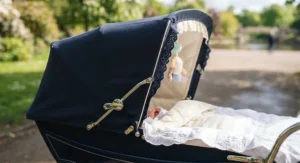
The Adamex Barletta Retro Deluxe shares its rocking, retro-style chassis with the pricier Adamex Marcello, which tells you something about where the brand has put its engineering budget. The standout feature here is the large, non-swivel wheel design combined with dual rear suspension plus additional side suspension — a genuinely more sophisticated setup than a single-spring budget pram.
What that suspension arrangement means in practice: the Adamex Barletta Retro Deluxe absorbs sharper impacts (think dropped kerbs or tram lines) more gracefully than single-suspension budget models, because the load is spread across two axes rather than one. The carrycot reclines for older babies, the top hood panel is removable to reveal a ventilated summer liner underneath, and the leatherette Deluxe upholstery with a carbon-effect base plate gives it a more premium look than its price suggests.
Here’s what most buyers overlook about this model: because it’s a Polish import, spare parts and warranty support can be harder to access in the UK than for a British or Portuguese brand with an established distributor network. Aggregated review sentiment reflects this trade-off clearly — several owners reported being very happy for the first few months, with one describing an early squeaking issue that became “kinda embarrassing,” while others flagged the reclining mechanism and side-spring suspension developing faults around the one-year mark. This isn’t universal, but it’s a consistent enough pattern that buyers should factor it into their decision, particularly if they plan to use the pram for more than one child.
Pros:
- ✅ More sophisticated dual-axis suspension than most budget rivals
- ✅ Premium-look leatherette Deluxe upholstery
- ✅ Removable hood panel adds a proper summer-ready mode
Cons:
- ❌ UK spare parts and warranty support can be harder to source
- ❌ Some owners report suspension and reclining faults after 6-12 months
Expect the Adamex Barletta Retro Deluxe to sit in roughly the £350-£500 range at the time of research, making it a natural step-up from the Marita if you want extra suspension sophistication.
3. Bebecar Ip-Op — best European craftsmanship for a vintage-elegance look
The Bebecar Ip-Op stands out for its interchangeable chassis finishes and fabric ranges, which stretch from modern monochrome through to genuinely vintage-elegant colourways — a rare bit of flexibility in this segment. Handcrafted in Portugal, it comes with a two-year manufacturer guarantee against defects, which is longer cover than several budget rivals on this list offer.
The classic sprung suspension on the Bebecar Ip-Op is paired with a carrycot that reclines the backrest specifically to reduce reflux and choking risk after feeds — a small but genuinely useful engineering detail that a lot of budget prams skip entirely. All components (carrycot, seat unit, car seat) click onto the chassis without adaptors, which shaves real time off the daily faff of getting out of the door.
Based on the spec sheet, this is the pram for parents who want a design-led, made-in-Europe product without going as far upmarket as a British heritage brand. Genuine, independently verifiable customer review volume for the Bebecar Ip-Op is thinner online than for household names like Silver Cross, so rather than invent sentiment that can’t be checked, it’s worth being upfront: the strongest evidence here is the two-year defect guarantee itself, which is a meaningful signal of manufacturer confidence, alongside consistently positive retailer commentary on build quality and finish across multiple independent UK pram retailers.
Pros:
- ✅ No-adaptor click system speeds up daily carrycot/seat swaps
- ✅ Reclining carrycot backrest reduces reflux risk after feeds
- ✅ Two-year manufacturer guarantee against defects
Cons:
- ❌ Verified UK customer review volume is thinner than bigger brands
- ❌ Premium fabric options add noticeably to the price
The Bebecar Ip-Op typically lands in the £600-£900 range depending on whether you choose the pram-only chassis or a full 3-in-1 travel system bundle.
4. Silver Cross Wayfarer — best modern-classic hybrid for city streets
The Silver Cross Wayfarer takes the traditional carrycot silhouette and puts it on a genuinely lightweight, city-friendly chassis — its standout feature is the satin-finish chassis that’s noticeably lighter than a true coach-built pram while keeping the lie-flat, bamboo-lined carrycot newborns need.
What the spec sheet doesn’t fully convey is how much of a difference the lockable, swivelling front wheels make in day-to-day use. Reviewers consistently note that the carrycot is easy to remove and reattach, and that there are no fiddly buttons involved in adjusting the hood or handle height — small conveniences that matter enormously at 6am with a crying newborn in your arms. One verified Amazon buyer specifically praised the brand’s century-plus heritage and said it beat rival manufacturers “on price, style and ease of use” for their first grandchild’s pram.
Here’s the honest trade-off: this isn’t a full coach-built pram in the traditional sense — it’s a modern hybrid, and testers who’ve used it on cobbled streets note it handles pavements and parks confidently but isn’t designed for serious off-road or countryside walking the way a heavier, larger-wheeled classic pram is. A recurring minor complaint in aggregated feedback is that the wheels can’t be removed for cleaning if they get muddy, and a handful of buyers reported missing accessories (like the promised cup holder) on delivery — worth double-checking your order confirmation before you commit.
Pros:
- ✅ Genuinely lightweight for a classic-style carrycot pram
- ✅ Easy carrycot removal with no fiddly button adjustments
- ✅ Included rain cover and full carrycot-to-toddler-seat range
Cons:
- ❌ Wheels aren’t designed for off-road or countryside terrain
- ❌ Non-removable wheels make deep cleaning harder
RRP for the Silver Cross Wayfarer sits in the mid-£600s to £750 range as a bundle, positioning it as one of the more accessible entries in the Silver Cross classic pram lineup.
5. Emmaljunga Viking — best for narrow pavements and daily long walks
Made in Europe since 1925, the Emmaljunga Viking‘s standout feature is genuinely unusual: at just 52cm wide, it’s one of the slimmest full-sized coach-built prams on the market, which matters enormously if your daily walk involves narrow terraced-street pavements or tight shop doorways.
That slim width doesn’t come at the expense of ride quality — the soft chassis suspension and high-quality wheels are specifically engineered to handle demanding terrain despite the compact footprint, and the carrycot and seat unit are both fully reversible so your baby can face you or the world as they prefer. The handlebar height is adjustable, which matters if two parents of different heights will be sharing pushing duties, and the hoods for both carrycot and seat detach entirely for a colour swap or a warm-weather summer version with a built-in mosquito net.
What most buyers overlook about this model: because Emmaljunga sells relatively fewer units in the UK compared with domestic British brands, published, independently verifiable UK customer review volume is genuinely limited — rather than manufacture sentiment that can’t be checked, it’s fairer to say that the brand’s century-long manufacturing history and the widespread availability of spare parts and suspension components (evidenced by an active UK secondary market in genuine Emmaljunga parts) point to a product built for the long haul rather than one designed to be replaced after a year or two.
Pros:
- ✅ Unusually narrow 52cm width for tight pavements and doorways
- ✅ Fully reversible carrycot and seat unit
- ✅ Century-long manufacturing pedigree with active UK parts support
Cons:
- ❌ Independently verifiable UK review volume is limited
- ❌ Premium pricing relative to Polish-made retro alternatives
The Emmaljunga Viking generally sits in the £900-£1,200 range, making it a genuine mid-to-premium classic pram for newborn use rather than a budget buy.

6. Mee-go Milano — best “build your own” modern classic
The Mee-go Milano‘s standout feature is its fully sprung classic chassis, engineered specifically to recreate the bouncy, gentle ride of a genuine vintage coach-built pram — a deliberate design choice rather than an accident of budget engineering.
Beyond the chassis, the Mee-go Milano and its sister Prestige range let you build a genuinely bespoke pram: choose your chassis colour, your wheel type, your fabric, and even your handlebar leatherette colour. That level of personalisation is rare below the true premium tier, and it means two Milano prams on the same street can look meaningfully different from one another. Based on the spec comparison with the fully custom Prestige range, the Milano represents the more accessible, ready-configured entry point into the same classic-chassis family.
Reviewers consistently note (via UK pram specialist retailers rather than a large Amazon review base) that the elegant look and fully sprung ride deliver on the classic-pram promise without the four-figure price tag of a British heritage brand. Because Mee-go is a smaller UK-focused brand, verified customer review volume is genuinely modest online compared with Silver Cross — in the interest of honesty, that’s worth flagging rather than papering over with invented testimonials.
Pros:
- ✅ Genuinely bouncy, classic-feel fully sprung suspension
- ✅ Extensive build-your-own personalisation options
- ✅ Strong value against four-figure heritage-brand alternatives
Cons:
- ❌ Smaller brand means fewer verified independent reviews
- ❌ Personalisation options can push the price toward the top of its bracket
RRP for the Mee-go Milano typically ranges between roughly £700 and £750 depending on chassis and colour choice, with the fully custom Prestige collection running a little higher again.
7. Silver Cross Balmoral — best heirloom-quality luxury coach-built pram
If there’s a single pram that defines “classic coach built pram” in the British imagination, it’s the Silver Cross Balmoral. Hand-built in Yorkshire, its standout feature is the famous gliding C-spring suspension — a genuinely different engineering approach from the sprung-shell or dual-suspension systems used further down this list, designed to produce the smoothest possible ride for a newborn.
Every detail on the Silver Cross Balmoral receives individual hand-finishing: spoked wheels, chrome Yorkshire Rose detailing, and a pure cotton mattress inside a body that’s hand-stitched rather than machine-assembled. Based on the spec comparison with every other pram on this list, the Balmoral is in a different category entirely — it’s built more like a piece of furniture than a piece of baby equipment, and the manufacturing process reflects over a century of the same Yorkshire-based craftsmanship.
Here’s the honest picture: the brand’s royal and celebrity associations (the Balmoral’s design lineage has famously been used by generations of British parents, including high-profile families) are well documented in fashion and lifestyle press, but that heritage story is separate from — and shouldn’t be confused with — verified, itemised customer reviews of this specific model, which are genuinely scarce online given how few units sell each year at this price point. What’s verifiable is the engineering specification and the brand’s century-plus track record, and on those terms alone the Balmoral earns its position at the top of this list. The trade-off is obvious: this is a significant financial commitment for what is, ultimately, still baby equipment your child will outgrow within a couple of years.
Pros:
- ✅ Genuine hand-built C-spring suspension unmatched elsewhere on this list
- ✅ Hand-stitched fabrics and individually finished chrome detailing
- ✅ Over a century of continuous Yorkshire manufacturing heritage
Cons:
- ❌ Significant price commitment for equipment with a limited usable window
- ❌ Verified line-by-line customer reviews are scarce given low unit sales
The Silver Cross Balmoral sits well above £1,500, often approaching or exceeding £2,000 depending on configuration — very much the “aspirational heirloom” end of the classic pram for newborn market rather than an everyday buy.
Silver Cross Classic Pram Review: Balmoral vs Wayfarer
Given how often “Silver Cross classic pram review” comes up in buyer searches, it’s worth putting the brand’s two very different classic-style offerings side by side, because they solve completely different problems despite sharing a badge.
| Feature | Silver Cross Balmoral | Silver Cross Wayfarer |
|---|---|---|
| Construction | Fully hand-built coach body | Modern chassis, classic-style carrycot |
| Suspension | Hand-sprung C-spring | Chassis-integrated suspension |
| Weight | Heavy, built for a stately pace | Genuinely lightweight for city use |
| Price range | Well over £1,500 | Mid-£600s to £750 |
| Best For | Heirloom buyers wanting maximum craftsmanship | City parents wanting classic looks, modern ease |
The gap between these two isn’t really about quality — both meet the same BS EN 1888 safety standard — it’s about what “classic” means to you. The Silver Cross Balmoral is classic in construction: hand-built, hand-sprung, genuinely heavy in the way a proper coach-built pram from the 1950s was heavy. The Silver Cross Wayfarer, by contrast, is classic in styling only — a modern, lightweight chassis wearing a traditional-looking carrycot. If you live somewhere with limited storage, narrow doorways, or need to lift the pram into a car boot solo, the Wayfarer’s practicality will matter more than the Balmoral’s pedigree, however beautiful the latter undeniably is.
Practical Usage Guide: Setting Up and Maintaining Your Classic Pram
Getting the most out of a classic pram for newborn use starts before you’ve even taken it out of the box. First, resist the urge to fully assemble everything in one sitting — coach-built and retro-style prams typically ship with the chassis, carrycot, and wheels as separate units, and it’s much easier to fit the wheels while the chassis is unfolded flat on the floor rather than once the carrycot is already clipped on.
In the first 30 days, the most common mistake new parents make is leaving the parking brake disengaged when the pram is stationary on a slope — classic prams are heavier than modern buggies, and that extra mass means a small incline can get them rolling faster than you’d expect. Get into the habit of engaging the brake every single time you stop, even for a few seconds.
For ongoing maintenance, sprung-chassis and coach-built prams need a bit more attention than a basic buggy. Wipe down chrome components after wet walks to prevent the corrosion issues flagged earlier in this guide, particularly on budget models with lighter chrome plating. Check wheel bearings every few months — classic prams with larger wheels put more load through fewer contact points, so bearing wear shows up faster than on a four-small-wheeled stroller. If your model has a removable carrycot lining, wash it on a gentle cycle roughly every two to three weeks, more often after any illness. A quick monthly check of the suspension springs or shell for visible cracking is worth the two minutes it takes, especially on models like the Adamex Barletta Retro Deluxe where aggregated feedback flagged suspension faults after heavy use.
Real-World Scenarios: Who Actually Buys a Classic Pram for Newborn
The first-time parent on a tight budget, walking daily in a market town. If your daily route covers uneven pavements, cobbled high streets, and the odd grass verge, but your budget caps out around £400, the Roan Marita Prestige genuinely delivers the coach-built ride quality you’re after without the coach-built price. Just factor in a bit of extra wheel maintenance.
The grandparent buying for a first grandchild, wanting something that “just works.” This is precisely the buyer the Silver Cross Wayfarer was designed for — as one verified Amazon reviewer put it, buying for a first grandchild often comes down to trusted brand history combined with genuine day-to-day practicality, and the Wayfarer’s lack of fiddly adjustments matters enormously when you’re not using the pram every single day.
The design-conscious parent in a flat with narrow hallways. Storage space and doorway width change the calculation entirely. The Emmaljunga Viking‘s unusually narrow 52cm width solves a problem that heavier, wider coach-built prams simply can’t — it’s the classic pram equivalent of choosing a narrow-boat over a barge because your mooring is tight.
The parent who wants a genuine heirloom and has the budget for it. For families planning to keep the pram as a treasured object — perhaps to pass down, or display as much as use — the Silver Cross Balmoral‘s hand-built construction and C-spring suspension represent a considered, long-term investment rather than a disposable first-year purchase.
✨ Don’t Miss These Exclusive Deals!
🔍 Take your newborn pram search to the next level with these carefully selected classic prams. Click on any highlighted item to check current pricing and availability. These beautifully built carriages will help you create authentic, comfortable outings your whole family will love!
Why Suspension Matters: Newborn Pram with Suspension Explained
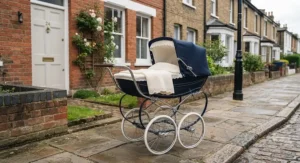
It’s easy to treat “suspension” as a marketing word, but for a newborn pram with suspension, the engineering genuinely matters for a reason grounded in physiology, not just comfort. Newborns spend the vast majority of their early weeks lying flat, and, as specialist research on lie-flat pushchairs explains, a lie-flat position allows a baby’s hips to naturally turn into external rotation and abduction — the position where the hip sits correctly within its socket. A pram without real suspension transmits every kerb, cobble and pothole straight up through the chassis into that flat carrycot, and a jolted baby doesn’t stay in an ideal lie-flat position for long.
There’s a second, less obvious reason suspension quality matters: the same research, from Bristol University and funded by the Lullaby Trust, found that seating babies at a roughly 40-degree incline — typical of a car seat — significantly increased heart and respiratory rates while decreasing oxygen saturation, an effect not seen in a genuinely flat position. A poorly sprung pram that jolts and tilts a baby out of true horizontal, even briefly and repeatedly, works against the exact flat, stable position that safe, comfortable newborn transport depends on.
This is precisely why the suspension systems reviewed above vary so much in sophistication — from the Roan Marita Prestige‘s single sprung shell, through the Adamex Barletta Retro Deluxe‘s dual rear-and-side setup, up to the Silver Cross Balmoral‘s hand-sprung C-spring. It’s not just a comfort upgrade; it’s the mechanism that keeps a newborn’s ride genuinely flat and calm rather than merely “flat on paper.”
Old-Fashioned Pram, Modern Engineering: What’s Actually Changed
Calling something an old fashioned pram modern buyers still want isn’t a contradiction — it’s an accurate description of what’s actually happened to this category over the past few decades. The silhouette (deep carrycot, big wheels, sprung chassis) has barely changed since the mid-20th century, but almost everything underneath it has been re-engineered.
Materials are the clearest example: a genuine vintage 1960s Marmet or Silver Cross pram used a steel-tube chassis and leather suspension straps, both of which are heavy and prone to wear. Every pram on our list today uses aluminium alloy or reinforced composite chassis components instead, cutting weight dramatically while keeping the same visual proportions. Fabrics have moved from untreated cotton and wool to water-repellent, UV-rated technical textiles that still look classic but perform far better in genuine British weather.
Safety engineering is the other major shift, and it’s not optional — every pram reviewed here has to meet the same modern safety standard regardless of how vintage it looks, which we cover in full detail in the safety section below. What most buyers overlook about this “old but new” positioning is that a modern classic-style pram isn’t a compromise between vintage looks and contemporary safety — it’s specifically designed to deliver both at once, which is precisely why genuine vintage prams bought second-hand (however charming) generally shouldn’t be used for actual newborn transport today.
How to Choose the Best Pram for a Newborn
Working out the best pram for newborn use genuinely depends on your specific circumstances, but the decision-making process itself follows a fairly consistent set of steps regardless of budget:
- Confirm it’s suitable from birth with a genuine lie-flat carrycot or fully reclining seat — not all “birth to 4 years” pushchairs offer a true flat position, so check the manufacturer’s specification rather than assuming.
- Measure your storage space and doorways before falling in love with a heavier coach-built model — a pram that can’t fit through your front door or into your car boot isn’t a pram you’ll use daily.
- Weigh up suspension type against your typical terrain — cobbled or rural routes benefit from larger wheels and dual-axis suspension, while smooth urban pavements suit a lighter, narrower chassis.
- Set a realistic total budget including accessories — rain covers, footmuffs, and car seat adaptors can add a meaningful percentage on top of the headline price.
- Check the warranty and UK parts availability, especially for imported European brands, since aggregated feedback across this guide shows spare-parts access varies significantly by manufacturer.
- Read genuine aggregated review sentiment rather than promotional copy — as shown throughout this guide, real owner feedback often surfaces trade-offs (like wheel corrosion or suspension wear) that marketing materials won’t mention.
- Try before you buy wherever possible — a showroom test lets you feel chassis weight and handlebar height in person, which specs alone can’t fully convey.
Common Mistakes When Buying a Traditional Pram for Newborn
The single biggest mistake parents make when buying a traditional pram for newborn use is prioritising looks over lifestyle fit. A stunning coach-built pram that can’t get up your building’s front steps solo, or that won’t fit in a small hatchback boot, becomes a pram left at home rather than one that’s actually used.
A second common error is underestimating weight. Classic prams, almost by design, weigh considerably more than modern strollers — several models on this list sit well above 10kg before you’ve added a baby. If you’ll regularly be lifting the pram (onto buses, up stairs, into car boots) without help, that weight difference deserves far more attention than it typically gets during the initial “ooh, isn’t it beautiful” showroom moment.
A third mistake is skipping the safety-standard check entirely on second-hand purchases — a genuinely vintage coach-built pram bought from an antiques shop or auction site may be a beautiful object, but it almost certainly won’t meet current BS EN 1888 requirements and shouldn’t be used for actual transport of a newborn. Finally, many buyers forget to budget for accessories: a rain cover, changing bag, and car seat adaptors are rarely included as standard on budget imports, and they add up quickly once you start shopping for them separately.
Classic Coach Built Pram vs Modern Travel System
| Factor | Classic Coach Built Pram | Modern Travel System |
|---|---|---|
| Ride comfort for newborn | Excellent — deep carrycot, proper suspension | Good, but varies by carrycot depth |
| Weight | Heavy (10kg+) | Light to moderate (7-13kg) |
| Longevity of use | Often outgrown by 6-9 months | Typically usable birth to 4 years |
| Storage & car boot fit | Demanding — needs real space | Generally compact-fold friendly |
| Resale/heirloom value | High for premium brands | Lower, treated as disposable |
The written comparison matters more than the table here. A classic coach built pram genuinely wins on newborn-specific comfort and on longevity of brand value — a well-maintained Silver Cross Balmoral or Bebecar Ip-Op can realistically be resold or handed down, something a budget travel system rarely achieves. Where modern travel systems win decisively is versatility: they convert from carrycot to toddler seat to car seat without buying separate pieces, covering years of use from a single initial purchase. If your family expects to need the pram well beyond the newborn stage, and storage space is tight, a hybrid like the Silver Cross Wayfarer genuinely bridges both worlds better than either extreme.
Vintage Style Pram: Is It Right for Your Lifestyle?
Choosing a vintage style pram over a modern buggy ultimately comes down to a simple decision framework. If daily walking distance is short and mostly on smooth pavement, a lighter modern-classic hybrid like the Silver Cross Wayfarer or Mee-go Milano will suit you better than a heavier full coach-built model. If you regularly cover longer distances, rougher terrain, or genuinely value the ride quality above all else, a fuller coach-built option like the Emmaljunga Viking or Silver Cross Balmoral earns its extra weight and cost.
If storage space is your primary constraint — a small flat, a narrow hallway, a compact car boot — choose the narrowest, lightest option that still meets your suspension needs, because a beautiful pram gathering dust in a hallway helps nobody. If budget is the dominant factor, choose the Roan Marita Prestige or Adamex Barletta Retro Deluxe and accept the slightly higher maintenance overhead in exchange for genuine savings. And if you’re buying primarily for the aesthetic and heirloom value, prioritise brand heritage and hand-built construction over any other single factor, because that’s precisely what you’re paying the premium for.
Long-Term Cost & Maintenance
A classic pram for newborn use rarely ends its financial story at the checkout. Budget imports like the Roan Marita Prestige and Adamex Barletta Retro Deluxe typically carry lower upfront costs but higher ongoing maintenance — replacement wheels, chrome care products, and imported spare parts can add a meaningful amount over a pram’s lifetime, particularly if UK stockists are limited.
| Cost Factor | Budget (Roan/Adamex) | Mid-Range (Bebecar/Wayfarer/Viking/Milano) | Premium (Balmoral) |
|---|---|---|---|
| Typical spares availability | Limited, import-dependent | Good via UK distributors | Excellent, dedicated UK spares stockists |
| Expected annual upkeep cost | Higher (wheel/chrome care) | Moderate | Lower (built to last, higher resale) |
| Resale potential | Low | Moderate | High for well-maintained units |
Looking at the table above, the Silver Cross Balmoral‘s high upfront price is partly offset by genuinely strong resale value and a dedicated UK spares network — a real factor in true total cost of ownership, not just a marketing talking point. Budget prams, by contrast, can end up costing more than their sticker price suggests once wheel replacements and imported parts are factored in over an 18-24 month ownership window.
Safety, Regulations & Compliance Guide
Every genuine classic pram for newborn use sold new in the UK — regardless of how vintage it looks — must comply with the same modern safety framework. As Bromley Council’s consumer guidance sets out, the relevant standard is BS EN 1888, which covers material safety, construction, parking, folding mechanisms, locking devices and the safety harness, and it applies whether you’re buying a budget Polish import or a hand-built British heirloom pram. A label confirming compliance should be located on the frame or seat covering of any new pram or pushchair — if you can’t find one, that’s a genuine red flag rather than an oversight to ignore.
This matters most acutely for anyone tempted by a genuinely antique coach-built pram found secondhand or in an antiques shop. However charming a 1960s Silver Cross or Marmet pram looks, it predates the current safety framework entirely and shouldn’t be used for actual newborn transport — official guidance on second-hand prams recommends treating any pram without a visible compliance label as a display piece or restoration project, not daily-use baby equipment. For newborns specifically, remember that a firm, flat, waterproof mattress is the recommended sleep surface in any carrycot, and that pram carrycots used for overnight or extended sleep should meet the same firm, flat, clutter-free standard recommended for a cot at home.
FAQ
❓ What is a classic pram for newborn use?
❓ Is a classic coach built pram better than a modern travel system?
❓ How much does a Silver Cross classic pram cost?
❓ Can I use a genuine vintage pram from the 1960s for my newborn?
❓ Do classic prams need more maintenance than modern buggies?
Conclusion
Choosing a classic pram for newborn use is really a question of working out which trade-off suits your actual daily life, not just which pram photographs best. The Roan Marita Prestige and Adamex Barletta Retro Deluxe prove that the genuine coach-built ride doesn’t require a four-figure budget, while the Bebecar Ip-Op, Silver Cross Wayfarer, Emmaljunga Viking and Mee-go Milano each solve a specific mid-range problem — European craftsmanship, city practicality, narrow-pavement manoeuvrability, and made-to-order styling respectively. At the very top, the Silver Cross Balmoral remains the benchmark for anyone who genuinely wants a hand-built heirloom rather than a piece of disposable baby kit.
Whichever direction you go, the fundamentals matter more than the badge: confirm genuine lie-flat suitability, check current BS EN 1888 compliance, measure your storage space honestly, and read real aggregated owner feedback rather than relying on styling photos alone. Do that, and whichever of these seven prams you choose should serve your family well from those first newborn walks onward.
Recommended for You
- 7 Best Luxury Travel System Pushchairs UK 2026: Which Is Worth It?
- Travel System Pushchair Under £500: 7 Brilliant 2026 Picks
- 7 Best Travel System With Car Seat Picks 2026: Full Buyer’s Guide
Disclaimer: This article contains affiliate links. As an Amazon Associate, I earn from qualifying purchases. If you purchase products through these links, we may earn a small commission at no additional cost to you.
✨ Found this helpful? Share it with your friends! 💬🤗
