In This Article
Somewhere between the wobbly £50 buggy and the four-figure status symbol sits a stretch of shop floor where the sensible parents live. A pushchair £100 to £300 is a wheeled child seat priced from roughly £100 to £300, above the flimsy basics and below the designer prams. It typically brings a reclining seat, workable suspension, a safety-standard label and a fold you can manage one-handed, with no luxury tax attached.

Why this bracket? Because the price ladder has a kink in it. Below about £100 you are largely buying light plastic and a hood that lets the sun straight in. Above £300 you start paying for fabrics, badge and refinements that plenty of families never miss. Some UK guides begin “mid-range” at £300, which is fair in a world of £1,000 travel systems, but it skips what happens in the £200-£300 zone: proper wheels, real suspension and sturdier frames turn up here.
A quick honesty note. I haven’t pushed any of these around your local park, and I won’t pretend otherwise. What follows is analysis built on published specs, respected UK review sites and the recurring themes in parent feedback, with every model checked at the time of research (September 2026). Prices are shown as ranges only, because they move constantly.
One filter applies before any comparison. Every new pushchair sold in Britain should carry a BS EN 1888 label on the frame or seat, and Trading Standards guidance on prams and pushchairs explains what that standard covers, from folding locks to harnesses. Anything without one is out of the running, whatever the price.
Quick Comparison: The Best Pushchair £100 to £300 at a Glance
| Pushchair | Wheels | Standout spec | Price range | Best For |
|---|---|---|---|---|
| Hauck Runner 2 | 3 | Big air-filled tyres | Under £200 | Rough paths on a tight budget |
| Cosatto Woosh 4 | 4 | Around 8.4kg, full suspension | Roughly £170-£250 | Light everyday city use |
| Silver Cross Pop 2 | 4 | Umbrella fold, lie-flat seat | Around £200 | Small boots and quick trips |
| Ickle Bubba Venus Jogger Pro | 3 | Handlebar hand brake | Roughly £250-£350 by bundle | Active parents with a newborn plan |
| Joie Versatrax | 4 | Reversible seat, one-hand fold | Roughly £250-£300 | Parent-facing babies |
| Joie Litetrax 4 Air | 4 | XXL canopy, terrain wheels | Roughly £200-£300 | Family all-rounder |
| Baby Jogger City Sights | 4 | Foam-filled tyres, two-way seat | Around £300 | One pushchair for years |
Read the table as a map of trade-offs, not a league table. The Hauck Runner 2 delivers the most rugged hardware per pound, but its bulk makes it a poor fit for buses. The Cosatto Woosh 4 and Silver Cross Pop 2 flip that logic, favouring portability over off-road ability. Meanwhile the Baby Jogger City Sights stretches to the top of your budget for the sturdiest all-round feel.
💬 Just one click — help others make better buying decisions too!😊
Top 7 Pushchair £100 to £300 Picks: Expert Analysis
These seven span budget, mid-range and upper-budget territory, mixing three-wheelers and four-wheelers so you can see the trade-offs in practice. Product-page copy is deliberately ignored here, and each verdict rests on specs plus the review themes that keep recurring.
1. Hauck Runner 2 — cheapest route to big air tyres
Nothing else this cheap puts three chunky pneumatic tyres under your child. The design borrows from jogging strollers, and that is exactly why it soaks up gravel and woodland tracks so willingly.
The frame is steel and the whole thing weighs around 11kg, which is heavy for lifting but planted on rough ground. The rear wheels pop off for storage, and MadeForMums measured the folded package at roughly 87 x 59 x 47cm. The seat reclines fully with an adjustable leg rest, and the hood carries UPF 50+ protection. Newborn accessories are sold separately, so check the recline angle before using it early on. Despite the name, the manual says it isn’t suitable for running.
On paper, this suits rural walkers and dog owners more than city commuters. Reviewers consistently praise the value and off-road ability, while noting the long frame is awkward on public transport. A minority of owners report scratched plastics and brake problems, which suggests build consistency is the price of the price.
Pros:
- ✅ Large air-filled tyres flatten rough paths
- ✅ Rear wheels release for boot storage
- ✅ Fully reclining seat with adjustable leg rest
Cons:
- ❌ Around 11kg makes lifting a workout
- ❌ Long frame struggles on buses and in cafés
A pushchair under £200 rarely offers this much terrain ability, so the value verdict is strong if your routes are rough.
2. Cosatto Woosh 4 — featherweight with full suspension
Light, compact and unashamedly playful, this is the buggy that proves a low weight doesn’t have to mean a low ceiling.
The listing details an aluminium frame at about 8.4kg, folding to roughly 57 x 49 x 34cm, with full suspension, lockable swivel front wheels, a one-hand fold and a telescopic pull handle. It’s rated from birth to 25kg, which is generous, and the retailer listing mentions a four-year guarantee. That adds up to a pushchair a single parent can lift into a car with a toddler on one hip. Which? has run a lab review of the Cosatto Woosh 4, though the scores sit behind its paywall.
Here’s my read: this is a pavement-and-park pushchair. Mumsnet’s reviewers found the Woosh line easy to steer and clean, but noted it struggled in long grass, which is what small wheels do. Owner comments elsewhere flag a compact seat and modest basket compared with bigger models.
Pros:
- ✅ Around 8.4kg is easy to lift
- ✅ Full suspension and lockable front wheels
- ✅ Rated up to 25kg for longer use
Cons:
- ❌ Small wheels labour in long grass
- ❌ Seat and basket feel modest to some parents
Expect roughly £170-£250 depending on pattern and retailer; for portability, it is one of the strongest mid range pushchair buys around.
3. Silver Cross Pop 2 — heritage brand, umbrella-fold convenience
Silver Cross has been building prams since 1877, and the Silver Cross Pop 2 brings that pedigree to a compact stroller.
One UK buying guide lists it with a lie-flat seat, an umbrella fold, suitability up to 22kg and a rain cover included. That spec sheet is unusually generous around the £200 mark. Umbrella folds are narrow and quick, so this suits families who bounce between trains, taxis and café tables. Small wheels usually come with that territory, which limits it on rough ground.
Now the honest caveat. I couldn’t find enough independent review data to summarise parent sentiment confidently, so treat this as a spec-led choice and read recent buyer reviews before committing. Also remember that “lie-flat” only has to reach 150° under the standard, so for frequent newborn use a full 180° recline or a carrycot is wiser.
Pros:
- ✅ Umbrella fold suits tight storage
- ✅ Lie-flat seat listed for early use
- ✅ Rain cover included in the box
Cons:
- ❌ Small wheels limit rough-ground comfort
- ❌ Limited independent reviews to lean on
It hovers around £200, right on the pushchair under £200 line, so check the current price before you decide.
4. Ickle Bubba Venus Jogger Pro — hand brake and air tyres at a friendly price
Jogger-style hardware usually costs a fortune, and this one’s calling card is that it doesn’t.
It runs on three air-filled tyres with thick tread and built-in rear suspension, plus a handlebar brake and wrist strap. The Prime bundle adds a newborn cocoon suitable from birth to around 9kg, roughly six months, plus a cup holder and organiser. The main seat takes over after that, and the brand suggests waiting until around nine months before exercising with your child, so check the manual before any jogging plans.
The hand brake matters on hills, where a foot pedal alone is a poor substitute. MadeForMums’ reviewer found it handled pavements, grass and uneven ground confidently and rated it its best-value pick in an all-terrain round-up, while noting it is bigger than a typical city buggy. A cocoon, though, is not a true carrycot, so weigh that up for winter babies.
Pros:
- ✅ Handlebar brake adds control on hills
- ✅ Air tyres with rear suspension for mixed ground
- ✅ Newborn cocoon available in the Prime bundle
Cons:
- ❌ Larger and bulkier than city buggies
- ❌ Bundle pricing pushes past £300
Roughly £250-£350 depending on bundle; it earns its place if outdoor walking is central to your routine.
5. Joie Versatrax — reversible seat without the premium price
Facing your baby on the walk is a small joy, and the Joie Versatrax delivers it without a four-figure invoice.
The reversible seat is lie-flat, and the fold works one-handed even with the seat attached in either direction. Joie lists it at about 13kg, folding to roughly 86 x 65.5 x 36cm, and it stands by itself when folded. A rain cover and cup holder come in the box, while the carrycot and infant carrier are sold separately. The basket is large and easy to reach.
What most buyers overlook is the seat’s fit. A MadeForMums tester found it snug for a three-year-old well under the 22kg limit, and owners mention short canopies and leg rests. Several reviewers also say the suspension is minimal, so it is more of a pavement performer than a trail tackler. Still, parents keep praising the price-to-features ratio.
Pros:
- ✅ Reversible lie-flat seat, parent or world-facing
- ✅ One-hand fold with the seat attached
- ✅ Large, easy-access shopping basket
Cons:
- ❌ Snug seat for larger toddlers
- ❌ Minimal suspension for rougher surfaces
Expect roughly £250-£300, which is fair value for a reversible design in this mid range pushchair tier.
6. Joie Litetrax 4 Air — big hood, terrain wheels, family friendly
Sun, drizzle, school run: this is the pushchair for the sort of British day that tries all three before lunch.
A retailer listing gives about 11.85kg, a folded size of roughly 81.5 x 59.5 x 33.5cm and suitability from birth up to 22kg. There are four recline positions including flat, a removable play bar and a free-standing fold. The “Air” designation means terrain wheels over the standard Litetrax, with foam-filled fronts on newer versions. The extendable canopy carries UPF 50+ protection and covers a lot of child.
Owner feedback splits sensibly. Fans love the hood, basket and easy one-handed control. Others found it a city stroller at heart that loosened with use on broken paths, and one disliked having to remove the belly bar so a toddler could climb out. One buyer also called inflating the rear tyres a faff.
Pros:
- ✅ Extendable UPF 50+ canopy gives generous cover
- ✅ Four recline positions including flat
- ✅ Foam-filled fronts on newer versions
Cons:
- ❌ Belly bar must come off for toddlers to exit
- ❌ Some owners report it loosening on rough paths
Roughly £200-£300 is typical; it’s a dependable everyday choice rather than a trail machine.
7. Baby Jogger City Sights — sturdy, long-haul feel at the budget ceiling
This one strains against the top of the bracket, but it delivers the most premium-feeling ride here.
The Baby Jogger City Sights weighs around 11.3kg and folds to roughly 81 x 59 x 32cm. It’s suitable from birth to 22kg, faces either way, accepts car seats and rolls on rubber, foam-filled tyres. Mumsnet describes it as sturdy, well built and designed to last, noting that it averages around £299 for the pushchair alone, although its list price is higher.
That is the whole calculation: if you can catch it near £300, it can serve as your only pushchair for years, potentially into a second child. Independent testers I found praise its versatility, but I could find less detailed complaint data than for the Joies, so read recent buyer reviews for durability patterns.
Pros:
- ✅ Faces parent or world, with car seat compatibility
- ✅ Foam-filled tyres mean no punctures
- ✅ Sturdy build praised by Mumsnet testers
Cons:
- ❌ Lands at the very top of the budget
- ❌ Heavier than the lightest options here
Around £300 at the time of research, but check current price, since list price sits higher and street prices move.
| Pushchair | Weight | Newborn option | Terrain kit | Best For |
|---|---|---|---|---|
| Hauck Runner 2 | Around 11kg | Recline seat; carrycot extra | Air tyres, lockable front | Rural walkers |
| Cosatto Woosh 4 | Around 8.4kg | Reclining seat from birth | Full suspension, small wheels | Commuters and flats |
| Silver Cross Pop 2 | Check listing | Lie-flat seat | Compact wheels | Trips and small boots |
| Ickle Bubba Venus Jogger Pro | Check listing | Cocoon in Prime bundle | Air tyres, rear suspension | Active walkers |
| Joie Versatrax | Around 13kg | Lie-flat seat; carrycot extra | Basic suspension | Parent-facing babies |
| Joie Litetrax 4 Air | Around 11.85kg | Flat recline | Terrain wheels | All-round families |
| Baby Jogger City Sights | Around 11.3kg | Suitable from birth | Foam-filled tyres | One long-term pushchair |
Weight is the quiet dividing line. The Cosatto Woosh 4 is the only true lightweight here, and everything else asks a bit more of your arms in exchange for stability or seat space. If you need to lift the pushchair daily, that number deserves more weight than any feature badge.
Your First 30 Days: Setup, Maintenance and Mistakes to Avoid
Getting it out of the box is easy. Living with it is where pushchair ownership is won or lost.
Week one checklist:
- Find the BS EN 1888 label on the frame or seat, and keep the box until you’re confident about returns.
- Test the parking brake forwards and backwards. Trading Standards-backed advice also says to check for two folding locks and a five-point harness.
- Work the fold repeatedly. Most mechanisms stiffen at first, so loosen yours up before a bus dash.
- Inflate air tyres properly if fitted (the Hauck Runner 2, Ickle Bubba Venus Jogger Pro and, on some versions, the Joie Litetrax 4 Air), and carry a small pump.
Weekly and monthly upkeep: wipe wheels and axles after muddy walks, look for loose bolts, and check the harness clips. Keep the basket within its rated load, since the Cosatto Woosh 4 is quoted around 8kg. Avoid hanging heavy bags from the handlebar, because that shifts the balance point and can tip a light frame.
Common first-month mistakes: buying accessories before you know your routes, using a car seat as a sleep space, and ignoring squeaks. A squeak is usually dirt or dryness, so a quick clean and light lubrication normally sorts it.
Real-World Scenarios: Matching a Pushchair to Your Family
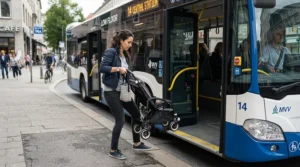
Scenario one: the rural dog walker. A family of three, with a budget near £180, walks a muddy bridleway daily. Ground conditions dominate, so big air tyres and a locking front wheel beat any city feature. On paper the Hauck Runner 2 fits, provided you can lift 11kg into the boot.
Scenario two: the third-floor flat. One parent, an eight-minute walk to the bus stop and no lift. Frequent lifting makes weight the deciding factor, so the Cosatto Woosh 4 or Silver Cross Pop 2 suit better. They will feel far kinder on your back than heavier all-terrain frames.
Scenario three: one pushchair from birth. A couple with a £280 budget and a new baby who wants face-to-face strolling and no upgrades for years. The Joie Versatrax or Baby Jogger City Sights matches that better, with reversible seats and sturdier builds. Budget for a carrycot or a compatible car seat if you need one.
Scenario four: the active parent. Three walks a week, some on grass, later plans for running. The Ickle Bubba Venus Jogger Pro offers a hand brake and air tyres, but confirm the manufacturer’s age guidance before any jogging.
✨ Don’t Miss These Exclusive Deals!
🔍 Take your search for the perfect pushchair £100 to £300 to the next level with these carefully selected models. Click any highlighted product to check current pricing and availability, then choose the one that fits your streets, boot and budget.
How to Choose a Pushchair £100 to £300
The best pushchair £100 to £300 is the one that fits your routes, boot and baby’s age, not the one with the flashiest spec sheet. Work through these steps in order:
- Start with your daily route. Smooth pavements need light weight and easy steering; fields and gravel need bigger wheels and better suspension.
- Decide your newborn plan. Standards only require 150° to count as lie-flat, so for frequent use with a young baby, choose a carrycot or a full 180° recline. The Lullaby Trust advises that car seats are for travel rather than sleeping and that babies should move to a firm, flat surface on arrival.
- Check the weight against your arms. Lifting a pushchair twice a day makes 8kg and 13kg feel like different worlds.
- Measure your boot and hallway. Folded dimensions vary by tens of centimetres.
- Count the extras. Carrycots, raincovers and car seat adaptors can add significantly to the total, so price the whole setup.
- Check UK support. Avoid mystery marketplace brands with no spare parts trail. A wheel replacement is hard to get when nobody answers.
- Confirm returns. A vague brake feel is a deal-breaker, and easy returns are your safety net.
Three-Wheel vs Four-Wheel: Which Suits Your Streets?
The three-wheel vs four-wheel debate feels tribal, but the answer really comes down to terrain, storage and how often you climb kerbs.
A three-wheeler gives you one big swivelling front wheel and usually larger, air-filled tyres. That’s why the Hauck Runner 2 and Ickle Bubba Venus Jogger Pro move so confidently over grass and gravel. A four-wheeler generally folds smaller and turns tighter in shops, which is why the Cosatto Woosh 4, Silver Cross Pop 2 and Joie Litetrax 4 Air dominate town use.
| Factor | Three-wheel | Four-wheel | Best For |
|---|---|---|---|
| Rough ground | Larger wheels help | Depends on wheel size | Hauck Runner 2 for paths |
| Shops and buses | Longer, less nimble | Compact and tight-turning | Cosatto Woosh 4 for towns |
| Folded size | Bulkier, wheels may detach | Often slimmer | Silver Cross Pop 2 for tight boots |
| Maintenance | Air tyres need a pump | Often foam or hard tyres | Baby Jogger City Sights for low fuss |
The table tells a consistent story: three-wheelers win outside and four-wheelers win in the doorway. One buying guide notes a slightly higher tipping tendency in some three-wheeler layouts, so keep the front wheel locked on rough ground and avoid overloading the handlebar. If you split your week between both environments, choose by where you spend most minutes, not where you spend most weekends.
Terrain Suspension: What It Does and When You Need It
Terrain suspension is the pushchair’s shock absorber system, and its job is to keep bumps away from a sleeping baby. But the badge on the frame is only part of the story.
Wheel size and tyre type often matter more. MadeForMums notes that the models struggling most on rough ground are lightweight strollers with very small wheels and limited suspension, so a “suspended” stroller on tiny wheels won’t behave like a jogger. Foam-filled tyres remove puncture risk, while air tyres such as those on the Hauck Runner 2 offer softer rides in exchange for a pump and occasional repair.
Reviewers give useful contrasts. Owners describe the suspension on the Joie Versatrax as minimal, whereas the Cosatto Woosh 4 is marketed with full suspension yet still struggled in long grass in one Mumsnet test. The lesson is that terrain suspension helps on cobbles and kerbs but can’t replace big wheels.
A practical test: push the pushchair firmly over a kerb in the shop and see how the frame reacts. If you feel it clunk through the handle, your baby will too. Lockable swivel front wheels, found on the Hauck Runner 2 and Cosatto Woosh 4, are also worth using on rough ground.
Pushchair Under £200: What the Budget End Really Delivers
A pushchair under £200 can be a smart buy, provided you know where the corners were trimmed. The Hauck Runner 2 and the Silver Cross Pop 2 show the two honest routes: buy big-wheel hardware and accept the bulk, or buy a compact frame and accept small wheels.
One UK guide warns that budget models often compromise on durability or handling. That’s plausible, and it’s why I’d protect four things above all: harness security, brake feel, frame stability and returns policy. A basic hood or small basket is annoying; a vague brake is a genuine problem.
Also watch the extras. Several pushchair under £200 options exclude carrycots and footmuffs, so a low headline price can climb. Read reviews for recurring faults, such as the plastics and brake complaints some owners raise about the Hauck Runner 2, rather than trusting the star average alone.
Used well, this tier makes an excellent second pushchair for grandparents or a single primary pushchair for straightforward routes.
Mid Range Pushchair: Where the Extra £100 Actually Goes
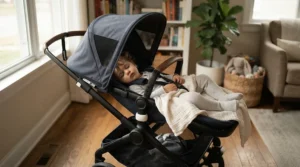
Step from under £200 towards £300 and a mid range pushchair starts to feel different in your hands. The money mostly goes into three places: fold and frame quality, seat flexibility and finishing details.
The Joie Versatrax shows the seat-flexibility upgrade, since its reversible seat lets you face your baby. The Baby Jogger City Sights shows frame quality, with the sturdy feel Mumsnet testers highlighted. The Ickle Bubba Venus Jogger Pro shows specialist features, like a hand brake, that cheaper models skip.
What you don’t get is a magic leap in ride. Terrain suspension is often still modest, and the seat may still feel snug for larger toddlers. That’s why a mid range pushchair is best judged by which extra you’ll actually use daily. If you’ll never face your baby, don’t pay for a reversible seat.
Mid-Range Feature Trade-Offs: What You Gain and What You Give Up
Every pushchair in this bracket is a set of choices, and the mid-range feature trade-offs are surprisingly consistent.
- Lightness vs stability: the Cosatto Woosh 4 is easy to carry but small-wheeled, while the Baby Jogger City Sights feels planted and weighs more.
- Compact fold vs seat size: umbrella folds like the Silver Cross Pop 2 save space but limit padding and wheel size.
- Big tyres vs maintenance: air tyres on the Hauck Runner 2 ride softly yet need a pump.
- Reversible seat vs weight: the Joie Versatrax gives you face-to-face strolling at around 13kg.
- Bundle value vs headline price: the Ickle Bubba Venus Jogger Pro offers a cocoon in the Prime bundle, which lifts the total.
The useful question isn’t “which is best?” but “which sacrifice can I live with for three years?” Those mid-range feature trade-offs show up most in daily habits: lifting, storing, folding, tyre care. Rank them honestly, then let the shortlist follow.
Safety and Regulations: What the BS EN 1888 Label Means
A pushchair earns trust through boring paperwork. BS EN 1888 is the safety standard for prams and pushchairs, covering materials, construction, parking, folding, locking devices and harnesses, and the tests include entrapment hazards and stability. Look for the permanent label on the frame or seat pad. Second-hand models may carry older marks such as BS EN 1888:2012, and damaged or modified pushchairs may no longer comply.
Your legal rights help too. Buying a pushchair from a trader falls under the Consumer Rights Act 2015, so it should be of satisfactory quality, fit for purpose and as described.
Sleep needs its own caution. Standards allow a 150° “lie-flat”, and the Department for Education’s safer sleep guidance for early years providers states that a lie-flat pram or pushchair should not be a child’s main separate sleep space. Adjust coats and blankets to avoid overheating. So treat pushchair naps as on-the-move rest, and use a cot or Moses basket for proper sleep.
Long-Term Cost and Value: Price Bands Compared
Think in cost per use, not sticker shock. A pushchair costing around £250 and used daily for three years works out at roughly 23p a day, which puts even the top of this bracket in perspective.
| Price band | What to expect | Examples | Best For |
|---|---|---|---|
| Under £200 | Solid basics, more visible compromises | Hauck Runner 2, Silver Cross Pop 2 | Tight budgets, second pushchairs |
| £200 to £250 | Better folds, seat comfort, cover | Cosatto Woosh 4, Joie Litetrax 4 Air | Everyday all-rounders |
| £250 to £300+ | Sturdier frames, flexible seats | Joie Versatrax, Ickle Bubba Venus Jogger Pro, Baby Jogger City Sights | Long-term single pushchair |
The pattern is clear: the first £100 buys function, the next £50 buys polish, and the final £50 buys flexibility and longevity. If you plan a second child or hand-me-down, the top band usually returns the most value. Otherwise, the middle band is the sweet spot. Budget for extras, tyre repair kits and eventual resale, too.
FAQ
❓ Is a pushchair £100 to £300 suitable from birth?
❓ What is the best pushchair under £200 for rough paths?
❓ Is a three-wheeler harder to use on pavements?
❓ Do I need terrain suspension on a mid range pushchair?
❓ How long does a pushchair £100 to £300 usually last?
Conclusion: Choosing Your Pushchair £100 to £300 With Confidence
The £100 to £300 bracket rewards the parents who shop by routine rather than by reputation. Rough paths point to the Hauck Runner 2. Small flats and quick trips favour the Cosatto Woosh 4 or Silver Cross Pop 2. Active walkers should look hard at the Ickle Bubba Venus Jogger Pro, while face-to-face strolling belongs to the Joie Versatrax. Families wanting one dependable all-rounder can weigh the Joie Litetrax 4 Air against the Baby Jogger City Sights, the priciest but sturdiest of the seven.
Whatever you choose, apply the same discipline: confirm the BS EN 1888 label, test the brake, check the recline for newborn use, and price the whole setup, not just the frame. Prices shift, so treat every range here as a starting point and check current listings before you buy.
Recommended for You
- 7 Best Travel Stroller Under £100 Picks For UK Parents (2026)
- Second Pushchair Under £100: 7 Best Buys For UK Parents In 2026
- Pushchair Under £100: 7 Genuine Buggy Bargains (2026)
Disclaimer: This article contains affiliate links. As an Amazon Associate, I earn from qualifying purchases. If you purchase products through these links, we may earn a small commission at no additional cost to you.
✨ Found this helpful? Share it with your friends! 💬🤗
