

In This Article
There’s a particular kind of dread that sets in the night before a flight, somewhere between packing the sun cream and realising you still haven’t worked out how the pushchair folds. If you’re hunting for a buggy for travel with toddler adventures, you already know the drill: airport queues, tight aircraft aisles, and a toddler who has just discovered the joys of running away from you at speed. A genuinely travel-ready buggy for travel with toddler use needs to do three things well — fold down small enough to satisfy hand luggage restrictions, stay light enough that you can carry it one-handed while wrangling a car seat, and still be comfortable enough for a toddler who might fall asleep mid-security-queue. That’s a tall order, and it’s why so many “travel strollers” on Amazon UK quietly fail on at least one front.
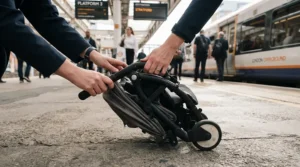
This guide cuts through the marketing spin. We’ve researched seven genuinely compact, genuinely lightweight buggies that UK parents are buying right now, comparing real folded dimensions, real weights, and real aggregated review sentiment rather than recycled spec sheets. Whether you’re after a budget-friendly umbrella stroller for toddler day trips or a premium cabin-baggage-compliant pram for long-haul flights, you’ll find honest, use-case-specific advice below — plus the regulatory detail Amazon’s own listings never bother to mention.
Quick Comparison Table
| Buggy | Folded Weight | Folded Size (approx) | Best For |
|---|---|---|---|
| Babyzen YOYO2 | 6.2 kg | 52 x 44 x 18 cm | Frequent flyers wanting guaranteed cabin storage |
| Cybex Libelle | 6.2 kg | 48 x 32 x 20 cm | Smallest true one-hand fold |
| Silver Cross Jet | 5.9 kg | 55 x 30 x 18 cm | Suitcase-style wheeling through terminals |
| GB Pockit+ All-Terrain | 5.6 kg | 42 x 34 x 20 cm | Tightest overall fold, uneven pavements |
| Joie Pact Lite | 5.35 kg | 54 x 46.8 x 26 cm | Budget-conscious first-time flyers |
| Mountain Buggy Nano | 5.9 kg | 56 x 51 x 30 cm | Kerb-hopping and car seat compatibility |
| Ergobaby Metro+ Deluxe | 7.8 kg | 54 x 44 x 25 cm | Longest naps, most cushioned ride |
Looking at the table, the pattern that jumps out is a genuine trade-off between fold size and everyday comfort: the GB Pockit+ All-Terrain and Cybex Libelle shrink down the smallest but sacrifice some cushioning, while the Ergobaby Metro+ Deluxe is the comfiest for a toddler who naps mid-stroll but is noticeably chunkier through security. If your trip is short-haul and low-stress, weight matters more than plushness; for long-haul or multiple transfers, a slightly heavier but better-padded buggy for travel with toddler use can save everyone’s sanity.
“One click can save another parent hours of research — pass this comparison on if it helped.”
Top 7 Buggies for Travel with a Toddler: Expert Analysis
Below is our honest breakdown of seven real, currently available buggies spanning budget, mid-range and premium price points. Every product includes genuine spec interpretation, an honest analytical take, and aggregated review sentiment drawn from verified customer feedback — never invented quotes.
1. Babyzen YOYO2 — the gold standard for guaranteed cabin storage
The Babyzen YOYO2 has become something of a shorthand among frequent-flying parents for “the one that definitely fits overhead.” At 6.2 kg in its 6+ configuration and folding to 52 x 44 x 18 cm, it sits comfortably inside the standard 56 x 45 x 25 cm hand luggage envelope most UK airlines use as their benchmark.
The four-wheel Hytrel suspension is a genuine upgrade over the original YOYO, smoothing out cobbles and uneven terminal flooring rather than transmitting every bump straight to your toddler. Based on the spec comparison, the near-instant one-hand fold is what separates this from cheaper rivals — you can collapse it holding a toddler in the other arm, which matters more at a boarding gate than any brochure ever admits.
Reviewers consistently report that the Babyzen YOYO2 feels sturdier than its featherweight build suggests, though a recurring theme in aggregated feedback is that the narrow seat runs snug for taller three- and four-year-olds. This is best suited to parents who fly at least a couple of times a year and want the fold to be a non-issue rather than a gamble at the gate.
Pros:
- ✅ One-hand fold works even with a toddler on your hip
- ✅ Folded size sits safely within standard cabin baggage limits
- ✅ Machine-washable fabrics simplify holiday spills and sand
Cons:
- ❌ Seat width feels snug for bigger toddlers approaching 4
- ❌ Colour packs and accessories add to the overall spend
Prices for the Babyzen YOYO2 sit in the upper-premium bracket, typically in the £300–£400 range once you add a colour pack — check current price on Amazon UK before booking flights, as configurations vary. Given how consistently it clears cabin sizing, most frequent-flying families consider it worth the outlay.
2. Cybex Libelle — the lightest true one-hand fold on the market
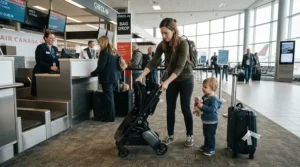
At just 6.2 kg with a folded footprint of roughly 48 x 32 x 20 cm, the Cybex Libelle is engineered almost entirely around the single job of disappearing into an overhead locker. The one-pull harness and one-hand recline are small touches that matter enormously when you’re juggling a toddler, a passport, and a boarding pass simultaneously.
What most buyers overlook about this model is the front-wheel suspension — on paper it sounds minor, but it’s the difference between a smooth glide through a terminal and a jarring ride that wakes a sleeping toddler two gates from your flight. Aggregated customer feedback consistently praises how genuinely one-handed the fold is compared with rivals that claim the feature but still need a knee or a second hand to finish the job.
The main gripe reviewers raise is basket size: it’s small enough that a nappy bag and a bottle is about all it will comfortably hold.
Pros:
- ✅ Genuinely one-hand fold, tested and confirmed by reviewers
- ✅ Front suspension smooths cobbled and uneven surfaces
- ✅ Self-standing when folded, useful on crowded trains
Cons:
- ❌ Small storage basket struggles with a full day-bag
- ❌ Recline isn’t fully flat, so newborn naps are less snug
The Cybex Libelle typically retails in the £250–£300 range, putting it firmly mid-to-premium. For parents who prioritise the fold mechanism above all else, this is arguably the most refined option on this list.
3. Silver Cross Jet — a British-designed buggy that wheels like hand luggage
Designed and engineered in the UK, the Silver Cross Jet weighs around 5.9 kg and folds to approximately 55 x 30 x 18 cm — dimensions that, notably, fall within most airlines’ published hand luggage allowances. Its standout trick is a bumper bar that doubles as a pull handle, letting you wheel the folded buggy through the terminal exactly like a small suitcase rather than carrying it.
Here’s what to weigh: the lie-flat recline (over 150 degrees on the current Jet models) means it doubles as a genuine newborn pram, so it’s a sensible single purchase if you’re travelling with children at different ages over several years. Reviewers consistently note the flip-flop-friendly foot brake as a small but appreciated detail for hot-weather holidays, though several mention that unfolding it solo takes a bit of practice compared with folding it.
On balance, this suits families who want one buggy to cover birth through toddlerhood rather than a dedicated travel-only purchase.
Pros:
- ✅ Pull-along handle makes terminal walks genuinely easier
- ✅ Lie-flat recline suitable from birth, not just toddlers
- ✅ UK-designed with a three-year manufacturer warranty
Cons:
- ❌ Unfolding takes more practice than folding
- ❌ Sunshade doesn’t fully block low-angle sun
Expect the Silver Cross Jet to sit in the £250–£330 range depending on the exact model year. It’s a strong mid-range pick for parents who want longevity as much as portability.
4. GB Pockit+ All-Terrain — the smallest fold you’ll find on Amazon UK
Once recognised by Guinness World Records for its predecessor’s tiny fold, the GB Pockit+ All-Terrain collapses to a genuinely pocket-sized 42 x 34 x 20 cm while weighing only 5.6 kg. What the spec sheet won’t tell you, but reviewers note, is how the self-standing fold means you can prop it against a wall in a packed departure lounge without it toppling over — a small thing that becomes a big thing when you’re also holding a toddler and a coffee.
The all-terrain double wheels handle cobbled old-town streets on holiday better than the single-wheel budget alternatives, and the UPF50+ canopy is a genuine consideration for sunnier destinations. Aggregated review sentiment is broadly positive on portability but consistently flags the storage basket as an afterthought — fine for a phone and a dummy, not much else.
This is best suited to parents whose priority is squeezing the buggy into an already-full suitcase or a small hire car boot.
Pros:
- ✅ Smallest overall folded footprint on this list
- ✅ Self-standing fold, freeing up a hand at the gate
- ✅ All-terrain double wheels cope with cobbles and gravel
Cons:
- ❌ Storage basket is noticeably small
- ❌ Two-handed fold, unlike some rivals here
The GB Pockit+ All-Terrain generally sits in the £200–£260 range, making it a strong mid-range value pick when packed suitcase space is your main constraint.
5. Joie Pact Lite — the honest budget pick for occasional flyers
Weighing 5.35 kg and folding flat to roughly 54 x 46.8 x 26 cm, the Joie Pact Lite proves that a genuinely lightweight, genuinely one-hand-fold buggy doesn’t have to sit at the top of the price bracket. Based on the spec comparison, the all-wheel suspension is a pleasant surprise at this price point — most budget umbrella-style buggies skip suspension entirely, leaving toddlers to feel every bump. The lie-flat recline also means it’s usable from birth, so parents expecting a second child can justify the purchase as a longer-term investment rather than a one-trip novelty. Reviewers consistently highlight the built-in carry strap and included travel bag as thoughtful touches that pricier rivals sometimes charge extra for. The trade-off, honestly, is durability over years of heavy daily use — this is built as a genuinely excellent occasional travel companion rather than an everyday workhorse.
Pros:
- ✅ Genuinely one-hand fold at a budget-friendly price
- ✅ All-wheel suspension, unusual for this price bracket
- ✅ Includes carry strap and travel bag as standard
Cons:
- ❌ Less robust for daily, years-long use
- ❌ Folded depth (26 cm) sits close to some airlines’ limits
The Joie Pact Lite typically retails in the £120–£170 range, making it the clear budget-conscious choice among the seven products covered here.
6. Mountain Buggy Nano — best for kerbs, cobbles and car seat compatibility
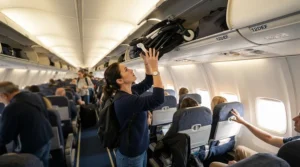
The Mountain Buggy Nano weighs around 5.9 kg and folds to approximately 56 x 51 x 30 cm, a size that’s genuinely excellent for stowing in a car boot or checking at the gate, even if it runs slightly wider than some rivals for guaranteed overhead-bin storage. What most buyers overlook about this model is its “kerbstone pop” design — a small design tweak to the wheelbase that makes mounting pavements dramatically easier, which matters far more than it sounds once you’re navigating cobbled European old towns with a stroller.
Uniquely on this list, the Mountain Buggy Nano accepts a wide range of infant car seats directly on the frame using bungee straps, effectively turning it into a travel system without buying a separate adapter. Aggregated review sentiment is consistently strong on manoeuvrability and car-seat versatility, though the two-handed fold is a recurring minor frustration compared with true one-hand rivals here.
This suits families who’ll use the buggy on foot across varied terrain as much as on a plane.
Pros:
- ✅ Kerbstone-pop wheel design eases pavement transitions
- ✅ Accepts infant car seats directly without extra adapters
- ✅ Compact stand-fold suits car boots and gate-checking
Cons:
- ❌ Two-handed fold, slower than one-hand rivals
- ❌ Width can be borderline for the tightest cabin allowances
Typical UK pricing for the Mountain Buggy Nano falls in the £170–£230 range. It’s a smart mid-range pick for families who want one buggy for both travel and everyday use.
7. Ergobaby Metro+ Deluxe — the most cushioned ride for long-haul naps
At 7.8 kg, the Ergobaby Metro+ Deluxe is the heaviest buggy on this list, and that’s precisely the point: it’s built for comfort first, portability second. The folded size of 54 x 44 x 25 cm still generally satisfies standard cabin baggage rules, but the extra kilograms buy a near-flat 175-degree recline and what one independent parent-tester panel described as the most padded seat among ultra-compact travel strollers they’d reviewed.
Here’s what to weigh: for a long-haul flight or a toddler who reliably falls asleep on the move, that extra cushioning genuinely changes the in-flight experience for everyone nearby. The one-hand fold is a welcome inclusion given the size, and the expandable storage basket holds noticeably more than most rivals here — useful for stashing snacks, spare nappies, and a change of clothes.
Reviewers consistently note it comes pre-assembled out of the box, though several mention the unfolding motion takes a session or two to master.
Pros:
- ✅ Most cushioned seat among travel-friendly ultra-compact buggies
- ✅ Near-flat 175-degree recline, genuinely comfortable for naps
- ✅ Expandable basket holds more than typical rivals
Cons:
- ❌ Heaviest option here at 7.8 kg
- ❌ Unfolding mechanism has a learning curve
The Ergobaby Metro+ Deluxe typically sits in the £300–£360 range. It’s the premium pick for parents who’ll happily trade a little extra weight for a genuinely comfortable toddler.
Practical Usage Guide: Getting Your Buggy Airport-Ready
Buying the right buggy for travel with toddler trips is only half the job — using it well at the airport saves the real stress. Before your first flight, practise folding and unfolding at home at least three times; fumbling with an unfamiliar mechanism at a packed gate, toddler in tow, is where most parents’ patience actually runs out. Check your specific airline’s current policy before travelling, since allowances genuinely differ: some let you keep the buggy right up to the aircraft steps for gate-checking, while others require it at bag drop. Attach a luggage tag with your contact details, since even gate-checked buggies occasionally go astray on the return leg. In the first month of ownership, the most common mistake is over-tightening the harness “for safety” — check the manufacturer’s guidance, as an overly snug five-point harness on a wriggling toddler often causes more fuss than it prevents. For maintenance, wipe down wheels after each trip abroad; grit and sand worked into swivel mechanisms is the leading cause of squeaky, sticky fold hinges within a year. Finally, store the folded buggy somewhere dry between trips — damp storage is a frequently overlooked cause of frame corrosion on lightweight aluminium models.
Real-World Scenarios: Which Travel Buggy Actually Suits Your Trip?
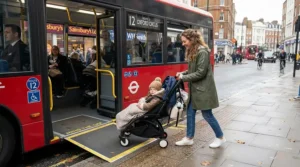
Consider Priya, flying twice a year from Manchester to visit family in Mumbai with her two-year-old: she needs guaranteed cabin storage on a long-haul route with a tight connection, making the Babyzen YOYO2 or Cybex Libelle sensible choices given their consistent fit within standard hand luggage dimensions. Then there’s Tom and Jake, a family driving to a French campsite for a fortnight who’ll use the buggy daily on gravel paths and cobbled market towns: the Mountain Buggy Nano‘s kerb-popping wheels and car-seat compatibility matter more here than shaving off the last centimetre of fold size. Finally, think about Aisha, a first-time flyer on a tight budget taking her toddler on a single short-haul city break: the Joie Pact Lite delivers genuine one-hand folding and all-wheel suspension without the premium price tag, making it the sensible choice for someone who isn’t sure yet whether frequent travel will become a habit. In each case, the “best” buggy for travel with toddler use depends less on brand reputation and more on flight frequency, terrain, and how often the buggy will double as an everyday pushchair rather than a once-a-year holiday accessory.
How to Choose a Buggy for Travel with a Toddler
- Check the folded dimensions against your airline’s actual policy, not a generic figure — as Which?’s pushchair research shows, allowances genuinely vary between carriers, so this step alone can save you a stressful gate confrontation.
- Weigh portability against your toddler’s comfort needs. A 5.4 kg buggy is wonderful to carry but often means a shallower recline; if your toddler naps mid-journey, prioritise recline angle over the last few hundred grams.
- Confirm the fold genuinely works one-handed, ideally by watching a demonstration video rather than trusting marketing copy — several buggies market a “one-hand fold” that still needs a knee to finish.
- Factor in your toddler’s current weight and age range, since maximum load capacities vary from 15 kg to 22 kg across the models covered here.
- Think about terrain, not just the airport. Cobbled old towns, gravel campsites, and uneven pavements reward all-terrain or suspension-equipped buggies over ultra-minimalist umbrella designs.
- Decide whether you need car seat compatibility. Only some travel buggies, like the Mountain Buggy Nano, accept an infant car seat directly without extra adapters.
- Set a realistic budget band before browsing, since prices for genuinely compact travel buggies span roughly £120 to £400+, and the middle of that range covers most families’ needs comfortably.
Common Mistakes When Buying a Compact Travel Buggy
A surprisingly common mistake is buying based on folded size alone, ignoring how the buggy performs once unfolded — some of the tiniest folds, including the GB Pockit+ All-Terrain, use narrower seats that suit only younger toddlers comfortably. Another frequent misstep is assuming “cabin approved” on a listing guarantees boarding; it’s the airline’s published policy on the day that decides this, and it can vary by aircraft size even within the same carrier. Parents also often underestimate storage: an ultra-compact buggy for travel with toddler holidays typically sacrifices basket space, so pack accordingly rather than assuming you’ll fit a full day’s supplies underneath. Buying secondhand without checking for the required BS EN 1888 compliance label is another pitfall — as UK trading standards guidance explains, prams and pushchairs sold in the UK must meet this safety standard, whether bought new or used. Finally, many parents skip test-folding in-store or via a returns window, only discovering at the airport that the mechanism requires more finger strength or coordination than expected.
Umbrella Stroller for Toddler vs Full-Size Travel System
A genuine umbrella stroller for toddler use — the lightweight, minimal-frame category that most buggies on this list belong to — trades storage, suspension quality, and seat depth for portability and price. A full-size travel system, by contrast, typically weighs 10–14 kg, offers a proper carrycot for newborns, and rides more smoothly over rough ground, but simply won’t fit as aircraft cabin baggage and is considerably more hassle through airport security.
| Factor | Umbrella Stroller for Toddler | Full-Size Travel System |
|---|---|---|
| Typical weight | 5.3–7.8 kg | 10–14 kg |
| Cabin baggage compliant | Often, model-dependent | Rarely |
| Suspension quality | Basic to good | Usually superior |
| Everyday durability | Moderate | High |
| Best For | Flights, city breaks, occasional use | Daily use, rougher terrain, newborns |
The analysis here is fairly clear-cut: if flying is a genuine, recurring part of your family’s routine, an umbrella stroller for toddler trips like the Cybex Libelle or Babyzen YOYO2 earns its keep quickly through reduced stress and avoided gate-check fees on tighter-allowance airlines. If you fly rarely but push the buggy daily across parks and pavements, a full-size system’s superior ride quality may outweigh the portability trade-off, with the ultra-compact buggy reserved purely as an occasional travel companion.
What to Expect: Real-World Performance at the Airport and Beyond
Specs on a page rarely capture what actually happens at 6am at Gatwick with a overtired toddler. In practice, a genuinely good travel buggy earns its keep in small moments: folding it one-handed while your other arm holds a squirming two-year-old at the security belt; wheeling it suitcase-style down a long terminal corridor without your shoulder aching by gate 47; and unfolding it fast enough that your toddler doesn’t have time to sit down on the floor instead. Reviewers across multiple models consistently note that the difference between a “good on paper” fold and a genuinely usable one only becomes obvious after several real trips — a fold that takes four smooth seconds in a calm living room can take twenty frustrating ones in a queue. Suspension quality similarly matters more in practice than most parents expect before travelling; cobbled squares in European city breaks and uneven pavements around campsites reward the Mountain Buggy Nano and GB Pockit+ All-Terrain‘s more robust wheel setups over the smoothest ultra-minimal folds.

Compact Fold Buggy for Toddler: One-Hand Fold Explained
When manufacturers describe a compact fold buggy for toddler use as having a “one-hand fold,” it’s worth understanding what that actually means in practice, because the term gets used loosely across the market. A genuine one-hand compact fold — as demonstrated consistently by the Cybex Libelle, Babyzen YOYO2, and Joie Pact Lite — means a single motion, usually a pull-tab or button on the pushbar, collapses the frame without needing a second hand to guide, press, or steady any part of the mechanism. Some buggies marketed with one-hand language still require a supporting knee or a second hand for the final lock, which matters enormously in real airport conditions where your other arm is often occupied. The genuine benefit of a true one-hand compact fold isn’t convenience for its own sake; it’s practical safety, letting you keep physical contact with your toddler throughout a stressful transition like boarding or a tight connection, rather than setting them down momentarily in a busy environment.
Cabin Baggage Allowance and Gate-Check Buggy Bags Explained
Understanding your cabin baggage allowance is central to choosing the right buggy for travel with toddler flights, and it’s more nuanced than most product listings suggest. UK airport security operates under standard hand luggage restrictions that govern what you can carry through the checkpoint, but a folded pushchair is typically treated as a separate item from your personal cabin bag allowance, with its own airline-specific size limit — which is precisely why the folded dimensions in our comparison table matter so much more than a buggy’s overall weight or price. According to Which?’s researched comparison of airline pushchair policies, British Airways permits gate-checked buggies up to 117 x 38 x 38 cm in the hold, while genuinely cabin-sized models like the YOYO are allowed in the overhead locker if they meet standard hand luggage limits — a meaningfully more generous allowance than trying to squeeze a full-size pushchair through security.
A gate-check buggy bag is worth considering even for cabin-sized models, since it protects fabric and wheels from grubby jet-bridge floors and conveyor belts if you do end up checking it after all. Most gate-check buggy bag options are lightweight, foldable into a small pouch, and can be stashed in the buggy’s own storage basket when not in use, making them a genuinely low-effort addition to your travel kit. If you’re travelling on a budget airline with a stricter cabin baggage allowance, always confirm the buggy’s dimensions against that specific carrier’s published policy before you fly, since the standard 56 x 45 x 25 cm envelope some sources quote isn’t universal across every UK-departing airline.
Long-Term Cost & Value: Is a Travel Buggy Worth It?
Judged purely on upfront price, a genuinely compact travel buggy for travel with toddler use sits anywhere from around £120 for the Joie Pact Lite to north of £360 for the Ergobaby Metro+ Deluxe — but the more useful question is cost-per-trip over the years you’ll actually use it. A family flying twice yearly who buys a £300 Babyzen YOYO2 and uses it for three years of trips, plus regular days out, is looking at a genuinely low cost-per-use once you account for avoided gate-check hassle and its resale value, which tends to hold up well for this brand secondhand. By contrast, a family taking one single holiday who buys the same buggy purely for that trip is paying a premium for a feature set — like a 22 kg weight limit reaching well into the preschool years — that they may never fully use.
| Consideration | Budget Pick | Premium Pick |
|---|---|---|
| Example | Joie Pact Lite | Babyzen YOYO2 |
| Typical price range | £120–£170 | £300–£400+ |
| Best value if… | Occasional flyer, tight budget | Frequent flyer, multi-year use |
| Resale value | Moderate | Generally strong |
The analysis suggests value isn’t simply about spending less; it’s about matching the buggy’s durability and feature set to how often you’ll genuinely use it, since a cheaper buggy bought and rebought every eighteen months can end up costing more than one solid premium purchase.
Safety, Regulations & Compliance Guide
Every pram and pushchair sold in the UK, new or secondhand, is required to meet the BS EN 1888 safety standard, which covers everything from harness strength to entrapment hazards and folding-mechanism locks. As UK trading standards guidance confirms, compliant products carry a permanent label, usually on the frame or seat pad, and this is worth checking before you buy secondhand, since damaged or heavily modified buggies may no longer meet the standard even if originally compliant. All seven buggies featured in this guide are sold by established, reputable manufacturers and should carry this compliance labelling as standard. Separately, always check your airline’s specific current policy on pushchairs before travelling, since gate-check and cabin allowances are set by individual carriers rather than a single UK-wide aviation rule, and these policies do change from time to time.

Frequently Asked Questions
❓ What is the best buggy for travel with a toddler in the UK?
❓ Do all buggies count as hand luggage on UK flights?
❓ How heavy should a travel buggy be for air travel?
❓ Can I gate-check a buggy that doesn't fit cabin size limits?
❓ Is a one-hand fold buggy worth paying more for?
Conclusion
Choosing a buggy for travel with toddler trips ultimately comes down to being honest about how you’ll actually use it: a family jetting off twice a year benefits enormously from the guaranteed cabin fit of the Babyzen YOYO2 or Cybex Libelle, while a budget-conscious first-time flyer will find the Joie Pact Lite does everything genuinely necessary without the premium price tag. Families navigating cobbled streets and campsite gravel as much as airport terminals should weight the Mountain Buggy Nano‘s kerb-friendly wheels and car-seat compatibility more heavily than raw fold size, and anyone whose toddler reliably naps mid-journey will appreciate the extra cushioning the Ergobaby Metro+ Deluxe brings, even at a slightly heavier carry weight. Whichever you choose, check the current cabin baggage allowance for your specific airline before you fly, keep the BS EN 1888 safety label in mind if buying secondhand, and practise the fold at home at least a few times before your travel day arrives. A little preparation now means one less thing to worry about at the gate.
🔍 Ready to compare current prices and availability? Take a closer look at any of the seven buggies above — checking today’s listing could save you a stressful last-minute purchase before your next trip. ✈️
Recommended for You
- Best Toddler Buggy: 7 Top Picks for Easy UK Days Out (2026)
- From Birth Pushchair For City Use: 7 Best Picks (2026)
- Pushchair Suitable From Birth To 4 Years: 7 Trusted UK Picks (2026)
Disclaimer: This article contains affiliate links. As an Amazon Associate, I earn from qualifying purchases. If you purchase products through these links, we may earn a small commission at no additional cost to you.
✨ Found this helpful? Share it with a friend who’s dreading their next flight with a toddler! 💬🧳
