In This Article
A high-back booster seat is a forward-facing child restraint with a padded backrest and adjustable headrest. It lifts your child so the car’s own seat belt crosses the collarbone and hips rather than the neck and tummy. It suits children of roughly four to twelve (100–150cm), and the backrest adds head and side support that a bare cushion can’t.

Here’s the catch. The market is crowded, prices run from pocket change to proper money, and half the marketing shouts “lightweight” without saying what that means. UK law says children must normally use a car seat until they’re 12 or 135cm tall, whichever comes first, according to GOV.UK’s child car seat rules. That’s up to eight years of school runs, grandparent hand-overs and, increasingly, hire cars on holiday. So the best high-back booster seat is rarely the fanciest one. It’s the one that fits your child, your car and your habits.
This guide covers seven real seats, chosen to span budget, mid-range and premium. Each is judged on published specifications and published reviews from sources such as Which?, Mother & Baby and Auto Express, plus aggregated customer feedback. I haven’t crash-tested anything, and nothing here pretends otherwise. Where evidence is thin, I say so.
If you move a seat between cars or pack it for flights, I’ve paid extra attention to every lightweight high-back booster for travel option on the list. Prices are shown as ranges only, so check current pricing and availability on amazon.co.uk before you buy.
Quick Comparison: High-Back Booster Seat Options at a Glance
| Seat | Approx. weight | Fitting | Price range | Best For |
|---|---|---|---|---|
| Graco Junior Maxi i-Size R129 | ~3.4kg | Seat belt only | Under £50 | Second cars, grandparents, carpools |
| Cosatto Ninja i-Go R129 | ~4.2kg | ISOFIT + belt, or belt only | £80–£100 range | Flights, hire cars, cabin bags |
| Maxi-Cosi Tanza i-Size | ~5.3–5.5kg | Isofix + belt | £80–£110 range | Folding i-Size from a big-name brand |
| My Babiie MBCS23 Compact | ~6.15kg | Retractable Isofix legs + belt | £60–£80 range | Budget folding seat |
| Joie i-Trillo FX | ~5kg | Isofix guides + belt | £80–£100 range | Everyday easy fitting |
| Maxi-Cosi Kore Pro i-Size | ~6kg | Isofix + belt | £150–£210 range | Long journeys and growing room |
| Thule Palm | ~7.1kg | Isofix | Low £200s | Premium, slim, three-across attempts |
Read the table through a “what will I actually do with this seat?” lens. The Graco Junior Maxi i-Size R129 is the value outlier: its lightness costs very little. The Cosatto Ninja i-Go R129 is the lightest folding option, which matters if the seat spends time in a suitcase. The Maxi-Cosi Kore Pro i-Size and Thule Palm are “fit it once and forget it” seats, where the extra money buys comfort, adjustability and slimness rather than a different legal approval.
💬 Just one click — help others make better buying decisions too!😊
Top 7 High-Back Booster Seat Picks: Expert Analysis
Every seat below carries R129 (i-Size) approval, so all have passed the newer testing regime, including side-impact tests. The differences lie in weight, fitting, comfort and how much grief they cause on a Monday morning.
1. Graco Junior Maxi i-Size R129 — featherweight at roughly 3.4kg
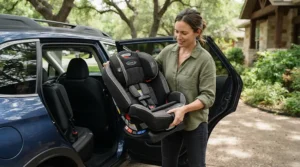
Few seats win a car-swap argument like this one. At around 3.4kg, the Graco Junior Maxi i-Size R129 is the lightest rigid high-back booster seat here by a comfortable margin. One retailer lists a higher figure, so check the listing you’re buying from.
It covers 100–150cm with a one-hand, 10-position headrest, open-loop belt guides and side-impact protection. In practice, that headrest range means you shouldn’t be re-buying at age seven. The open-loop guides make threading the belt a one-glance job. It’s belt-fitted, so there’s no Isofix to wrestle with, but the empty seat can slide about. Buckle it in even when nobody’s sitting on it.
On the spec sheet, this is a grandparent’s-car or second-car seat. UK retailer reviewers repeatedly mention how easily it moves between vehicles, and children seem to rate the retractable cup holders. The supplier has confirmed it doesn’t recline, so long night drives may mean a slumped head.
Pros:
- ✅ Lightest rigid high-back booster seat in this guide
- ✅ One-hand 10-position headrest grows with your child
- ✅ Two retractable cup holders
Cons:
- ❌ No Isofix, so the empty seat can shuffle
- ❌ No recline for napping
Under £50: outstanding value if weight is your priority.
2. Cosatto Ninja i-Go R129 — folds into its own carry bag
The Cosatto Ninja i-Go R129 is the one to look at if your lightweight high-back booster for travel has to survive an airport. It weighs about 4.2kg and folds in seconds into its own carry bag. Retailer listings put the folded size around 20.5 × 45 × 53cm. Cosatto describes it as IATA hand-luggage compatible, but airlines make their own rulings, so check your carrier’s cabin limits.
It suits 100–150cm and fits with ISOFIT connectors plus the belt, or the belt alone. Cosatto says it’s tested beyond the standard R129/03 speed requirements, in line with ADAC levels. Treat that as a manufacturer claim until you’ve seen a published test result. The fabric is made from recycled bottles, the covers are machine washable, and there’s a four-year guarantee when you register within 28 days.
I couldn’t find a deep pool of independent reviews at the time of research, so the case for this seat rests on its spec and portability rather than a crowd verdict. Weigh that honestly: it’s a clever travel seat, not yet a battle-tested one.
Pros:
- ✅ Roughly 4.2kg and folds into a carry bag
- ✅ Belt-only or ISOFIT fitting flexibility
- ✅ Four-year guarantee on registration
Cons:
- ❌ Thin independent review pool so far
- ❌ Cabin-bag status is the brand’s claim, not an airline’s promise
Around £80–£100: fair money for a seat that doubles as hand luggage.
3. Maxi-Cosi Tanza i-Size — big-brand folding for hire cars
The Maxi-Cosi Tanza i-Size is a folding high-back booster seat aimed squarely at travellers and hire-car users. Maxi-Cosi lists it at roughly 5.3kg and folding down to about 59.5 × 28 × 45cm. Independent test houses quote slightly different weights, so allow for a little variation.
It’s Isofix-plus-belt, covers 100–150cm, and uses G-Cell side-impact protection with ten headrest positions. The cover is recycled fabric and machine washable. Mother & Baby named it their best lightweight high-back booster seat. Reviewers like how portable and easy to fit it is, though some found the base too wide for smaller cars, where it can sit over the belt buckle fittings.
Be aware of the mixed signals. ADAC and ÖAMTC tested it in 2025, but I couldn’t verify their scores. The Dutch consumer body ANWB gave it a “sufficient” verdict. Reading between the lines, folding seats can trade some refinement for portability, so check Which? before committing. A minority of retail reviewers also felt it was less sturdy than heavier seats.
Pros:
- ✅ Folds compactly for boots and suitcases
- ✅ Ten-position headrest with G-Cell side protection
- ✅ Washable recycled-fabric cover
Cons:
- ❌ Wide base may clash with belt fittings in small cars
- ❌ Mixed independent verdicts
Around £80–£110: decent value if travel is the main job.
4. My Babiie MBCS23 Compact High Back Booster — budget fold-and-go
Most folding seats cost serious money. The My Babiie MBCS23 Compact High Back Booster doesn’t. It folds to about 48 × 47 × 25cm, has a carry handle, and its Isofix legs retract into the base when not in use. At roughly 6.15kg it’s heavier than the Graco Junior Maxi i-Size R129, but you’re paying for the fold.
It’s i-Size R129 approved for 100–150cm, with a memory-foam headrest, extendable side wings and an eight-position headrest according to one retailer. My Babiie says it was shortlisted for a Junior Design Award for best car seat. That’s a nice badge, not a crash result.
The cover is hand-wash only, which will matter the first time somebody throws up. Reviewer evidence is thin: the retailer pages I found carry only a handful of ratings, though buyers who wrote in like the high back and the adjustability. That’s too small a sample to call a verdict, so treat this as a promising budget pick rather than a proven one.
Pros:
- ✅ Folds flat with a carry handle
- ✅ Retractable Isofix legs stay out of the way
- ✅ Extendable side wings for growing children
Cons:
- ❌ Hand-wash-only cover
- ❌ Small review pool and heavier than the lightest rivals
Around £60–£80: a sensible budget route to a folding seat.
5. Joie i-Trillo FX — easy fitting for everyday life
The Joie i-Trillo FX is the seat for parents who’d rather not read the manual twice. Mother & Baby picked it as their easiest high-back booster seat to install. At around 5kg with Isofix guides, it clicks in quickly and moves between cars without a fight.
It suits 100–150cm, with a ten-position headrest, a memory-foam seat pad, two foldable cup holders and Guard Surround Safety panels. You can remove the panels to make room if you need a third person in the back row. That’s a practical touch for families with an awkward middle seat. The covers are removable and machine washable, and reviewers praise the lightness and quick fitting.
The warnings are small but real. Only two colours are available, and some of the wider i-Trillo range lacks Isofix, so check the exact listing before buying. Which? has previously described it as Joie’s cheapest tested seat, so it sits at the sensible end of the market rather than the glamorous end.
Pros:
- ✅ Lightweight, quick to fit and easy to swap between cars
- ✅ Memory-foam seat pad and two cup holders
- ✅ Removable side panels free up space
Cons:
- ❌ Only two colours
- ❌ Variants without Isofix can cause confusion
Around £80–£100: a safe middle-of-the-road buy.
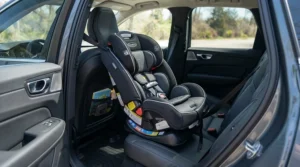
6. Maxi-Cosi Kore Pro i-Size — grows in width as well as height
The Maxi-Cosi Kore Pro i-Size earns its price through growing room. The seat expands in both height and width, so a nine-year-old doesn’t feel jammed into a six-year-old’s shell. At roughly 6kg with Isofix plus belt fitting, it’s reasonably portable for its class.
Side Protection System Plus adds extra impact-absorbing material to the wings. The Kore Pro also has a ClickAssist light that illuminates the buckle area, and the open space at the base puts the buckle within a child’s reach. That sounds gimmicky until you’ve watched a seven-year-old insist on doing it herself. An optional summer cover is available for hot weather.
Reviewers said the cushioning felt firm for longer journeys, which is worth knowing if your child sleeps in the car. Mother & Baby named it their best overall high-back booster seat, yet one large UK retailer’s customer average sits just under four out of five, so opinion isn’t unanimous. I’d read that as “excellent but not perfect”.
Pros:
- ✅ Expands in height and width as your child grows
- ✅ Side Protection System Plus for the wings
- ✅ Buckle-assist light and easy reach for independence
Cons:
- ❌ Some reviewers found the cushioning hard
- ❌ Noticeably dearer than the budget picks
Roughly £150–£210 depending on retailer: worth it for long-term comfort.
7. Thule Palm — slim, premium, built to stay put
Thule is better known for roof boxes than child seats, but the Thule Palm is a convincing first high-back booster seat. Auto Express rated it 4.5 out of 5 in a January 2026 review. It covers 100–150cm, weighs about 7.14kg, and uses guiding Isofix anchors that extend from the base.
The relatively open design means older children can fasten their own belts. Thule claims it’s slim enough to fit three across in certain cars, though you’d need to confirm that for your own vehicle. It comes in three colours, and Auto Express reported no staining on the light fabric after several weeks.
The same reviewer noted some movement in the backrest, which didn’t inspire a sense of solidity, though they had no worries about its effectiveness. At a price comparable to the Nuna Aace LX, it’s much dearer than similar offerings from Silver Cross or Maxi-Cosi. The optional footrest costs extra. This is a seat you buy for slimness and polish, not to save money.
Pros:
- ✅ Slim shape and open design for self-buckling
- ✅ Strong Auto Express rating
- ✅ Isofix guides make fitting simple
Cons:
- ❌ Premium price, with an optional extra footrest cost
- ❌ Some backrest movement noted by reviewers
In the low £200s: only worth it if slimness and finish matter to you.
Top 7 High-Back Booster Seat Picks Compared
| Seat | Height range | Standout spec | Review signal | Best For |
|---|---|---|---|---|
| Graco Junior Maxi i-Size R129 | 100–150cm | ~3.4kg | Retailer reviewers praise portability | Cheapest light seat |
| Cosatto Ninja i-Go R129 | 100–150cm | Folds into carry bag | Few independent reviews found | Flights and hire cars |
| Maxi-Cosi Tanza i-Size | 100–150cm | Folding, G-Cell | Mother & Baby lightweight pick | Brand-name folding seat |
| My Babiie MBCS23 Compact | 100–150cm | Retractable Isofix legs | Small review pool | Budget folding seat |
| Joie i-Trillo FX | 100–150cm | Memory-foam pad | Mother & Baby easy-fit pick | Everyday use |
| Maxi-Cosi Kore Pro i-Size | 100–150cm | Expands in width | Mother & Baby top pick | Long journeys |
| Thule Palm | 100–150cm | Open, slim design | Auto Express 4.5/5 | Premium slim fit |
The table shows how little height range separates these seats: all cover the same 100–150cm window. What differs is the compromise each makes. The Graco Junior Maxi i-Size R129 and Cosatto Ninja i-Go R129 give up Isofix-style stability or padding for portability, while the Maxi-Cosi Kore Pro i-Size and Thule Palm spend your money on comfort. Pick the compromise that matches how you actually travel.
✨ Ready to Compare Current Prices?
🔍 Take your next car-seat decision from “maybe” to “sorted” with these carefully selected seats. Click any highlighted seat name to check current pricing and availability on amazon.co.uk. A well-chosen high-back booster seat makes every school run calmer!
How to Install and Use a High-Back Booster Seat: Your First 30 Days
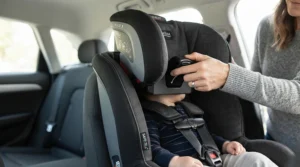
A good seat fitted badly is just an expensive cushion. Hampshire County Council’s road-safety guidance on child car seats starts with the basics: is the seat right for your child’s weight and height, and is it fitted correctly? Build your routine around that.
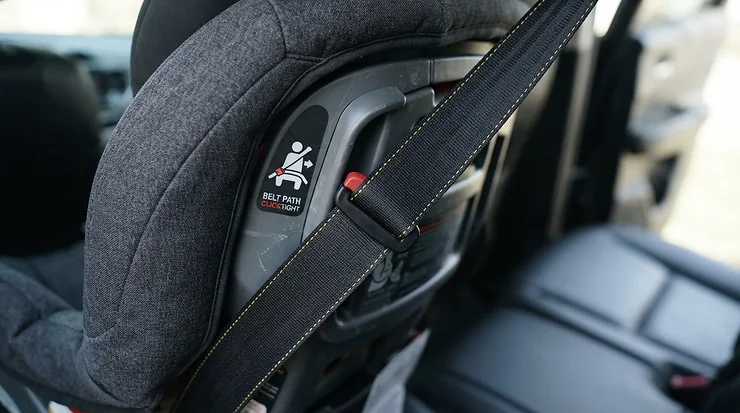
Week 1: set it up. Check the label shows a capital “E” in a circle and “R129”. Fit the seat on a rear seat, using Isofix if your seat has it. Route the belt through the guides, with the shoulder strap crossing the middle of the shoulder rather than the neck. The lap strap should sit low across the hips, not the tummy.
Week 2: tune the fit. Adjust the headrest so it supports the head without pushing it forward. Re-check after every growth spurt. Mother & Baby’s guidance is blunt: the belt must never sit across the neck or tummy.
Weeks 3 and 4: build habits. Wash the cover according to the label. The Graco Junior Maxi i-Size R129 asks for cold, delicate cycles. Test the buckle routine until your child can do it alone, then check belt twists every few weeks.
The classic mistakes: tucking the belt under an arm, leaving slack from bulky coats, and forgetting to re-seat a loose empty seat. A two-minute check beats an hour of regret.
Real-World Scenarios: Matching a High-Back Booster Seat to Your Family
Three families, three very different shopping lists.
The two-car household with a helpful grandparent. Two cars, a Thursday pick-up rota, a budget of about £50, and a seat that moves weekly. The Graco Junior Maxi i-Size R129 fits this almost perfectly: very light, belt-fitted, and with cup holders for the biscuit negotiations. Accept the no-recline trade-off.
The twice-a-year holiday family. Flights to Spain, hire cars at both ends, and a seat that must squeeze into a cabin bag. The Cosatto Ninja i-Go R129 is the lightest folding choice, with the Maxi-Cosi Tanza i-Size as the brand-name alternative. Budget around £80–£110, check your airline’s rules, and practise folding it before you leave.
The three-kid mid-size hatchback. Frequent motorway trips and a middle seat that nobody wants. The Thule Palm, with its slim shape, and the Maxi-Cosi Kore Pro i-Size, with its width-expanding comfort, are the candidates. Test the fit in your own car, because “three across” depends entirely on the vehicle.
Each scenario flips the “best” answer, which is the whole point: the best high-back booster seat depends on the journey, not the brochure.
High-Back Booster Seat Problems and Practical Fixes
Even a well-chosen seat throws up problems. Here are the five most common, with fixes.
1. The empty seat slides around. Belt-fitted seats like the Graco Junior Maxi i-Size R129 have no Isofix to hold them. Buckle the seat in even when it’s empty, or choose an Isofix seat such as the Joie i-Trillo FX.
2. The base blocks the belt buckle. Some reviewers found the Maxi-Cosi Tanza i-Size base too wide for smaller cars. Check your vehicle’s rear seat width and the seller’s returns policy before committing.
3. Your child slumps asleep. Choose a seat with firm side wings and a supportive headrest, and set the headrest height properly. Where a seat doesn’t recline, plan breaks on long drives.
4. Three seats won’t fit across. Look at slim designs such as the Thule Palm, or removable side panels as on the Joie i-Trillo FX. Test before you buy.
5. Spills and sick. Machine-washable covers help enormously. A hand-wash-only cover, as on the My Babiie MBCS23 Compact High Back Booster, needs a little more patience.
When Does Your Child Need a High-Back Booster Seat? Age, Height and Weight
Age is a poor guide, because children grow at different speeds. For R129 seats, go by height: 100cm is the typical starting point, and 150cm is the upper end. Older weight-based R44 seats work from about 15kg. Mother & Baby advises that children ideally weigh at least 18kg and stand 100cm tall before moving from a harness seat, and that you keep them in the harness seat until they hit its maximum.
A high-back booster seat has no internal harness, so the child is held by the car’s belt. That means your child needs to sit still, upright and in position for the whole journey. If a four-year-old can’t manage that, a later move is better.
New backless boosters are limited to taller, heavier children, roughly 125cm and 22kg or more, which is why a high-back booster seat is usually the right choice for younger children. Remember too that growth varies. One Mother & Baby tester noted her son hit the recommended maximum height at nine, so don’t assume your child will use the seat until twelve.
How to Choose a High-Back Booster Seat
- Check the approval label. Look for a capital “E” in a circle plus “R129”. It’s your proof the seat passed modern side-impact testing.
- Measure your child. R129 seats go by height (100–150cm). A seat that’s too big or small compromises belt positioning.
- Decide on fitting. Isofix stabilises the empty seat but doesn’t restrain the child; the belt does that. Which? points out that Isofix on a booster doesn’t work the way it does on a baby or toddler seat.
- Weigh weight against habit. If you swap cars weekly, 3–5kg matters. If the seat lives in one car, extra comfort beats extra portability.
- Check vehicle fit. Base width, rear-seat shape and belt-buckle position all vary. A wide base can clash with fittings.
- Read independent tests. Which?, ADAC and Auto Express add context a spec sheet can’t.
- Inspect the little things. Washable covers, headrest range and belt guides are what you’ll actually use every day.
Lightweight High-Back Booster for Travel: What Actually Matters on Holiday
“Lightweight” isn’t one thing. For a lightweight high-back booster for travel, I’d split the field into two camps. The first is ultralight rigid seats, such as the Graco Junior Maxi i-Size R129 at around 3.4kg. The second is folding seats, such as the Cosatto Ninja i-Go R129, the Maxi-Cosi Tanza i-Size and the My Babiie MBCS23 Compact High Back Booster.
Rigid ultralights are brilliant in cars but awkward in luggage. Folding seats cost a little more and weigh slightly more, but pack down. On weight alone, the Cosatto Ninja i-Go R129 (~4.2kg folded into a carry bag) is the standout for flights. The Maxi-Cosi Tanza i-Size is a natural alternative for hire cars when you want a known brand.
Three practical points:
- Airlines decide, not brands. A seat described as cabin-compatible still needs checking against your airline’s size and weight limits.
- Hire seats are a gamble. Many parents prefer to bring their own so they know the seat’s history and fit.
- Coaches and minibuses. Operators don’t have to supply child seats, so you’ll need to bring your own.
Packing a lightweight high-back booster for travel also means rehearsing the fold at home. Nobody wants to learn a mechanism in a hire-car park at 11pm.
High-Back Booster Seat vs Backless Booster: The Written Verdict
The question isn’t “which is cheaper” but “which protects better”. Which? crash tests suggest backless boosters have not proved nearly as safe as high-back boosters with full-length backs and wings, which add head and chest protection in a side impact. Which?’s car seat experts recommend a high-back booster seat whenever possible.
| Feature | High-back booster seat | Backless booster |
|---|---|---|
| Side-impact protection | Wings and headrest | Minimal |
| Belt positioning | Guides on the shell | Depends on cushion design |
| Sleeping support | Headrest helps | None |
| Portability | Heavier, bulkier | Lighter, smaller |
| Typical minimum size (new) | 100cm | Around 125cm / 22kg |
| Best For | Graco Junior Maxi i-Size R129 for budget, Maxi-Cosi Kore Pro i-Size for comfort | Taller older children |
The table makes the trade clear. A backless cushion wins on portability and price, but a high-back booster seat wins on protection and support, especially for younger children and for any child who naps in the car. For most families with a child under about 125cm, the high back is the sensible default. Reserve backless options for older, taller children and short hops.
Features That Actually Matter (And Those That Don’t)
Features that matter:
- R129 approval and side-impact design. Wings, headrest structure and energy-absorbing materials are the safety core.
- Belt guides. Good guides keep the belt on the shoulder and low on the hips. This is the whole point of a booster.
- Headrest range. Ten positions, as on the Graco Junior Maxi i-Size R129, Maxi-Cosi Tanza i-Size and Joie i-Trillo FX, mean it fits through growth spurts.
- Washable covers. Not glamorous, but you’ll use it constantly.
Features that matter less:
- Cup holders. Handy, not a safety feature.
- Fancy lights and finishes. The Maxi-Cosi Kore Pro i-Size ClickAssist light is clever, but it’s a convenience.
- Colour choice. Pick what you like, but don’t let it outrank fit.
- Isofix as a safety panacea. It keeps the seat steady, but the belt still restrains the child.
Heavier doesn’t mean safer, either. A lightweight high-back booster for travel can be fully R129 approved, and weight alone says little about crash performance. Use independent tests to judge safety, not the number on the scales.
UK Law, R129 and R44: A Plain-English Safety Guide
UK law requires children to use a car seat until they’re 12 or 135cm tall, whichever comes first. You can choose by height (i-Size/R129) or by weight (R44). Height-based seats carry a label showing a capital “E” in a circle and “R129”; weight-based seats show “ECE R44”.
Which? also notes that only EU-approved seats can be used in the UK, and that EU-approved seats aren’t legal in places such as the US. If you’re travelling beyond Europe, check destination rules in advance. Its UK and abroad car seat law guide is a good place to start.
R129 includes side-impact testing, which is why every seat in this guide is R129. R44 seats are still legal if you own one, but they’re being phased out. On backless boosters, manufacturers can now only make cushions approved for group 3 (22kg and above), so younger children generally belong in a high-back booster seat.
Long-Term Cost and Value: What a High-Back Booster Seat Really Costs Per Year
Don’t judge only by the sticker. A seat that works for six years is cheaper per year than one you replace in three. Using price ranges and an assumed six-year life:
| Seat | Price range | Rough yearly cost | Value take | Best For |
|---|---|---|---|---|
| Graco Junior Maxi i-Size R129 | Under £50 | Under about £8 | Best raw value | Second cars |
| My Babiie MBCS23 Compact | £60–£80 | About £10–£13 | Cheap folding seat | Budget travel |
| Cosatto Ninja i-Go R129 | £80–£100 | About £13–£17 | Pays off on holidays | Flights |
| Maxi-Cosi Tanza i-Size | £80–£110 | About £13–£18 | Solid brand folding | Hire cars |
| Joie i-Trillo FX | £80–£100 | About £13–£17 | Easy everyday seat | School runs |
| Maxi-Cosi Kore Pro i-Size | £150–£210 | About £25–£35 | Comfort and growth | Long trips |
| Thule Palm | Low £200s | About £33–£38 | Premium finish | Slim fits |
Looking at the numbers, the gap between a £50 seat and a £200 seat is only a few pounds a year. The question is whether you’ll feel the difference on every drive. For short trips, the cheap seats are hard to fault. For long motorway days with a napping child, spending more on the Maxi-Cosi Kore Pro i-Size is easier to justify. Whatever you pick, check current prices, since ranges move.

FAQ
❓ Can a lightweight high-back booster for travel be as safe as a heavier seat?
❓ Can I take a high-back booster seat on a plane or coach?
❓ Do I need Isofix on a high-back booster seat?
❓ Is a second-hand high-back booster seat safe?
❓ How do I know my child has outgrown a high-back booster seat early?
Conclusion
Choosing a high-back booster seat is really about matching trade-offs to your life. If weight and price rule, the Graco Junior Maxi i-Size R129 is hard to beat. If you fly, the Cosatto Ninja i-Go R129 and Maxi-Cosi Tanza i-Size are the travel-minded choices, with the My Babiie MBCS23 Compact High Back Booster as the budget fold. For everyday ease, the Joie i-Trillo FX is a sensible middle. If comfort and long-term fit matter most, step up to the Maxi-Cosi Kore Pro i-Size or Thule Palm.
Whichever you choose, remember the basics. Check the R129 label, fit the seat properly, set the headrest, and re-check as your child grows. A lightweight high-back booster for travel is brilliant for holidays, but only if you’ve practised with it first.
✨ Ready to Choose Your Seat?
🚗 Take the stress out of every journey with the seats above. Click any highlighted seat name to check current pricing and availability on amazon.co.uk. Your next high-back booster seat could be sorted in minutes!
Recommended for You
- Group 1-2-3 Car Seat: 7 Best Picks For UK Families (2026)
- Extended Rear-Facing Car Seat: 7 Essential UK Picks (2026)
- Forward-Facing Toddler Car Seat: 7 Best Safe UK Picks (2026)
Disclaimer: This article contains affiliate links. As an Amazon Associate, I earn from qualifying purchases. If you purchase products through these links, we may earn a small commission at no additional cost to you.
✨ Found this helpful? Share it with your friends! 💬🤗
