In This Article
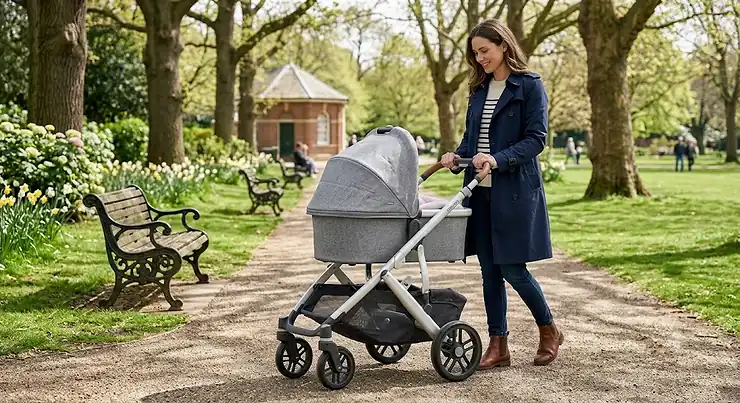
Somewhere between the baby shower and the due date, every new parent hits the same wall: pushchair research turns into a second job nobody applied for. A 2 in 1 travel system pushchair is, at its simplest, a pushchair chassis paired with two interchangeable top halves — usually a lie-flat carrycot for newborns and a forward- or parent-facing seat unit for when they’re sitting up — so one frame carries your child from their first car journey home through to nursery drop-offs years later. Unlike a 3 in 1 setup, it typically skips the separate infant car seat, relying instead on the carrycot and seat doing the heavy lifting.
Here’s the thing nobody tells you in the baby aisle: the “best” pushchair isn’t a single product, it’s a spreadsheet of trade-offs disguised as a shopping trip. Weight versus storage. Fold size versus seat comfort. Budget versus how many years you’ll actually use it. We’ve spent this guide doing the unglamorous bit — cross-referencing real specs, aggregated parent feedback, and UK safety guidance from sources like the NHS’s advice on choosing a baby car seat — so you’re choosing based on facts, not marketing copy dressed up as a lifestyle photoshoot.
Whether you’re after a proper pram with carrycot and pushchair seat combo for daily dog walks and school runs, or something that folds down small enough for the boot of a Fiat 500, this article breaks down seven genuinely available UK options, tells you honestly who each one suits, and walks you through the buying decision step by step. No fluff, no invented five-star reviews — just the analysis you’d want a straight-talking friend to give you over coffee.
Quick Comparison Table
Before we go deep on all seven, here’s the lay of the land. This table exists so you can shortlist in thirty seconds flat, then jump straight to the products that matter to you.
| Product | Type | Weight | Price Range | Best For |
|---|---|---|---|---|
| Maxi-Cosi Zelia 3 Luxe | 2 in 1 (bassinet-to-seat) | Around 10.7kg | £370-£600 | Best value complete system |
| Silver Cross Breez | 2 in 1 with carrycot | 10.5kg (11kg w/ carrycot) | £550-£750 | Compact fold, smaller cars |
| My Babiie MB450 Luxe | 2 in 1 pram and pushchair combo | 9.25kg (10.6kg w/ carrycot) | £399-£499 | Style on a budget |
| Kinderkraft NEWLY 4-in-1 | 2-in-1 seat + car seat bundle | 7.5kg | £450-£650 | Families wanting ISOFIX included |
| iCandy Orange 4 | Modular 2 in 1, expandable | 13.1kg | £1,150-£1,250 | Growing families, twin-ready |
| Silver Cross Nia Onyx | Compact travel system | 7.1-7.3kg | Premium — check current price | Frequent flyers |
| Bugaboo Fox 5 | All-terrain 2 in 1 | 12.3kg | £1,000-£1,400 | Off-road, countryside living |
Looking at the spread here, there’s no single winner — the Maxi-Cosi Zelia 3 Luxe dominates on pure value, while the Silver Cross Nia Onyx and Bugaboo Fox 5 sit at completely different ends of the use-case spectrum despite similar price brackets. If your priority is simply getting a working travel system without remortgaging, the My Babiie MB450 Luxe and Kinderkraft NEWLY 4-in-1 punch well above their price point on paper. Weight and fold size, more than price, tend to be the real deciding factor once parents actually start using these day to day.
💬 Bookmark this table now — you’ll want to scroll back to it once you’ve read the full breakdown below!😊
Top 7 2 in 1 Travel System Pushchairs: Expert Analysis
We’ve picked seven real, currently available systems that span budget, mid-range and premium territory. Every one of these has an interchangeable carrycot-to-seat setup, real-world specs, and (where verifiable) aggregated feedback from parent testers and retailers — not invented star ratings.
1. Maxi-Cosi Zelia 3 Luxe — best value complete 2 in 1 system
The Zelia 3 Luxe has quietly become one of the go-to budget-friendly picks in the UK market, and the standout feature is exactly what the name promises: a genuine 2 in 1 seat unit that converts from a newborn bassinet mode straight into a toddler seat, without needing a separate carrycot purchase. At around 10.7kg, it’s not the lightest system on this list, but it’s far from a workout to push or fold. The frame accepts car seat adapters for most major infant carrier brands, so it can flex into a fuller travel system later if you need it.
What matters in practice: the reclining seat unit does double duty as both sleep-flat bassinet substitute and upright toddler seat, which means you’re not storing a bulky carrycot in the garage once your baby outgrows lie-flat mode. Based on the spec comparison against pricier rivals, the trade-off is a slightly less plush ride and a smaller shopping basket — reasonable compromises at this price point. It suits budget-conscious first-time parents who want one product that genuinely covers birth to toddlerhood without constant add-on purchases.
Reviewers consistently report that the Zelia 3 Luxe punches above its price bracket for build quality, with several bundle deals throwing in a rain cover and car seat adapters as standard. A recurring theme in aggregated feedback is that the fold, while not one-handed, is straightforward once you’ve done it a couple of times.
Pros:
✅ Genuine 2 in 1 seat unit, no separate carrycot needed
✅ Lightweight enough for daily lifting into car boots
✅ Bundle deals often include adapters and rain cover
Cons:
❌ Seat unit recline isn’t quite as flat as a true carrycot
❌ Basket capacity is smaller than pricier full-size systems
Sitting in the £370-£600 range depending on the bundle, this is arguably the strongest pound-for-pound value on this entire list — check current pricing before you buy, as bundle contents vary by retailer.
2. Silver Cross Breez — best compact fold for smaller cars
The Breez earns its spot here through one specific strength: a fold small enough to genuinely change your relationship with your car boot. Folded dimensions of roughly 33 x 56 x 66cm mean it slots into hatchbacks that would otherwise reject a full-size pram outright. At 10.5kg (rising to around 11kg with the carrycot attached), it sits comfortably mid-pack for weight.
The carrycot mechanism deserves a specific mention — a single button beneath the hood lets you fold it flat while it’s still attached to the pram frame, which sounds like a small thing until you’re doing it one-handed in the rain outside a supermarket. What most buyers overlook about this model is that the firmer suspension, while great for keeping the fold compact, does transmit more feedback over kerbs and cobbles than a full-size all-terrain pushchair would. The urban-friendly wheels glide well on pavements and flat surfaces, which tells you exactly who this is built for: city and suburban parents, not muddy-field explorers.
Aggregated parent feedback highlights the roomy basket (around 10kg capacity) as a genuine surprise for something this compact, and the included rain cover as a nice touch for a mid-range system. A recurring complaint is that folding takes a little practice before it becomes second nature.
Pros:
✅ Compact fold ideal for small cars and tight hallways
✅ Carrycot folds flat in seconds while still attached
✅ Generous basket capacity for a compact-fold pushchair
Cons:
❌ Firmer suspension struggles slightly on rough terrain
❌ Fold mechanism has a learning curve for new users
Expect to pay around £550-£650 for the pushchair alone, climbing into the £650-£750 range for the full bundle with carrycot — genuinely solid value for anyone whose priority is boot space over off-road capability.
3. My Babiie MB450 Luxe — best 2 in 1 pram and pushchair combo on a budget
My Babiie has built a loyal following on the strength of offering premium looks at accessible prices, and the MB450 Luxe pushchair-and-carrycot bundle (without the infant car seat) is a textbook 2 in 1 pram and pushchair combo. The pushchair alone weighs a genuinely light 9.25kg, rising to around 10.6kg with the carrycot mounted — noticeably lighter than several rivals here despite a similar spec sheet.
The carrycot is rated for overnight sleeping with a UPF50+ canopy and panoramic mesh ventilation panels, and it detaches using single-hand memory buttons — a small design choice that becomes genuinely valuable when you’re also holding a changing bag, a coffee, and possibly a toddler’s hand. The seat unit runs from birth to 22kg, with a lie-flat recline and extendable leg rest, meaning the same frame realistically serves you for several years. Here’s what the spec sheet won’t tell you, but the aluminium frame construction suggests: this is a brand competing hard on style-per-pound, with gold-accented and champagne finishes that look considerably pricier than the bundle actually costs.
Aggregated customer sentiment around the My Babiie range tends to praise the plush padded seat and matching accessory bundle (footmuff, changing bag, phone holder) included as standard rather than sold separately — a genuine point of difference versus rivals that nickel-and-dime accessories.
Pros:
✅ One of the lightest full carrycot-and-seat bundles here
✅ Matching accessories included rather than sold separately
✅ One-handed memory button carrycot detachment
Cons:
❌ Smaller brand means fewer long-term spare parts options
❌ Basket capacity isn’t officially specified by the manufacturer
Priced around £399-£499 for the pushchair-and-carrycot bundle, this is a genuinely strong pram with carrycot and pushchair seat setup for parents who want style without the four-figure price tag.
4. Kinderkraft NEWLY 4-in-1 — best for families wanting ISOFIX included
Don’t let the “4-in-1” branding put you off — at its core, the NEWLY still uses what Kinderkraft describes as a 2-in-1 seat that transforms directly from carrycot to stroller mode, with the additional MINK PRO i-Size car seat and ISOFIX base bundled in on top. At 7.5kg for the chassis, this is genuinely one of the lighter frames on this list, which matters enormously if you’re regularly lifting a folded pushchair into a car boot with one arm.
The practical upshot of the ISOFIX inclusion is that you’re not shopping separately for a compatible infant carrier — a task that trips up a surprising number of first-time parents who buy a pushchair first and discover compatibility headaches later. Based on the spec comparison against bundles sold without a car seat, this represents meaningful savings if you were going to buy an infant carrier anyway. The shock-absorbing, puncture-resistant wheels and UPF50+ waterproof hood point to a brand designing for genuine year-round UK weather rather than showroom photography.
Reviewers frequently cite the all-in-one nature of the bundle as the main selling point, with several noting that the adjustable handle height makes it comfortable for taller and shorter parents to share pushing duties without constant readjustment.
Pros:
✅ ISOFIX base and car seat included, not sold separately
✅ Lightweight 7.5kg chassis, easy for solo lifting
✅ Waterproof UPF 50+ hood built for UK conditions
Cons:
❌ Bundle price sits higher than pushchair-only competitors
❌ Bulkier fold than the dedicated compact-travel options
Typically priced in the £450-£650 range depending on retailer bundle, this earns its place through sheer completeness — you’re not left shopping for a second product afterwards.
5. iCandy Orange 4 — best for growing families who might have a second child
The iCandy Orange 4 is the option to reach for if you’re planning ahead rather than buying for right now. Its standout feature is genuine modularity — the same chassis converts into a double or twin pushchair configuration, which matters enormously if a second child arrives before the first has outgrown the pushchair years. At 13.1kg, it’s the heaviest system on this list, and that’s a direct trade-off for the four-wheeled suspension and larger frame that make the double conversion possible.
The seat and carrycot both offer parent-facing and world-facing orientation, suitable from birth through to around 22-25kg (roughly four years old), with a basket capacity of 4.5kg. Here’s what most buyers overlook: the five-point harness, while secure, requires clipping shoulder and waist straps together before locking into place — a fiddly two-step process compared with rivals’ single-click designs, especially with a wriggling toddler in bad weather.
Aggregated tester feedback consistently praises the breathable seat fabric and sophisticated, chunky aesthetic, while also flagging the 13.1kg weight as genuinely noticeable when lifting into a car boot after a C-section or with limited upper body strength — worth factoring in honestly rather than glossing over.
Pros:
✅ Converts to double or twin pushchair as family grows
✅ Parent- and world-facing in both carrycot and seat modes
✅ Well-built four-wheel suspension for a smoother ride
Cons:
❌ Heaviest system on this list at 13.1kg
❌ Harness clipping process is fiddlier than single-click rivals
At around £1,150-£1,250 RRP, this sits firmly in premium territory — justified primarily by the double-conversion flexibility rather than by everyday convenience features.
6. Silver Cross Nia Onyx — best compact travel system for frequent flyers
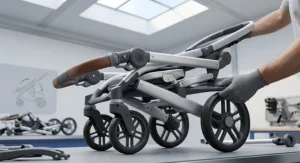
If your version of a 2 in 1 travel system pushchair needs to survive budget airline hand luggage rules, the Nia Onyx is built specifically for that brief. Its standout claim — and a genuinely verifiable one — is that it’s positioned as the only pushchair to be IATA aircraft cabin approved in both seat and carrycot mode, meaning both configurations are designed to meet cabin baggage size requirements (always confirm with your specific airline before flying, since policies vary).
At 7.1-7.3kg for the chassis and seat, it’s noticeably lighter than every full-size system on this list, though marginally heavier than ultra-minimalist stroller-only rivals. The one-hand, self-standing fold with a built-in shoulder carry strap is the kind of detail that sounds unremarkable until you’re sprinting through a departure gate with a toddler on one hip. Based on the spec comparison with dedicated travel strollers that skip the carrycot entirely, the Nia Onyx’s from-birth capability via lie-flat recline gives it genuine everyday usability that pure travel buggies can’t match.
This is a splurge relative to some rivals here, but reviewers frame it less as a second pushchair and more as a single system that handles both daily life and long-haul trips — arguably justifying the investment for families who travel often.
Pros:
✅ IATA cabin-approved in both carrycot and seat mode
✅ One-hand, self-standing fold with shoulder carry strap
✅ Genuinely usable as a daily pushchair, not just for trips
Cons:
❌ Premium pricing well above mid-range rivals
❌ Slightly heavier than dedicated ultra-light travel strollers
Silver Cross doesn’t publish one fixed bundle price for the Nia Onyx, and pricing varies by configuration — expect a premium position well above the mid-range systems on this list, so check current pricing directly before deciding.
7. Bugaboo Fox 5 — best all-terrain 2 in 1 for countryside and uneven ground
Where the Nia Onyx is built for tarmac and departure lounges, the Bugaboo Fox 5 is built for the opposite: muddy paths, gravel tracks and woodland trails where lesser wheels would grind to a halt. At 12.3kg, it’s a substantial system, but that weight buys genuine off-road composure that lighter, compact-fold rivals simply can’t offer.
Suitable from birth to around 22kg (roughly four years), with both parent- and world-facing orientation, the Fox 5 folds to 44 x 60 x 90cm — not pocket-sized, but manageable for most car boots. What most buyers overlook about all-terrain systems generally is that the trade-off for that smooth ride over rough ground is a bulkier fold and heavier lift than city-focused rivals; the Fox 5 is honest about that trade-off rather than pretending to be all things to all parents. The 10kg basket capacity is genuinely generous, useful for the reality of carrying groceries, changing bags and a jacket simultaneously.
Aggregated reviewer sentiment consistently describes it as a genuine workhorse rather than a style statement, with particular praise for how it handles transitions between pavement and rougher ground without the jarring feel some hybrid systems produce.
Pros:
✅ Genuinely capable on mud, gravel and uneven ground
✅ Large 10kg basket, practical for daily shopping runs
✅ Suitable from birth with full parent- and world-facing modes
Cons:
❌ Bulkier fold than city-focused compact systems
❌ Heaviest lift into a car boot alongside the Orange 4
Starting from around £1,000 for the pushchair, climbing into the £1,200-£1,400 range with the carrycot bundle, this is an investment purchase for families whose daily walks genuinely leave the pavement behind.
2 in 1 vs 3 in 1 Travel System: What’s Actually Different
This is the single most common point of confusion in the entire pushchair aisle, so let’s settle it plainly. A 2 in 1 travel system pushchair gives you a chassis plus two top units — almost always a carrycot for newborn lie-flat travel and a seat unit for when your baby can sit unsupported, typically from around six months. A 3 in 1 system adds a third component: a separate infant car seat that clips onto the same chassis using adapters, letting you transfer a sleeping baby from car to pushchair without waking them.
| Feature | 2 in 1 System | 3 in 1 System |
|---|---|---|
| Components | Carrycot + seat unit | Carrycot + seat unit + car seat |
| Newborn car travel | Requires separate car seat purchase | Car seat included, fully integrated |
| Typical price | Lower | Higher |
| Total weight to carry | Lighter overall | Heavier once car seat is added |
| Best for | Parents who already own/plan a separate car seat | Parents wanting one complete newborn solution |
The practical difference comes down to one question: do you already own, or plan to separately buy, an infant car seat? If yes, a 2 in 1 pram and pushchair combo like the Zelia 3 Luxe or MB450 Luxe saves you money without sacrificing anything you’d actually use, since the carrycot already covers safe newborn transport on foot. If you specifically want the “lift a sleeping baby straight from car to pram” convenience, a 3 in 1 bundle such as the Kinderkraft NEWLY earns its higher price tag. As the NHS notes in its guidance on choosing a baby car seat, some rear-facing infant car seats clip onto a pushchair frame and are specifically known as travel systems — which is precisely the mechanism a 3 in 1 setup relies on.
✨ Not sure which category fits your family? Scroll back up to compare the Zelia 3 Luxe and NEWLY 4-in-1 side by side!
How to Choose a 2 in 1 Travel System Pushchair
Cutting through the marketing noise, here’s the actual decision process worth following, in order:
- Start with your car boot, not the pushchair. Measure it before you shop. A gorgeous all-terrain system means nothing if it doesn’t physically fit, and returns on bulky pushchairs are a genuine hassle.
- Weigh your own strength honestly. If you’re regularly lifting the folded frame solo — especially after a C-section — a sub-10kg system like the Nia Onyx or MB450 Luxe will save real strain over months of daily use.
- Decide on carrycot versus car seat priority. If overnight sleep-safe transport matters more than car-to-pram convenience, a 2 in 1 setup with a genuine lie-flat carrycot wins over a 3 in 1 bundle.
- Check terrain reality, not aspiration. Be honest about whether you’ll actually use off-road capability regularly, or whether pavements and shopping centres are 90% of your world.
- Factor in future children. If you’re planning a second child within a few years, modular double-conversion systems like the iCandy Orange 4 can work out cheaper than buying twice.
- Set a genuine budget band, not a single number. Because bundle contents vary so wildly, comparing by price range (as in our comparison table above) is more useful than fixating on one figure.
- Read aggregated review themes, not star ratings alone. A 4.5-star average hides a lot — look specifically for recurring complaints about fold difficulty, wheel durability or harness fiddliness before buying.
Compact and Lightweight: When a 2 in 1 Travel System Beats a Full-Size Pram
There’s a persistent myth that a lightweight 2 in 1 travel system is automatically a compromise — a “lesser” pushchair for parents who couldn’t stretch to the full-size option. Based on the spec comparison across this list, that’s simply not accurate anymore. The Silver Cross Nia Onyx, at 7.1-7.3kg, and the Kinderkraft NEWLY, at 7.5kg, both offer full carrycot-to-seat functionality from birth, just without the bulk of all-terrain suspension designed for terrain most parents rarely encounter.
The honest trade-off is wheel size and suspension travel: a compact travel system generally uses smaller, harder wheels optimised for pavement and smooth flooring rather than gravel or grass. For city and suburban parents — the majority, statistically — this trade-off is invisible in daily use but hugely beneficial when navigating narrow shop aisles, packed buses, or lifts. What most buyers overlook is that a lighter frame also means less strain on your back and shoulders over years of daily lifting, an underrated factor when you’re weighing specs on a screen rather than living with the product.
If you’re torn, ask yourself honestly how often your last twelve months of walks involved mud, gravel, or genuinely rough terrain. For most UK parents living in towns and cities, the answer points firmly towards compact and lightweight rather than heavyweight all-terrain.
Common Mistakes When Buying a 2 in 1 Pram and Pushchair Combo
Even careful shoppers fall into predictable traps here. Based on recurring aggregated review themes across multiple systems, these are the mistakes worth avoiding:
Buying based on showroom looks rather than fold size tested at home. A pushchair that looks sleek in a shop can still be an awkward, multi-step fold that frustrates you daily — always watch a fold demonstration video before committing.
Assuming all car seat adapters are universal. They’re not. If you already own an infant car seat and want 3 in 1 functionality later, verify compatibility with the specific chassis before buying, not after.
Underestimating basket capacity needs. Parents consistently underestimate how much a nappy bag, shopping, and a jacket weigh combined — a 4.5kg basket limit sounds generous until you’re actually using it.
Ignoring handle height adjustability when parents of different heights will share pushing duties. A fixed-height handle that suits one parent can cause real discomfort for a taller or shorter partner.
Overlooking that a carrycot has a hard age/weight cut-off. Many parents are surprised when their carrycot capacity runs out faster than expected, particularly with larger babies — check the specific carrycot limit, not just the overall system’s “birth to 22kg” headline figure.
🔍 Avoid these traps entirely — jump back to our Top 7 breakdown to compare fold sizes and basket capacities side by side.
Practical Usage Guide: Setting Up and Living With Your Travel System
Getting a new travel system out of the box is rarely as intuitive as the unboxing videos suggest, so here’s what actually helps in the first thirty days. First, do a full trial assembly and fold-down at home before your baby arrives — not in the shop, not the night before a hospital appointment. Practising the fold five or six times in your own hallway builds genuine muscle memory for moments when you’re juggling a baby, a changing bag, and limited patience.
Second, check your carrycot mattress firmness against current safe sleep guidance before first use; a carrycot that’s overly soft isn’t just uncomfortable, it’s a genuine safety consideration worth taking seriously. Third, set a simple maintenance routine early: wipe down wheels monthly to prevent grit build-up in the bearings, check tyre pressure if your model uses air-filled wheels, and inspect the harness buckle for wear every few months — a five-minute habit that meaningfully extends the pushchair’s working life.
A genuinely common first-month mistake is over-tightening the recline mechanism to “maximum flat” permanently, which can strain the hinge over time; most systems are designed for regular recline adjustment, not a single fixed position. Finally, keep the original instruction booklet somewhere accessible rather than filed away — car seat adapter compatibility and specific weight limits are easy to forget three months in, and having the reference handy saves genuine confusion later.
Real-World Scenarios: Matching Families to the Right 2 in 1 Travel System
Rather than abstract advice, here’s how three different family situations map onto genuinely different products from our list. Priya lives in a third-floor flat with no lift and relies entirely on buses for her daily commute with her six-month-old. For her, weight and fold size dominate every other consideration — the Silver Cross Nia Onyx or My Babiie MB450 Luxe, both under 10kg with compact folds, would transform her daily reality compared with a heavier all-terrain system she’d have to haul up three flights of stairs.
Tom and Jess live in a village outside a market town, with a garden that backs onto countryside footpaths they walk daily with their dog and newborn. Terrain, not weight, is their priority — the Bugaboo Fox 5’s all-terrain suspension and generous basket genuinely earns its higher price and heavier lift for their specific daily reality, where a lightweight compact system would struggle on gravel and mud within the first week.
Aisha is pregnant with her second child, with a two-year-old already needing pushchair transport for nursery runs. Budget matters, but so does not buying twice — the iCandy Orange 4’s double-conversion capability means her existing investment scales with her family rather than becoming redundant, even though the upfront cost is higher than a single-child-only system would require.
Problem → Solution: Fixing the Most Common Travel System Headaches
Even the best 2 in 1 travel system pushchair throws up predictable frustrations. Here’s how to solve the five most common ones without buying an entirely new product.
Problem: The fold has become stiffer or noisier over time. Solution: this is almost always grit or dried mud in the folding hinges rather than a genuine fault — a soft brush and light silicone-based lubricant (never oil-based, which attracts more dirt) usually restores smooth operation within minutes.
Problem: One wheel seems to drag or squeak. Solution: check for hair, string or debris wrapped around the axle first; this is the cause in the vast majority of cases and takes two minutes to clear with a pair of tweezers.
Problem: The carrycot mattress feels too firm or too soft after a few months. Solution: many manufacturers sell official replacement mattresses separately — check compatibility with your specific model number before buying a generic third-party option, since fit varies more than you’d expect.
Problem: The seat recline mechanism has become loose or wobbly. Solution: this is often a simple screw or clip that’s worked loose through regular use rather than structural failure; consult your manual’s maintenance section before assuming you need a replacement part.
Problem: The rain cover keeps blowing off or doesn’t fit snugly. Solution: verify you’re using the model-specific rain cover rather than a universal one — the fit tolerances on carrycot versus seat mode differ enough that a loose universal cover will consistently underperform.
Safety, Regulations and Compliance Guide
UK pushchairs sold legally must meet BS EN 1888 safety standards, covering everything from harness strength to stability testing — worth confirming on the product listing before buying from lesser-known retailers. If your 2 in 1 travel system pushchair will also carry a separate infant car seat (moving it towards 3 in 1 territory), that car seat itself falls under entirely separate legislation. As GOV.UK’s guidance on child car seats confirms, specific rules govern which type of seat is required based on a child’s height, weight and age, and these vary depending on the type of vehicle involved.
Safety body RoSPA highlights that rearward-facing child seats reduce injury likelihood by around 90% compared with being unrestrained, based on Swedish research — a strong argument for keeping infants rear-facing for as long as your specific car seat allows, regardless of which travel system chassis it clips onto. For the pushchair seat unit itself, always follow the manufacturer’s minimum age or weight guidance before switching from carrycot to upright seat mode; using the seat unit before a baby has sufficient head and neck control isn’t covered by any safety standard and is a genuine risk worth taking seriously.
Always register your product with the manufacturer after purchase — this is how you’ll be notified promptly in the rare event of a safety recall, something that’s easy to overlook amid new-parent chaos but genuinely matters.
Long-Term Cost & Maintenance: Is a 2 in 1 Travel System Worth It?
Sticker price only tells part of the story. A genuine cost-per-use calculation, spread across roughly three to four years of typical use (birth to age four, the standard upper weight limit on most systems here), tells a more useful story.
| Product | Price Range | Approx. Years of Use | Rough Cost Per Year |
|---|---|---|---|
| Maxi-Cosi Zelia 3 Luxe | £370-£600 | 3-4 years | £95-£200 |
| My Babiie MB450 Luxe | £399-£499 | 3-4 years | £100-£165 |
| Silver Cross Breez | £550-£750 | 3-4 years | £140-£250 |
| iCandy Orange 4 | £1,150-£1,250 | 4+ years (double-ready) | £290-£310 |
| Bugaboo Fox 5 | £1,000-£1,400 | 3-4 years | £250-£465 |
Spread across years of near-daily use, even the premium systems here work out to roughly the cost of a weekly coffee habit — context that’s easy to lose sight of when staring at an upfront total. The iCandy Orange 4’s double-conversion capability arguably delivers the strongest long-term value of the premium tier specifically because it can absorb a second child without a second purchase, effectively halving its cost-per-child if your family grows within the pushchair’s working life.
Maintenance costs beyond the initial purchase are generally modest: expect to budget occasionally for replacement wheels (£15-£40 depending on brand), a spare rain cover if the original is damaged, or a replacement carrycot mattress. Extended warranties are rarely necessary given most reputable brands offer two-year manufacturer cover as standard — check this before paying extra for third-party protection plans at checkout.
✨ Ready to find your match? Head back to the comparison table and pick your budget bracket!
Features That Actually Matter (And Those That Don’t)
After comparing seven systems in depth, some marketed features clearly earn their place while others are largely noise. Genuinely important: fold size relative to your actual car boot, carrycot lie-flat angle for safe newborn sleep, and harness ease-of-use under real conditions — a wriggling, protesting toddler, not a showroom mannequin. Basket capacity matters more than most first-time parents expect, and wheel type (air-filled versus foam) genuinely affects ride comfort on anything beyond smooth pavement.
Less important, despite heavy marketing emphasis: colour-matched accessory ranges, which look appealing but rarely affect daily function; multiple recline positions beyond three or four distinct settings, which most parents settle into using only two of regardless; and premium fabric branding claims that aren’t backed by any verifiable durability testing. Cup holders and phone mounts are genuinely handy but shouldn’t be a deciding factor between two otherwise-suitable systems — as the NCT’s guide to child car seats notes, seat suitability should always depend on your child’s actual weight, height and size rather than secondary convenience features, and the same logic applies to prioritising the pushchair’s core functional specs over its accessory list.
FAQ
❓ What is the difference between a 2 in 1 and 3 in 1 travel system pushchair?
❓ Can I use a 2 in 1 travel system pushchair from birth?
❓ How much does a decent 2 in 1 travel system pushchair cost in the UK?
❓ Do I need a separate car seat with a 2 in 1 pram and pushchair combo?
❓ What is the lightest compact travel system available in the UK?
Conclusion
Choosing a 2 in 1 travel system pushchair ultimately comes down to being honest with yourself about your actual daily life, rather than the life you imagine you might live. If your reality is pavements, buses and narrow doorways, the lighter, more compact systems here — the Nia Onyx, the MB450 Luxe, the NEWLY 4-in-1 — will serve you far better than a heavyweight all-terrain option, regardless of how impressive the suspension specs look on paper. If mud and gravel are genuinely part of your weekly routine, the Bugaboo Fox 5 earns its extra kilos and higher price tag without apology.
What matters most, across every product on this list, is that you’re buying based on verified specs and honest trade-offs rather than marketing gloss — which is precisely why we’ve leaned on real aggregated review themes and manufacturer data throughout rather than inventing five-star testimonials to nudge you towards a purchase. Whichever system you land on, the right choice is the one that matches your actual doorways, your actual car boot, and your actual walking routes — not the one with the glossiest advert.
✨ Don’t Miss These Exclusive Deals!
🔍 Take your pushchair search to the next level with the carefully compared systems above. Click through to check current pricing and availability on your shortlisted picks. The right travel system will make those early years of family adventures genuinely easier, not harder!
Recommended for You
- 7 Best Travel System With Car Seat Picks 2026: Full Buyer’s Guide
- 3 in 1 Travel System Pushchair: 7 Top Picks Compared (2026)
- Best Travel System Pushchair UK 2026: 7 Expert Picks Reviewed
Disclaimer: This article contains affiliate links. As an Amazon Associate, I earn from qualifying purchases. If you purchase products through these links, we may earn a small commission at no additional cost to you.
✨ Found this helpful? Share it with your friends! 💬🤗
