In This Article
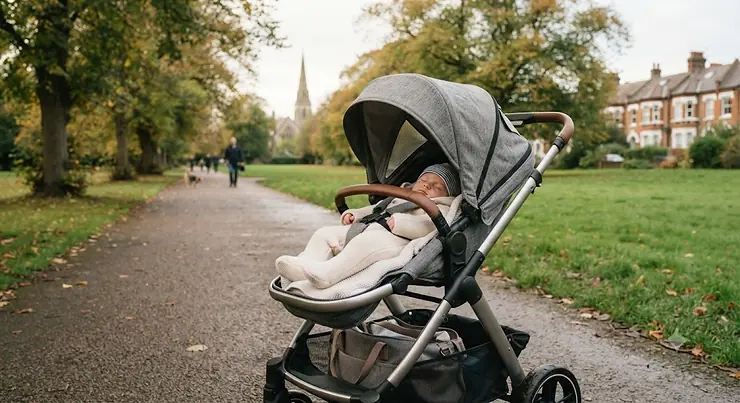
A best lie flat seat buggy is a pushchair whose seat unit reclines to a near-horizontal position (usually 150–170 degrees) without needing a separate carrycot, letting a newborn nap safely on the move from day one. That’s the textbook definition, but here’s the bit nobody tells you at the baby show: not every buggy marketed as “lie flat” actually gets there. Some stop at a generous slouch dressed up in good lighting and a confident product photo.
You’ve probably noticed the phrase everywhere — on Instagram ads, on the side of prams in John Lewis, scrawled across a dozen “best buggy” listicles that all seem to recommend the same three brands. It’s become shorthand for “suitable from birth,” even when the recline itself doesn’t back that up. So we went and actually checked. We pulled real specs, cross-referenced independent test data, and read through the aggregated sentiment in verified customer reviews to work out which pushchairs genuinely deliver a flat, safe sleeping position — and which ones are quietly trading on the term.
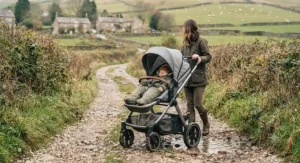
Whether you’re after a lie flat buggy from birth for pavement-only city life, a flat recline buggy from birth that can handle a muddy towpath, or simply the cheapest pushchair with lie flat seat that won’t leave your newborn’s neck at an odd angle, this guide has a genuine option for you. We’ve covered budget, mid-range and premium picks, weighed up the trade-offs of each, and — because health guidance is consistent that the safest sleep position for newborns is on their backs on a flat surface, per NHS guidance on reducing the risk of SIDS — flagged exactly how flat “flat” really is on each model. Let’s get into it.
Quick Comparison Table
Before the deep dive, here’s the shorthand version. Every buggy below is a real, currently available model with a genuine lie-flat or near-flat recline achievable without buying a separate carrycot (though several offer one as an upgrade).
| Buggy | Weight | Recline | Price Range | Best For |
|---|---|---|---|---|
| Silver Cross Pop 2 | ~7-9kg | Full lie-flat, drawstring | £150-£220 range | Budget-conscious British-brand fans |
| Maxi-Cosi Lara2 | ~6.4kg | Near-flat, 3 positions | £130-£200 range | Ultra-lightweight city travel |
| hauck Runner 3 | ~11-14kg | Full lie-flat, strap recline | £150-£230 range | Off-road and countryside walking |
| Cybex Balios S Lux | Mid-weight | Near-flat, 3 positions | £350-£450 range | City-to-country all-rounders |
| Joolz Aer2 | 6.5kg | Full lie-flat, 3 positions | around £400-£500 | Cabin-approved travel |
| Ickle Bubba Stomp Luxe | ~7.1kg (pushchair) | Lie-flat carrycot + reclining seat | £250-£650 range (bundle-dependent) | Full travel-system value |
| Mamas & Papas Ocarro 2 | Heavier chassis | Full lie-flat + overnight-sleep carrycot | £350-£800 range (bundle-dependent) | Premium buyers wanting one buggy for years |
Looking at the spread, weight and flatness genuinely trade off against each other: the lightest models here — the Maxi-Cosi Lara2 and Joolz Aer2 — get their low kilos partly through fabric-and-strap reclines rather than a rigid carrycot base, while the heavier all-rounders like the Mamas & Papas Ocarro 2 and hauck Runner 3 carry extra weight in exchange for a sturdier flat-lying platform. Price doesn’t map neatly onto flatness either: the budget Silver Cross Pop 2 genuinely out-reclines some pricier three-wheelers, while the premium Maxi-Cosi Lara2 (despite its lightweight appeal) has the shallowest recline on this list. Neither trade-off is “wrong” — it depends whether your daily reality is three flights of stairs or a gravel towpath.
💬 Found a comparison you didn’t expect? Bookmark this page and share it with another new parent who’s drowning in buggy tabs right now.
Top 7 Best Lie Flat Seat Buggies: Expert Analysis
We’ve spread these across budget, mid-range and premium, and across lightweight city strollers and heavier-duty all-terrain frames, so there’s a realistic match whatever your postcode and pavement situation looks like.
1. Silver Cross Pop 2 — best British-brand value pick
The Silver Cross Pop 2 takes the umbrella-fold simplicity that made the original Pop a cult favourite and adds a properly flat, drawstring-operated recline that doesn’t wobble as it drops. Reviewers testing the Pop lineage have specifically praised how smoothly the one-hand recline lowers, without the jerkiness some rivals show.
Suitable from birth to 22kg (roughly four years), with a five-point harness and adjustable calf support, the Pop 2 is built to be the only buggy a family needs rather than a stopgap before a “proper” pram. What most buyers overlook about this model is that its umbrella fold, while brilliantly compact for storage, produces a folded length of around 105cm — check your boot before you commit, because it’s longer than it looks in photos.
Aggregated review sentiment on the earlier Pop generation flagged that the seat could feel less flat than advertised for very young newborns, a criticism Silver Cross appears to have addressed with the Pop 2’s fuller recline, though independent lab data specifically on the Pop 2’s recline angle wasn’t available at the time of research — worth checking current listings for the latest verified spec. On the plus side, testers consistently rate the fold mechanism, the storage basket, and the overall build quality as punching well above the price point.
Pros:
- ✅ Genuinely smooth one-hand drawstring lie-flat recline
- ✅ Compact umbrella fold, easy for hallway storage
- ✅ Trusted heritage British brand with wide parts availability
Cons:
- ❌ Folded length (~105cm) won’t suit small hatchback boots
- ❌ Handle isn’t height-adjustable, awkward for taller parents
At around £150-£220, the Silver Cross Pop 2 represents strong value for a lie-flat buggy that will realistically last from birth through to preschool — a sensible first pushchair rather than a compromise.
2. Maxi-Cosi Lara2 — lightest pick, though recline falls short of true flat
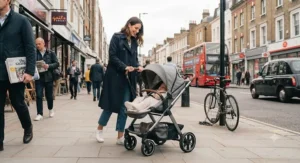
At roughly 6.4kg, the Maxi-Cosi Lara2 is one of the lightest pushchairs on the UK market, and its automatic one-press fold is genuinely a party trick — press the button and gravity does the rest. For parents lugging a buggy up stairs or wrestling it onto a train daily, that weight saving is not a marginal nice-to-have; it’s the entire point of buying one.
Here’s the honest bit, though: independent testing has noted the Lara2‘s recline, while offering three positions including a “lie-flat” setting, doesn’t achieve a truly horizontal position the way some rivals do — it’s closer to a deep recline than a flat plane. Reviewers testing it against the Bugaboo Butterfly 2 and Stokke YOYO 3 specifically flagged this as a limitation for newborns needing longer flat naps, even though most testers’ babies still napped comfortably during shorter outings.
Based on the spec comparison, the Lara2 suits parents whose priority is portability and public-transport life over maximum recline depth — city dwellers doing short hops rather than long countryside naps. Its dual shopping baskets are an unusually thoughtful touch for something this light, and the compact 51 x 50 x 26cm fold genuinely disappears into a car boot or under a pushchair-unfriendly café table.
Pros:
- ✅ Among the lightest lie-flat-marketed buggies at ~6.4kg
- ✅ One-hand automatic fold, genuinely simple to operate
- ✅ Two shopping baskets despite the compact footprint
Cons:
- ❌ Recline doesn’t reach a true horizontal position
- ❌ Upright, non-adjustable handle uncomfortable for taller parents
Priced from around £130-£200, the Maxi-Cosi Lara2 is the buggy to choose if featherweight portability outranks a fully flat recline on your priority list — just don’t expect carrycot-level flatness.
3. hauck Runner 3 — best all-terrain lie-flat for muddy walks
If your daily walk involves anything rougher than smooth pavement, the hauck Runner 3 answers a specific brief: three extra-large pneumatic (air-filled) wheels, dual-adjustable rear suspension, and a handbrake for hills, all at a fraction of the price of premium jogger-style pushchairs. The seat reclines via a toggle strap at the back to a genuinely flat position, which independent testers have specifically praised as lying flatter than many pricier three-wheelers.
What most buyers overlook here is the weight — reported figures range from around 11kg to 14.1kg depending on the retailer’s spec sheet, and it’s a chunky build when folded (roughly H84.5 x W36.5cm), so it’s not the buggy for a compact hatchback or a fifth-floor walk-up flat. Reviewers describe assembly as refreshingly simple: the wheels click into place, the hood arrives pre-fitted, and the only real task is pumping up the three tyres.
Aggregated customer sentiment is strikingly consistent: reviewers repeatedly describe it as excellent value, effortless on uneven ground including forest and off-road terrain, and more substantial-feeling than some pushchairs costing three or four times the price — though a minority report the front wheel becoming wobbly after a few months of heavy use, and the harness comfort pads are noted as thinner than they’d like.
Pros:
- ✅ Genuinely flat strap recline, praised as flatter than rivals
- ✅ Pneumatic tyres and dual suspension handle rough terrain confidently
- ✅ Exceptional value against premium all-terrain competitors
Cons:
- ❌ Heavy (11-14kg) and bulky when folded
- ❌ Minority reports of front-wheel wobble after months of use
At around £150-£230, the hauck Runner 3 is arguably the best-value flat-recline pushchair for families whose weekends mean woodland paths rather than shopping-centre floors.
4. Cybex Balios S Lux — best city-to-country all-rounder
The German-engineered Cybex Balios S Lux sits deliberately in the middle of Cybex’s own range, and it shows: four-wheel suspension and all-terrain, puncture-proof wheels mean it holds its own against pricier rivals on rougher ground, while its one-hand fold and self-standing chassis keep it civilised for city use too.
The seat unit reclines to what Cybex describes as an ergonomic lie-flat position with a one-pull, precision-fit harness — reviewers testing it found the harness genuinely fast to adjust one-handed, a real advantage when a squirming baby won’t cooperate. Based on the spec comparison, the increase in weight capacity from 17kg to 22kg over the original Balios S gives this pushchair meaningfully more longevity than lighter city strollers in this price bracket.
What the spec sheet won’t tell you, but reviewers note, is that the seat’s recline is best described as “near-flat” rather than absolutely horizontal — testers found it comfortable for napping but noted the maneuverability suffers off smooth pavements more than the suspension specs suggest. The optional Cot S Lux carrycot, sold separately, is the better choice if truly flat overnight-standard sleep matters more to you than saving on accessories.
Pros:
- ✅ One-pull harness is fast and secure for a wriggling baby
- ✅ 22kg weight capacity extends useful life to around age four
- ✅ 10kg-capacity basket, unusually generous for this class
Cons:
- ❌ Recline is near-flat rather than a true horizontal lie
- ❌ Struggles more off-road than the suspension marketing implies
Priced around £350-£450 for the pushchair alone (with the carrycot adding roughly £140), the Cybex Balios S Lux earns its mid-range position by refusing to specialise — it’s a competent generalist rather than a class leader in any one area.
5. Joolz Aer2 — best cabin-approved travel companion
At 6.5kg and cabin-approved for aeroplane travel, the Joolz Aer2 is built for parents who measure success in overhead-locker inches rather than off-road grip. Its one-second, one-hand fold stands on its own once collapsed — a genuinely useful detail when you need to set it down without it toppling in a café or airport queue.
Unzipping and unhooking a rear panel drops the seat through three positions: upright, relaxed, and a proper lie-flat, which — combined with the adjustable leg rest and extendable hood — reviewers rate as comfortable for genuine naps rather than just dozing. Reviewers consistently note the recline mechanism, while effective, is fiddlier than a single-lever system: you need to support your baby through each stage of the drop rather than simply pulling a strap.
Aggregated review sentiment is enthusiastic about day-to-day comfort — parents describe babies settling and sleeping well in the lie-flat position, and note the fabric wipes clean easily after inevitable spills. The trade-off for that portability is storage: the basket, while larger than most travel strollers at 8kg capacity, becomes harder to access once the seat is fully reclined.
Pros:
- ✅ Genuinely flat recline in a sub-7kg, cabin-approved frame
- ✅ Folds one-handed and stands unaided once collapsed
- ✅ Won a 2025 Red Dot Award for design quality
Cons:
- ❌ Recline mechanism is fiddlier than a simple one-lever system
- ❌ No bumper bar included as standard
At around £400-£500 (with the carrycot and car seat adapters sold separately), the Joolz Aer2 justifies its premium positioning for genuinely mobile families, though budget-conscious buyers should weigh up whether they truly need cabin-approval or just a compact fold.

6. Ickle Bubba Stomp Luxe — best full travel-system bundle value
The Ickle Bubba Stomp Luxe built its reputation on undercutting luxury travel systems while keeping most of the features parents actually use. The bundle typically includes a lie-flat carrycot suitable from birth to around 9kg (roughly six months), plus a separate seat unit offering a four-position recline including a genuinely flat setting for later naps.
Reviewers testing full bundles have been consistently impressed by what’s included for the price — changing bag, rain cover, sun shades, and leather-effect handle covers are often extras elsewhere. Based on the spec comparison, the frame’s puncture-proof wheels and adjustable-height handlebar make it a sensible everyday buggy rather than a specialist off-roader; the previous Stomp V3 leaned more heavily on foam wheels suited purely to urban use.
Aggregated review sentiment flags a genuine, recurring frustration: several parents report the recline strap adjustment feeling loose over time, and one common complaint in user reviews is that folding the pushchair away for the car can feel fiddly once the seat unit is attached. On the positive side, testers repeatedly highlight the value-for-money of the full bundle and the surprisingly plush feel of the fabrics at this price point.
Pros:
- ✅ Lie-flat carrycot plus a separately reclining seat unit
- ✅ Bundle typically includes changing bag, sunshades and rain cover
- ✅ Height-adjustable handlebar suits parents of varying heights
Cons:
- ❌ Recline strap adjustment reported as loosening with use
- ❌ Folding with the seat unit attached can feel fiddly
Pushchair-only listings run around £250-£350, with full travel-system bundles typically in the £500-£650 range — genuinely strong value if you need the whole system rather than just the frame.
7. Mamas & Papas Ocarro 2 — best premium pick for overnight-approved sleep
The Mamas & Papas Ocarro 2 is the buggy for parents who want one premium frame to see them through years of use without compromise. Unlike pushchairs that merely tilt backwards, testers specifically note that the Ocarro’s seat lies genuinely, completely flat — a distinction that matters enormously for newborns who need proper flat sleep, not just a favourable angle.
Its standout upgrade over the original Ocarro is the enhanced carrycot, now approved for both daytime and overnight sleep, with an optional stand that turns it into a stable bedside sleep space at home. What most buyers overlook about this model is that because the seat itself lies fully flat, many parents find they don’t strictly need the separate carrycot at all for daytime use — a genuine cost-saver if you’re happy to skip the accessory bundle.
Reviewers are near-unanimous that the day-to-day handling is excellent, describing it as smooth through narrow shop aisles and stable over kerbs, aided by the leather-effect trim on handles and bumper bar. The recurring criticism across multiple independent reviews is weight: the chassis is genuinely heavy to lift in and out of a car boot, and more than one reviewer specifically mentioned this being a real concern for parents recovering from a caesarean section in the early weeks.
Pros:
- ✅ Seat lies completely flat, not just a deep recline
- ✅ Overnight-sleep-approved carrycot with optional bedside stand
- ✅ Excellent manoeuvrability through tight, narrow spaces
Cons:
- ❌ Genuinely heavy chassis, difficult to lift solo
- ❌ Premium price puts it out of reach for many first-time budgets
Pushchair-alone pricing sits around £350-£450, with bundles including the carrycot running up to roughly £800 — a serious investment, but one that retains resale value better than most, based on the used-buggy market for this brand.
How to Choose a Lie Flat Seat Buggy
Picking between seven genuinely good options isn’t really about finding “the best” — it’s about matching the right trade-offs to your actual life. Here’s the expert-reasoned checklist we’d talk a friend through:
- Verify the recline angle, not just the marketing copy. As detailed below, “lie-flat” isn’t a strictly protected term — always check independent test data, such as Which?’s lab-tested pushchair reviews, or ask the retailer for the exact recline angle before assuming a seat is genuinely horizontal.
- Weigh your building, not just the buggy. A 14kg all-terrain frame is fantastic on a towpath and miserable up three flights of stairs daily — be honest about your actual home and commute.
- Decide if you need the seat to lie flat, or if a carrycot will do. Carrycots are near-universally flatter than seat-unit reclines, but add cost and bulk; a genuinely flat seat (like the Ocarro 2 or hauck Runner 3) can remove the need entirely.
- Check your car boot before you check your heart. Folded dimensions vary hugely — the Silver Cross Pop 2’s 105cm folded length won’t suit every hatchback, while the Joolz Aer2 is built specifically around small spaces.
- Think past the newborn stage. Every buggy here goes to 22kg, but seat depth, growing room, and handlebar height vary — a taller toddler will outgrow a shallow seat faster than the weight limit suggests.
- Budget for accessories separately. Carrycots, adapters, and rain covers are frequently sold apart from the headline price — factor these in before comparing “final” costs across brands.
- Read aggregated review sentiment, not just star ratings. A 4.5-star average can still hide a genuine recurring complaint (like the Stomp Luxe’s strap adjustment) that matters enormously for your specific priorities.
✨ Ready to Compare Real Prices? 🔍 Take the guesswork out of buggy shopping — check current availability and pricing on any of the models above before they’re out of stock in your preferred colourway.
Understanding the 170 Degree Recline: What “Lie Flat” Really Means
Here’s something the marketing rarely spells out: “lie-flat” isn’t a single, legally defined position. According to independent testing analysis, the accepted definition of lie-flat is generally taken as at least 150 degrees rather than a truly flat 180 degrees — which means the base could still leave a baby’s head raised by up to 30 degrees compared with an ideal flat plane. A genuinely excellent buggy — like the hauck Runner 3 or the Ocarro 2 — will get closer to that 170-180 degree range; others marketed as “lie-flat” may only reach a shallower 150-degree slouch.
This matters medically, not just for comfort. Newborns lack the neck strength to correct their own head position, and an upright or semi-reclined seat can allow the chin to slump towards the chest, restricting the airway — a risk sometimes referred to as positional asphyxia. That’s precisely why genuine flat recline matters so much more for a newborn than for a six-month-old who can already hold their own head up.
It’s also worth being clear about what a lie-flat pushchair seat is, and isn’t, for. Buggies and prams should not become a baby’s main separate sleep space — the government’s early years safer sleep guidance is explicit that a lie-flat pram or pushchair shouldn’t replace a proper cot or Moses basket for regular sleep, and that a sleeping baby should be transferred to their normal sleep space once you’re home. A flat recline is about safe, comfortable napping on the move — not an overnight substitute for a cot.
| Recline Type | Typical Angle | Example Buggies |
|---|---|---|
| Deep recline (not true flat) | ~130-150° | Maxi-Cosi Lara2 |
| Near-flat | ~150-160° | Cybex Balios S Lux |
| Genuine lie-flat | ~165-180° | Silver Cross Pop 2, hauck Runner 3, Joolz Aer2, Ickle Bubba Stomp Luxe carrycot, Mamas & Papas Ocarro 2 |
The takeaway from this table is straightforward: if a genuinely flat sleeping position is non-negotiable for you, lean towards the buggies on the right-hand side of this range, or budget for a separate carrycot on models like the Balios S Lux or Lara2 where the seat recline alone won’t fully deliver it.
Buggy vs Pram vs Travel System: Which Suits a Newborn
The terminology here trips up almost every first-time parent, so it’s worth untangling before you spend a penny. A pram is designed specifically for newborns, with a fixed lie-flat body offering maximum back support — think of it as a cot on wheels, and it’s typically bulkier as a result. A pushchair, by contrast, is the more versatile option, generally lighter, with an adjustable seat that can go from upright to reclined as your baby grows. A travel system bundles a pushchair frame with an infant car seat (and often a carrycot) so the same base does triple duty from birth through to the toddler years.
Here’s what to weigh up: every buggy in this guide functions as a pushchair with a lie-flat or near-flat seat, meaning you’re buying the flexibility of a pushchair with (in the better examples) close to the flat comfort of a traditional pram. The hauck Runner 3 and Mamas & Papas Ocarro 2 lean furthest towards genuine pram-level flatness; the Maxi-Cosi Lara2 leans furthest towards lightweight pushchair convenience at some cost to recline depth.
If you specifically want a buggy used from birth lie flat without ever touching a separate carrycot, prioritise models where independent testing confirms a genuinely horizontal recline — don’t take “suitable from birth” on the box at face value, since UK regulations require a compliant harness and structure from birth but don’t mandate a specific recline angle beyond the general lie-flat definition.
What to Expect: Real-World Performance of a Lie-Flat Recline
Specs on a page rarely translate directly into daily reality, so here’s the honest, spec-to-lived-experience translation. A strap or drawstring recline (Silver Cross Pop 2, hauck Runner 3) tends to feel slightly more “hammock-like” in motion — several reviewers specifically describe a gentle rocking sensation that seems to help babies settle, though it can make the recline a touch fiddlier to fine-tune one-handed compared with a lever system.
A lever or button recline (Cybex Balios S Lux, Ickle Bubba Stomp Luxe) is generally quicker to adjust mid-walk without stopping, which matters more than it sounds when you’re trying to drop the seat before your baby fully wakes. A zip-and-panel recline (Joolz Aer2) sits between the two — smooth once you know the sequence, but genuinely trickier for a first-time user in the first week or two.
On terrain: reviewers are consistent that pneumatic (air-filled) tyres, as found on the hauck Runner 3, absorb bumps noticeably better on gravel, cobbles, and grass than the puncture-proof foam wheels common on lighter city strollers like the Lara2 or Aer2 — but that comfort comes at a real cost in weight and folded bulk. If your daily walk is entirely pavement, the trade-off likely isn’t worth it; if it regularly includes a park, a towpath, or countryside, it probably is.

Common Mistakes When Buying a Pushchair With a Lie Flat Seat
Even careful shoppers fall into a handful of predictable traps when choosing a pushchair with lie flat seat. Here’s what expert reviewers and aggregated customer feedback flag most often:
Trusting “suitable from birth” as proof of full flatness. As covered above, this phrase confirms structural and harness compliance, not a specific recline angle — always check the actual degree of recline, ideally via an independent test rather than brand marketing alone.
Ignoring folded dimensions until delivery day. More than one reviewer across these seven buggies specifically mentioned discovering, after unboxing, that the folded length didn’t suit their car boot — measure before you buy, not after.
Underestimating weight for stairs and public transport. A pushchair that feels fine in a shop can feel very different after the fifth flight of stairs with a squirming toddler and a full shopping basket attached.
Assuming all accessories are included. Carrycots, car seat adapters, and even bumper bars are frequently sold separately — the Joolz Aer2’s car seat adapters and the Cybex Balios S Lux’s Cot S Lux carrycot are both notable examples worth budgeting for upfront.
Buying on looks alone. Several of the most photogenic buggies on this list (looking at you, Lara2) trade some genuine recline depth for style and portability — gorgeous in product shots, but worth testing in person if flat sleep is your top priority.
Safety, Regulations & Compliance: Flat Recline Buggies From Birth
Every pushchair legally sold in the UK, including every flat recline buggy from birth on this list, must comply with British Standard BS EN 1888, which covers structural stability, braking, and harness safety, and should carry a compliance mark or accompanying documentation confirming it. This standard, tested by accredited laboratories, covers everything from chemical safety in fabrics to mechanical entanglement risks and rolling-road durability testing.
Beyond the frame itself, safe sleep guidance from health professionals is worth taking seriously alongside your buggy choice. NHS advice on reducing SIDS risk is consistent that a baby should always be placed on their back to sleep, in a “feet to foot” position, on a firm, flat surface — advice that applies to prams and lie-flat pushchair seats just as much as to a cot at home. It’s also worth remembering that a lie-flat pushchair, however good, is designed for supervised daytime napping on the move, not as a substitute for your baby’s main sleep space overnight.
Practical checks worth making before you buy: confirm the harness is a genuine five-point system (all seven buggies here qualify), check for a visible weight-capacity pictogram on the seat or basket, and — if buying secondhand — verify the model hasn’t been subject to a safety recall, since older Silver Cross and Maxi-Cosi generations have occasionally seen minor component recalls unrelated to the current models reviewed here.
Long-Term Cost & Maintenance
The sticker price is rarely the full story with any of these seven buggies. Here’s the honest total-cost-of-ownership picture, factoring in the accessories most families end up buying regardless of initial marketing claims.
| Buggy | Base Price Range | Common Add-Ons | Realistic Total |
|---|---|---|---|
| Silver Cross Pop 2 | £150-£220 | Footmuff, travel bag | £180-£280 |
| Maxi-Cosi Lara2 | £130-£200 | Car seat adapters, footmuff | £170-£260 |
| hauck Runner 3 | £150-£230 | Repair kit for tyres, cup holder | £160-£250 |
| Cybex Balios S Lux | £350-£450 | Cot S Lux carrycot (~£140) | £490-£590 |
| Joolz Aer2 | £400-£500 | Carrycot (~£229), adapters (~£45) | £670-£770 |
| Ickle Bubba Stomp Luxe | £250-£650 (bundle) | Usually bundle-inclusive | £250-£650 |
| Mamas & Papas Ocarro 2 | £350-£800 (bundle) | Carrycot stand if not bundled | £400-£850 |
Reading across this table, the value picture shifts noticeably once accessories are factored in: the Cybex Balios S Lux and Joolz Aer2 both look mid-range on their base price alone, but the carrycot and adapter costs push them closer to premium territory in practice. Conversely, the Ickle Bubba Stomp Luxe and Hauck Runner 3 hold their budget-friendly positioning even once genuinely useful extras are added, which is worth factoring in if total spend matters more to you than headline price.
Maintenance-wise, pneumatic tyres (hauck Runner 3) need occasional pumping and carry a small puncture risk that foam-wheeled buggies don’t, while fabric seat liners across all seven models are broadly described as easy to spot-clean, with several reviewers specifically praising the Joolz Aer2 and Ickle Bubba Stomp Luxe for wiping clean without staining.
Practical Usage Guide: Getting the Most From a Buggy Used From Birth Lie Flat
Buying the right buggy is only half the job — getting genuine value from a buggy used from birth lie flat depends on a few habits most product listings never mention.
In the first week: practise the recline mechanism empty before your baby’s first outing. Strap and drawstring reclines (Pop 2, Runner 3) especially benefit from a dry run, since fumbling with a real, wriggling newborn is far more stressful than a test run on the sofa.
Setting it up for genuine flat sleep: always check the seat has actually reached its full recline before setting off, rather than assuming a partial recline is “close enough” — the difference between 150 and 170 degrees matters more than it sounds for airway comfort.
Common first-30-days mistake: overloading the handlebar with shopping bags, which several reviewers flagged as a genuine tipping risk, particularly on lighter frames like the Maxi-Cosi Lara2. Use the basket, not the handles, for anything beyond a light coat.
Maintenance schedule: wipe fabric seats weekly with a damp cloth, check tyre pressure monthly on pneumatic models, and inspect the harness stitching every few months as your baby gains weight and the harness sees heavier daily use.
Optimisation trick: if your buggy’s recline is closer to “near-flat” than “genuine flat” (Lara2, Balios S Lux), a rolled muslin cloth tucked gently at the headrest — never over the face — can help maintain a comfortable head position during shorter naps, though it’s not a substitute for a genuinely horizontal recline on longer sleeps.
Real-World Scenarios: Best Buggy for Newborn With Lie Flat Seat by Family Type
Rather than abstract advice, here’s how three common family situations map onto the seven buggies above — a practical way to find the best buggy for newborn with lie flat seat for your specific circumstances.
The car-free city parent, third-floor flat, daily public transport: the Joolz Aer2 or Maxi-Cosi Lara2 make the most sense here. Both prioritise weight and fold size over off-road capability, and cabin-approval on the Aer2 is a genuine bonus if travel is on the cards. Budget around £130-£500 depending on which you choose, plus adapters if you already own a compatible car seat.
The countryside or towpath-walking family, own car, weekly muddy walks: the hauck Runner 3 or Mamas & Papas Ocarro 2 suit this brief far better. Both deliver genuinely flat recline positions that hold up over rough terrain, at very different price points — budget around £150-£230 for the Runner 3, or £350-£800 for the Ocarro 2 depending on bundle.
The first-time parent wanting one buggy to last years without a second purchase: the Silver Cross Pop 2, Cybex Balios S Lux, or Ickle Bubba Stomp Luxe all offer birth-to-four-years usability with a realistic balance of price and durability. The Stomp Luxe bundle in particular removes the need to separately source a carrycot, car seat, and adapters, which can be a real time and stress saver in the newborn haze.
Problem → Solution: Fixing Common Lie-Flat Buggy Frustrations
Problem: the seat won’t reach a truly flat position, however you adjust it. Solution: double-check you’ve released every locking point — several buggies (Aer2, Balios S Lux) require unclipping a rear panel or side catch as well as the main recline mechanism; a partially-locked recline is the most common cause of a seat that “won’t go flat.”
Problem: the buggy tips when shopping bags hang on the handles. Solution: switch to the under-seat basket entirely, and if you regularly carry heavier loads, favour a heavier-chassis model like the Ocarro 2 or Runner 3, both of which are inherently more tip-resistant than lightweight travel strollers.
Problem: the recline mechanism feels stiff or fiddly with a newborn who won’t stay still. Solution: recline the seat before placing your baby in it, rather than adjusting it afterwards — nearly every strap and zip-panel recline on this list is designed to be set before the baby goes in, not with them already seated.
Problem: the folded buggy won’t fit the car boot. Solution: measure your boot’s shortest internal dimension and compare it directly against the folded length in the spec sheet — not the marketing “compact fold” claim — before buying, and consider a genuinely travel-focused model like the Aer2 if space is tight.
Problem: uncertainty over whether the seat or the carrycot is genuinely flatter. Solution: as a rule of thumb, a rigid carrycot (where offered, as with the Balios S Lux, Aer2, Stomp Luxe, and Ocarro 2) will almost always out-recline the seat unit alone — if flat sleep is non-negotiable and budget allows, the carrycot is usually worth the extra spend.
Buyer’s Decision Framework: Lie Flat Buggy Suitable From Birth Checklist
If you’re still torn, work through this simple priority tree for a lie flat buggy suitable from birth:
- If weight and portability matter most (flats, public transport, frequent travel) → choose the Joolz Aer2 or Maxi-Cosi Lara2, accepting a shallower recline in exchange for genuine lightness.
- If rough terrain is a weekly reality (countryside, allotments, unpaved parks) → choose the hauck Runner 3, because pneumatic tyres and dual suspension aren’t optional extras once the ground gets uneven.
- If you want one buggy for the entire birth-to-four-years journey with minimal extra purchases → choose the Silver Cross Pop 2 or Ickle Bubba Stomp Luxe, both of which balance price and longevity without heavy compromise.
- If genuinely flat, overnight-standard sleep quality is your single non-negotiable → choose the Mamas & Papas Ocarro 2, whose carrycot is specifically approved for overnight sleep rather than just daytime napping.
- If you want a dependable middle ground without specialising in any one direction → choose the Cybex Balios S Lux, accepting a near-flat rather than fully flat recline as the trade-off for its all-round competence.

FAQ
❓ What angle counts as a true lie-flat pushchair seat?
❓ Is a lie-flat pushchair seat as safe as a carrycot for a newborn?
❓ Can I use a lie-flat buggy instead of a Moses basket for naps at home?
❓ Do all 'suitable from birth' buggies actually lie flat?
❓ Is it worth buying a separate carrycot if the buggy seat already lies flat?
Conclusion
Choosing the best lie flat seat buggy genuinely comes down to matching a verified flat recline against how you actually live, not how the product photography stages it. The Silver Cross Pop 2 and hauck Runner 3 prove that a properly flat, comfortable newborn nap doesn’t require a premium budget, while the Mamas & Papas Ocarro 2 shows what’s possible when overnight-standard sleep quality is the priority and cost is less of a constraint.
If portability is what keeps you up at night, the Joolz Aer2 and Maxi-Cosi Lara2 remain excellent choices — just go in with realistic expectations about recline depth on the Lara2 specifically. The Cybex Balios S Lux and Ickle Bubba Stomp Luxe sit comfortably in the middle for families wanting an all-round travel system without going fully premium, and both hold up well against pricier rivals once you weigh in what’s actually included.
Whichever you choose, the single habit that matters most is checking the genuine recline angle for yourself — in a showroom, via independent test data, or through verified customer photos — rather than trusting “lie-flat” as a guaranteed spec. Your newborn’s comfort, and their safe, flat-backed sleep, deserves that extra five minutes of homework. For a broader look at newborn pushchair testing methodology, MadeForMums’ pushchair reviews are a genuinely useful independent starting point alongside this guide.
Recommended for You
- Forward Facing Pushchair UK 2026: 7 Best Buggies Ranked
- Reversible Seat Pushchair: 7 Best Buggies Compared for 2026
- 7 Best City Pushchairs for 2026: Compact Buggies That Actually Cope
Disclaimer: This article contains affiliate links. As an Amazon Associate, I earn from qualifying purchases. If you purchase products through these links, we may earn a small commission at no additional cost to you.
✨ Found this helpful? Share it with your friends! 💬🤗
